
There is no safer place than a bank to keep your hard-earned money safe. Depositing money in a bank not only provides security to your capital, but you also get interest on the deposit amount. The interest rates offered by different banks on money deposited in a savings account may also vary. All banks providing banking services in the country operate under the Reserve Bank of India (RBI).
RBI keeps a close watch on the functioning of all banks so that the money of the common people remains safe. But have you ever wondered what will happen to your hard-earned money deposited in it if your bank collapses? Don’t panic, RBI has made some special rules to keep the money of common people safe! So let’s know how the safety of your money is ensured in case of a bank collapse.
RBI’s infallible rules for the safety of common people’s money
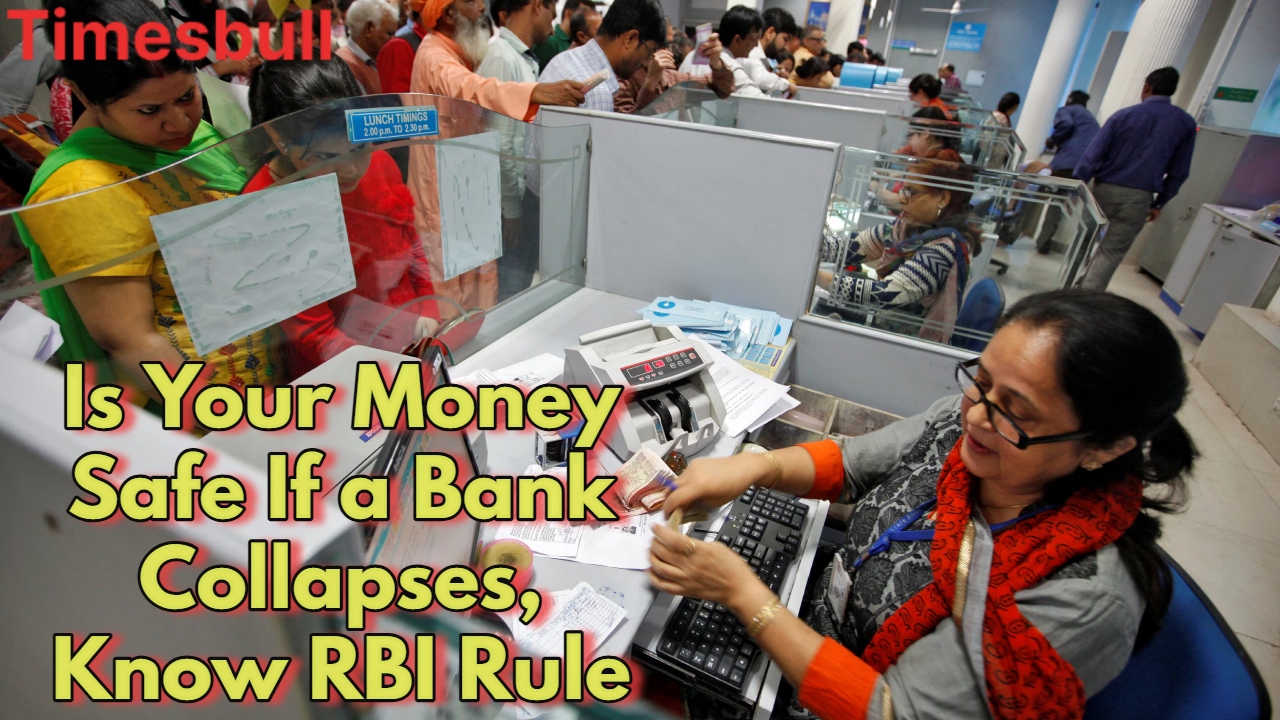
If you have deposited your hard-earned money in a bank and unfortunately that bank goes bankrupt, then what will happen to your money in such a situation? RBI has made some important rules to save the money of customers from such situations. If a bank sinks or goes bankrupt, you get your money back up to a certain limit. This rule provides a strong safety net to protect you from financial loss.
Read More:- Government Big Announcement: Delhi Farmers to Get ₹9,000 Under PM Kisan Yojana
Read More:- No More Digital Tax: Modi Govt Removes 6% Levy on Online Ads
How much money do you get back if a bank goes bankrupt
According to the Deposit Insurance and Credit Guarantee Corporation (DICGC) Act, if a bank goes bankrupt, all the customers (depositors) of that bank get a deposit insurance cover of up to ₹5 lakh. This deposit insurance cover includes both your principal amount and the interest amount deposited in the bankrupt bank.
Let us tell you that deposit insurance also applies to all types of deposits like savings accounts, current accounts, RD (recurring deposit), and FD (fixed deposit). This means that if you have deposited ₹10 lakh in a bank and that bank goes bankrupt, then according to RBI rules, you will get a maximum of ₹5 lakh back. Therefore, splitting your deposits across different banks can be a wise move.
How much time does it take to get the money back
Let us tell you that it takes a maximum of 90 days to get back the money deposited in a sunk bank. While there was a time when this process used to take a very long time. The central government changed some rules under the DICGC Act in the year 2021.
After the change, the customers of bad banks kept under moratorium will get back their deposits up to ₹ 5 lakh within 90 days of the commencement of the moratorium. This change has brought a big relief to the customers, as now they will not have to wait long for their money.
Read More:- Avoid PF Withdrawal Delays! Follow These Easy Steps to Get Your Money Instant
Latest News
- ITR Filing Before May 31? You May Get Notice

- Women Free Bus Travel Scheme – How to Get Free Bus Travel From June 1, 2026? How to Apply

- LSG Vs PBKS Video: ऋषभ पंत पर भड़के अर्जुन तेंदुलकर! वीडियो देखकर आप भी रह जाएंगे हैरान

- Apple MacBook Neo Deal Alert: Get It For Under ₹58,000 on Amazon Right Now

- Pakistan Attack: आत्मघाती हमले से दहला पाकिस्तान, 23 लोगों की मौत, 50 से ज्यादा घायल, जानें

- Honor Magic 9 Series Leaks: Flagship Upgrades with Massive 8,000mAh Battery and 200MP Cameras

- Motorola Edge 60 Fusion Review: Mid-Range King or Outdated?

- FD Update– Breaking Your FD Early? Know the consequences

- Bank Holiday–RBI Announces Closure of SBI, HDFC and All Banks Next Week, Save the Dates

- Samsung Galaxy S26 Ultra Amazon Deal – Get ₹23,509+ Discount with Bank Offers and Exchange Benefits