
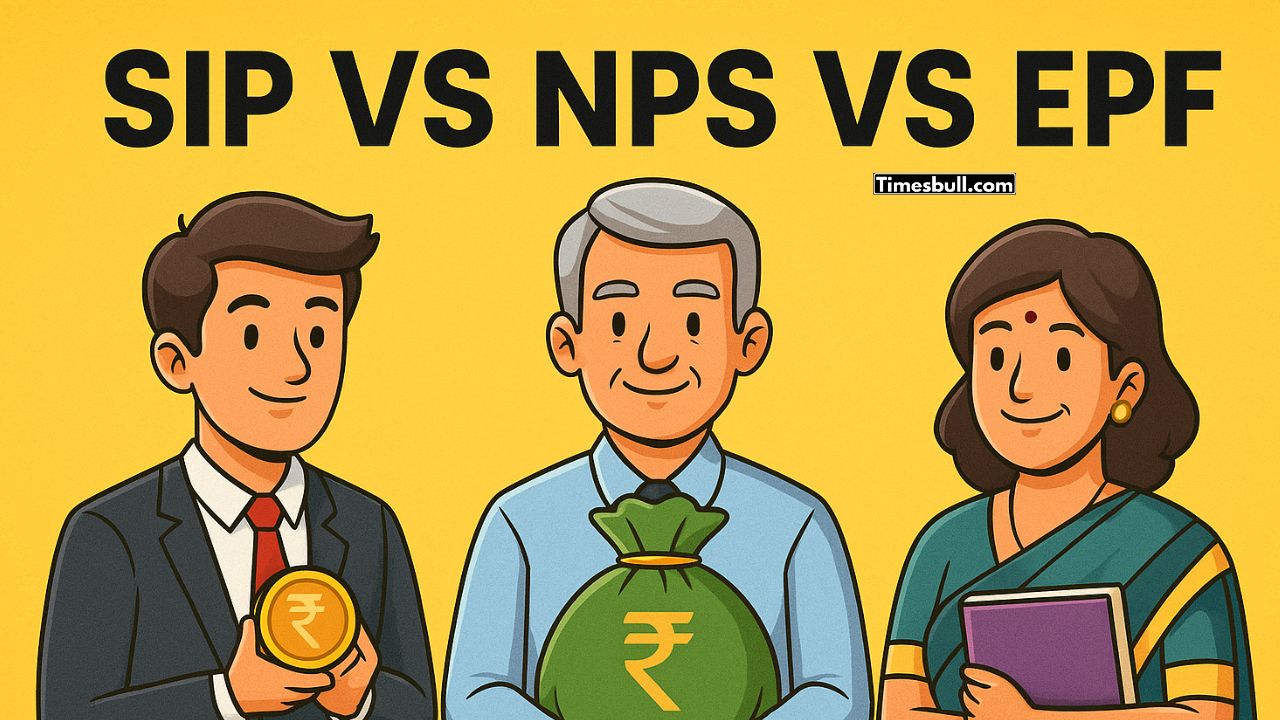
As long as you are earning, there is no tension about expenses. But after retirement, it is very important to prepare for future expenses. You must start this preparation during your earning years — and the earlier, the better. If you delay, it will become harder to create a good retirement fund.
There are many ways to build a retirement fund (Best Retirement Plan). Out of these, three options are the most popular — Mutual Fund SIP, National Pension Scheme (NPS), and Employee Provident Fund (EPF). Let us understand which of these is the best choice for you.
EPF is Government Guaranteed
EPF is a long-term scheme. It is for salaried people. In this scheme, both the employee and the employer deposit 12 percent of the employee’s salary into the PF account. The investment earns about 8.25 percent interest every year. The interest earned, and the full amount received after retirement, are completely tax-free.
For people who want a safe and tax-free option at the time of retirement, EPF can be the best choice.
Who Should Choose Mutual Fund SIP?
SIP allows you to invest a small amount every month. Over the long term, it can give better returns than EPF. The biggest advantage of SIP is compounding. In this, you earn returns on your previous returns as well.
People who want to keep investing till retirement and expect higher returns may find SIP a good option.
NPS is a Market-Linked Scheme
NPS is a retirement scheme run by the government. Any Indian citizen can invest in it. Since NPS is linked to the market, it can give better returns than fixed-income options, but it also carries some risk.
NPS is better for people who are ready to take a little risk. It also gives tax benefits. However, the money stays locked until the age of 60. After that, you can withdraw some part of the amount.
Other Benefits of EPF, SIP, and NPS
At the time of retirement, EPF gives you the full amount together. You can use the money as needed and invest the remaining amount wherever you wish.
SIP gives you full flexibility. You can take out money whenever you need it, whether before or after retirement. You can also continue investing in SIP even after you retire.
NPS gives you a fixed monthly pension after retirement, which becomes a regular source of income. It also helps in saving taxes.
What is the Conclusion?
If you are ready to take some risk for higher returns, then SIP may be the best for you. If you prefer safety and want to minimise risk, then EPF is the right choice. You can also increase your EPF contribution if you want. NPS is best for those who want tax savings and a monthly pension after retirement.
You can choose any of these three options based on your needs, comfort, and financial goals.
Latest News
- Indian Railways– 155 Trains Express Declared High-Speed, Thousands of Railway Staff to Benefit

- Monsoon Alert – Warning Heavy to Very Heavy Rain alert & thunderstorms in 22 States Over Next 4 Days

- America-Iran War: मिडिल ईस्ट में तनाव होगा खत्म! ईरान ने होर्मुज रास्ते पर कही बड़ी बात

- PM Surya Ghar Yojana 2026: Get Up to Rs 78,000 Subsidy within 6 Easy Steps, Know Here

- Cheapest Available 5G Smartphones in India Under 10000

- UPSC Prelims Answer Key 2026 – How to Download UPSC Prelims Answer Key at upsc.gov.in

- 8th Pay Commission: एनपीएस और पुरानी पेंशन में कौन सी बेहतर, जानिए बड़ा अपडेट

- Xiaomi 17T Launching With Leica 5x Zoom and Huge 6,500mAh Battery Under ₹60,000

- NEET UG 2026 – Haryana & Bihar Announce Free Bus Service for Candidates on June 20-21

- PM Kisan 23rd Installment: Farmers to get Rs 2000 in June? Know Here