Former Railway Minister and TMC leader Mukul Roy passes away, was admitted to hospital
New Bank Merger Update – How Will Your IFSC Code and Chequebook Change? Will IOB, CBI Merged with PNB & Canara
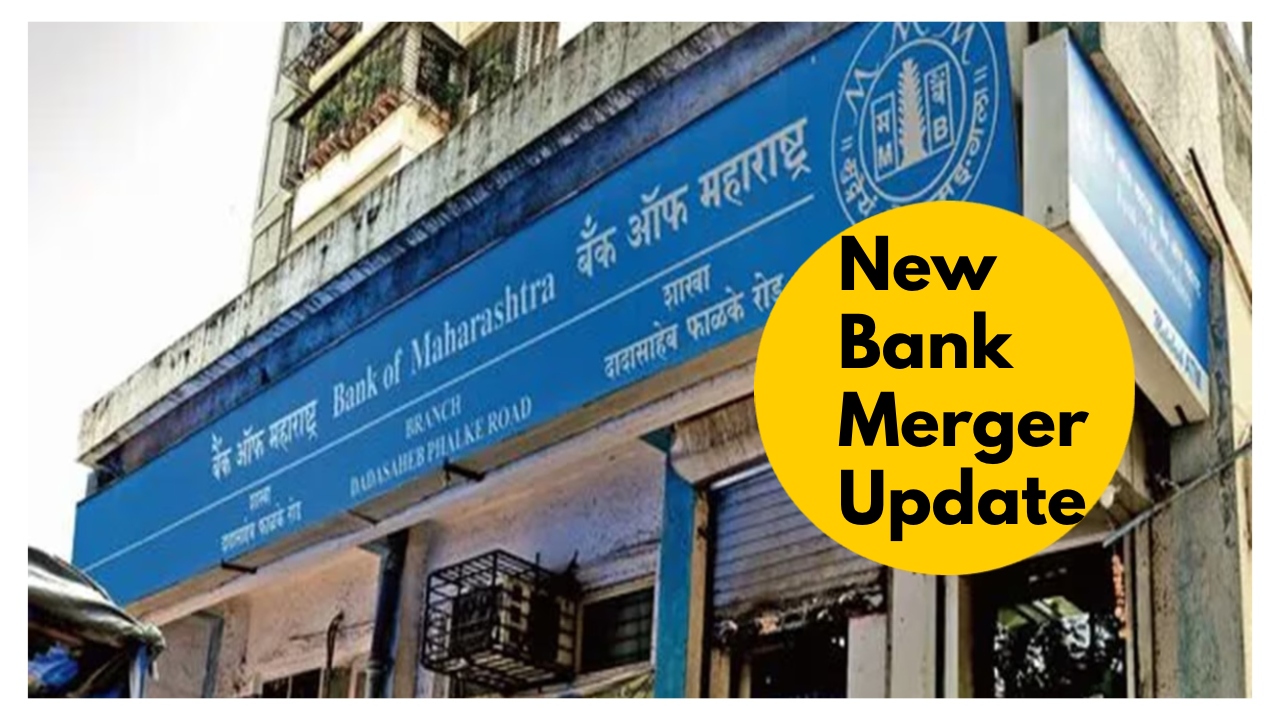
Bank Merger Update: The central government is preparing to transform the landscape of public-sector banks. According to media reports, the government, in collaboration with the Reserve Bank of India, is developing a framework that will significantly reshape the landscape of government banks in the country by 2026. The government may accelerate the process of consolidation of public sector banks in the coming years. The objective is to achieve a ‘developed India’ by 2047. The government wants the country to have strong, well-capitalised banks that can compete globally. To accomplish the Developed India 2047 goal, the government wants our banks to stand tall not only in the country but also against the world’s largest banks.
Finance Minister Nirmala Sitharaman recently stated that India needs several large, world-class banks. She clarified that work in this direction has already begun. The government believes that large banks can not only better meet the country’s economic needs but also strengthen India’s presence in the international market.
India currently has 12 government banks. Currently, only the State Bank of India has secured a place among the world’s top 50 banks. Surprisingly, the private-sector giant HDFC Bank is also not on the list of the world’s top 100 banks. If India is to become an economic superpower, we need large banks capable of funding major infrastructure projects. Large banks have more capital and the strength to withstand global market shocks.
Which banks may be merged?
The list of potential bank mergers includes six smaller public-sector banks: Indian Overseas Bank, Central Bank of India, UCO Bank, Bank of India, Bank of Maharashtra, and Punjab & Sind Bank.
Bank of Baroda (April 2019): Bank of Baroda + Vijaya Bank + Dena Bank. After the merger of Vijaya Bank and Dena Bank, Bank of Baroda became the second-largest PSU bank.
April 2020: Union Bank of India, Andhra Bank, and Corporation Bank. Following the merger with Andhra Bank and Corporation Bank, Union Bank became India’s fifth-largest PSU lender.
How many banks have been merged so far?
Between 2017 and 2020, the government undertook a significant round of mergers, reducing the number of public-sector banks from 27 to 12. Major mergers during this period included the merger of Oriental Bank of Commerce and United Bank of India with PNB, the merger of Syndicate Bank with Canara Bank, the merger of Andhra Bank and Corporation Bank with Union Bank of India, and the merger of Allahabad Bank with Indian Bank. These were aimed at improving asset quality, strengthening governance, and achieving scale efficiencies.
What will be the impact on account holders?
Bank mergers can directly affect customers. For example, bank names, IFSC codes, chequebooks, and passbooks may need to be changed after the merger. There may be temporary service delays during account migration and data transfer. Additionally, two banks’ nearby branches may be merged, affecting account holders. However, digital services may be strengthened.
Latest News
Must Read
Credit Score Impact of Late Payment: How One Missed EMI Can Cost You Lakhs
Most Viewed
Ayushman Bharat Yojana: Get ₹5 Lakh Free Treatment Without Paying a Rupee
Most Viewed
Free Electricity Scheme: Cut Electricity Bills to Zero with PM Surya Ghar Muft Bijli Yojana
Most Viewed
SIP for Beginners: How Small Investors Can Build Crores Without Lump Sum
Most Viewed
Free Government Facility: 7 Best Government Schemes Every Indian Must Know in 2026
Most Viewed
Trending Now
Gold Rates Today – Check the prices of 22 to 24 carat gold in major cities without any changes
5 Best Midrange Killer Phones in 2026
SBI Share Price Prediction: Critical 15-Minute Opening Strategy – Watch Closely
EPFO Minimum Pension to Be ₹10,000? Government Announces New Date
Parents’ permission will be required to get married! Big verdict by the High Court
Best Galaxy A-Series Phones in February 2026
Monsoon Update – Cyclone Warning with Heavy Rainfall in 11 States, Thunderstorms Expected
Realme GT 7 Pro 5G—Get Discount Of Rs 22000 on This Phone With 12GB RAM; Order Now!
Best 5 Top Selling Phones on Flipkart Under ₹15K in 2026
📁 CATEGORIES