


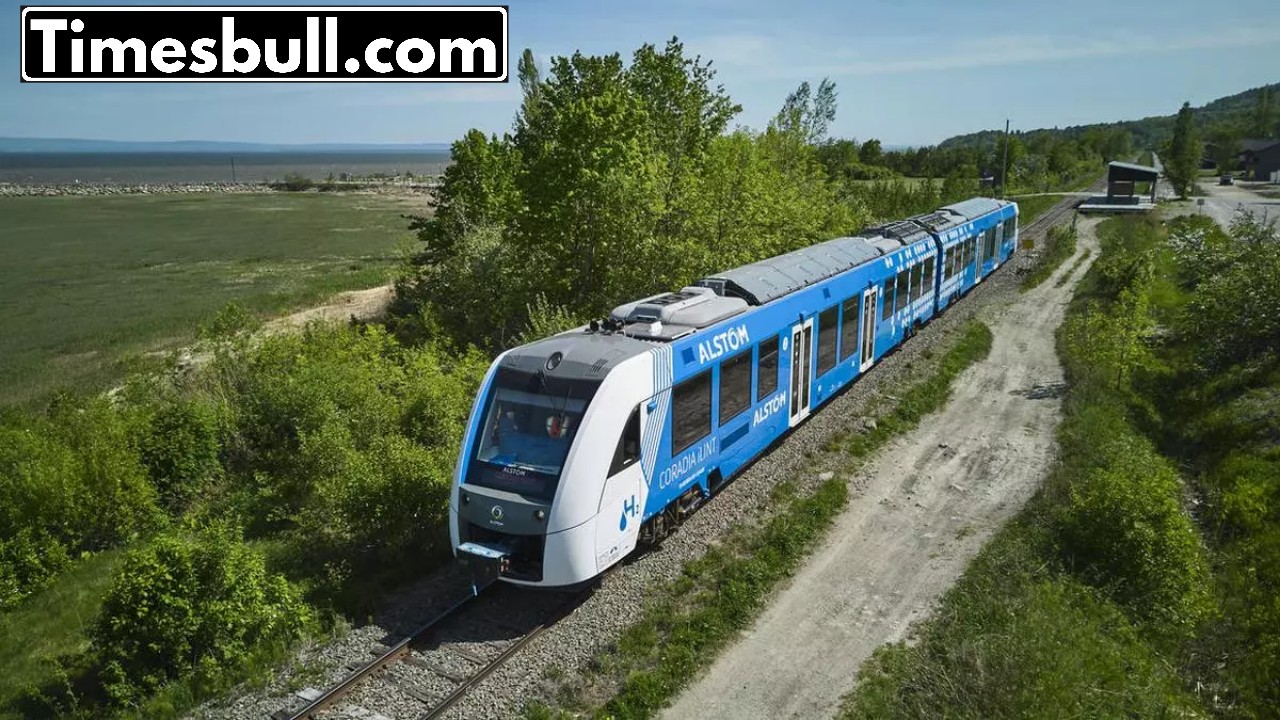
Hydrogen Train– The country’s first hydrogen train is ready. The entire train, including its coaches, is parked in the yard at Shakur Basti in Delhi. Meanwhile, the Research Design and Standards Organization (RDSO) is completing testing at a hydrogen plant in Jind.
After this, another branch of the railway will conduct testing. This entire process is expected to take 10 days. After this, the train will be given the green light. If there are no obstacles, it will be back on track by the end of this month at the latest. After this, the country’s first hydrogen train will run between Sonipat-Gohana-Jind. Union Railway Minister Ashwani Vaishnav has already released a video from his Instagram handle describing the features of this train.
The country’s first hydrogen train is ready to run between Sonipat-Gohana-Jind. A hydrogen plant has been completed in Jind for this purpose, and testing is underway there. Meanwhile, the engine and bogies for the hydrogen-powered train have been manufactured in Lucknow and have arrived in Delhi.
The entire train has been parked at Delhi’s Shakur Basti yard for several days. After Diwali, the railway will complete all necessary procedures. After that, the train will be ready to run with passengers. The launch of the hydrogen train is a significant step for Indian Railways, as it will require neither electricity nor any other fuel.
The hydrogen train is a completely pollution-free Namo Green Rail. The track length between Sonipat-Gohana-Jind is approximately 89 kilometers. This train is capable of running at speeds of 110-140 kilometers per hour. The train will be able to carry 2,638 passengers at a time. The project is estimated to cost ₹120 crore.
- The hydrogen train will run on an 89-kilometer long track.
- There are 08 coaches in this train.
- Capable of running at a speed of 110 to 140 km per hour.
- This train has a capacity of 2638 passengers.
- 430 kg of hydrogen will be produced daily in the Jind plant.
- Hydrogen production begins at Jind plant
Hydrogen production has begun at the Jind plant. Testing is currently underway. The Ministry of Railways’ Research, Design and Standards Organization wing is conducting the investigation. After reviewing the design and standardization of the plant’s equipment, the wing will submit its report to the Railway Board, zonal railways, and railway production units. The plant will produce 430 kg of hydrogen daily.