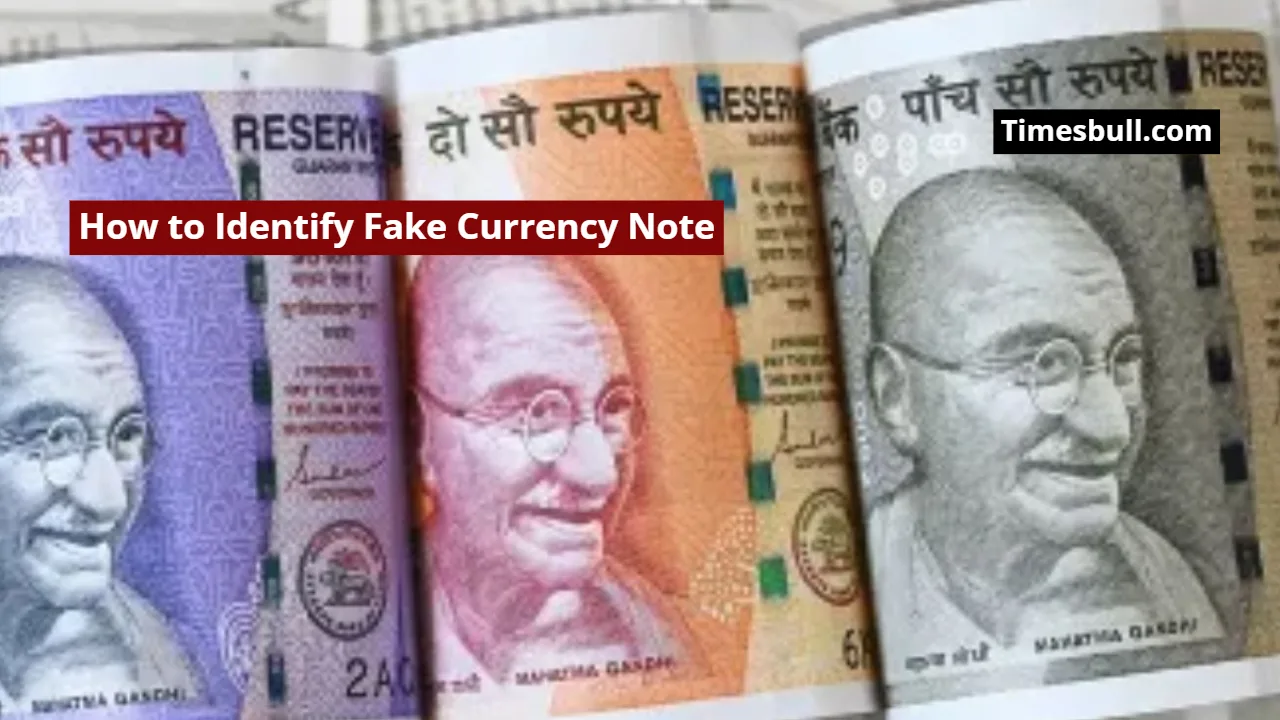
To curb the problem of counterfeit notes in India, several advanced security features have been added to currency. Fake notes often have flaws in these features. The security features on genuine notes make counterfeiting difficult. However, many people fail to distinguish between genuine and fake notes. Therefore, we explain how to identify genuine and fake notes.
Special Identification of Devanagari and Regional Languages
The value on Indian notes is written in capital letters in Devanagari and in small letters in English. The value is written in 15 Indian languages on the back of the note. This feature is often blurred or blurred on counterfeit notes.
Transparent Register Feature
When a genuine note is held up to the light, the printing on the front and back is clearly visible. This feature is often misaligned on counterfeit notes.
Latent Image and Security Thread
When a genuine note is held up to the light, the rupee symbol and number are visible. The security thread contains the words India and RBI. The thread on a counterfeit note often appears to be merely printed.
Watermark
Genuine notes have a clear watermark image of Mahatma Gandhi. Counterfeit notes may appear blurred or with thick lines.
Bleed Lines
Genuine notes have raised lines on their edges that are palpable. This is a feature specifically designed for the visually impaired.
Intaglio Printing and Raised Printing
Gandhi’s photo, the RBI seal, and other symbols are embossed. Counterfeit notes have a flat or light feel.
Numbering and Ink Quality
Genuine notes have numbers in ascending order, and the print is clear. Counterfeit notes may have uneven numbers or broken ink.
What to Do If You Find a Counterfeit Note
If you receive a counterfeit note from an ATM, immediately show the note to the machine’s camera and inform the security guard. Always take the transaction slip. Deposit the note at the bank and file a complaint. According to regulations, the bank must refund the money received from an ATM. If you receive a counterfeit note from someone, do not attempt to pass it on, as this is considered a crime.
Rules for exchanging soiled and mutilated notes
Mutilated notes can be easily exchanged. If a mutilated note less than 20 rupees contains more than half of the note, the full amount is refunded. If a larger note contains 80 percent of the note, the full amount is refunded. Notes that are severely damaged or burnt are not exchanged.
Note Exchange Process
Notes can be exchanged at any government bank branch, currency chest, or RBI office. Charges may apply for large quantities or high denominations.
Caution when storing cash at home
If you keep large amounts of cash, it is best to use a fireproof locker.