
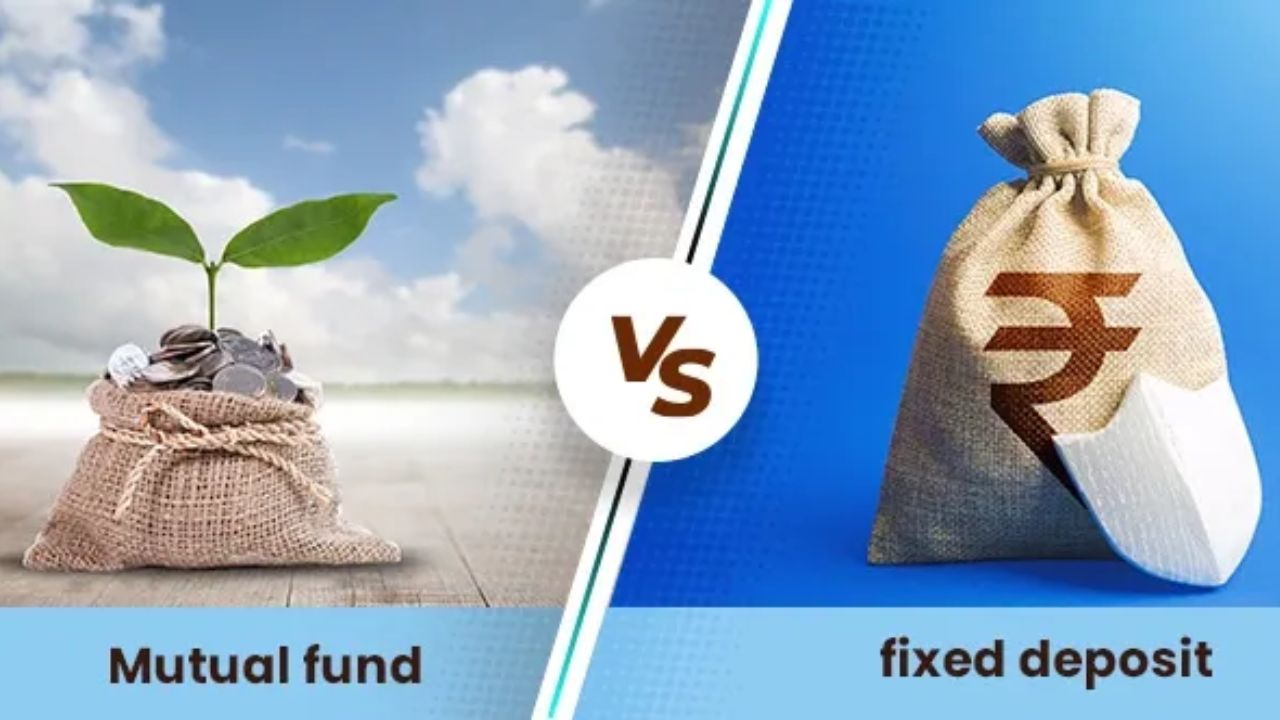
If you want to invest your money in a safe option, you may ask: Is FD (Fixed Deposit) better than mutual funds? FDs give fixed returns and protect your money. Mutual funds can give higher returns and may beat inflation in the long term.
But what is the difference? What is the risk? How are they taxed? And which one is more useful for you? Here, we compare FD and mutual funds to help you choose better.
Difference Between FD and Mutual Funds
Returns
- FDs give fixed and safe returns. Banks pay a set interest rate for a fixed time. Good for people who do not want risk.
- Mutual fund returns depend on the market. They can give higher profit but also have more risk.
Risk
- FDs are low risk. They also have insurance cover of up to ₹5 lakh under DICGC.
- Mutual funds carry risk based on type. Equity funds have more risk. Debt funds are safer but still depend on market ups and downs.
Expenses
- FDs have no extra charges. Banks give interest directly.
- Mutual funds have costs like fund management fees and admin charges. These make up the “expense ratio.”
Withdrawal
- FDs allow early withdrawal but with penalty, usually up to 1%.
- Mutual funds allow withdrawal anytime (except ELSS). Some funds charge exit load, usually 1%.
Tax
FD interest is taxed as per income slab. TDS of 10% is cut if yearly interest is above ₹50,000 (₹1 lakh for senior citizens).
Mutual fund tax depends on type and time.
- Equity funds: Less than 12 months = STCG 20%. More than 12 months = LTCG 12.5%.
- Debt funds: Taxed as per income slab.
Investment Method
- FDs only allow lump sum. Example: start with ₹1,000 in Ujjivan Bank.
- Mutual funds allow lump sum and SIP. With SIP, you can start with ₹500.
Which is Better?
If you want low risk and fixed returns, FDs are better. If you want long-term growth and higher returns, mutual funds are better. Choose based on your goal, risk level, and time.
Latest News
- America-Iran War: मिडिल ईस्ट में तनाव होगा खत्म! ईरान ने होर्मुज रास्ते पर कही बड़ी बात

- PM Surya Ghar Yojana 2026: Get Up to Rs 78,000 Subsidy within 6 Easy Steps, Know Here

- Cheapest Available 5G Smartphones in India Under 10000

- UPSC Prelims Answer Key 2026 – How to Download UPSC Prelims Answer Key at upsc.gov.in

- 8th Pay Commission: एनपीएस और पुरानी पेंशन में कौन सी बेहतर, जानिए बड़ा अपडेट

- Xiaomi 17T Launching With Leica 5x Zoom and Huge 6,500mAh Battery Under ₹60,000

- NEET UG 2026 – Haryana & Bihar Announce Free Bus Service for Candidates on June 20-21

- PM Kisan 23rd Installment: Farmers to get Rs 2000 in June? Know Here

- Best Premium Smartwatches Under ₹10,000: Upgrade to Luxury Metallic Builds, AMOLED Screens, and In-Built GPS

- Maruti Dzire CNG Continues Dominance – Fuel Efficient Sedan Wins Indian Families