After nearly 10 years, the Central Government has made a historic revision to the Central Government Health Scheme (CGHS) rates, which will come into effect on October 13th. This unprecedented change will provide direct relief to approximately 4.6 million employees and pensioners. The new rates will now be determined based on the hospital category, city category, and ward type. These rates have been increased by an average of 25-30%, significantly benefiting private hospitals. This move is a significant effort to improve cashless treatment.
Why the Change Was Necessary
This significant reform in CGHS rates was implemented because, for several years, government employees and pensioners had been complaining that CGHS-affiliated hospitals flatly refused to provide them with cashless treatment. Patients were forced to pay out of pocket, and then it took months to receive refunds, causing them financial hardship. Private hospitals, on the other hand, argued that the old rates were too low and not in line with current medical expenses. The last major change in CGHS rates was made in 2014, after which only minor improvements were made, not comprehensive revisions.

Impact of Employee Unions’ Demands
In August of this year, the National Federation of Central Government Employees’ Unions submitted a memorandum to the government, highlighting the financial hardship faced by employees and pensioners due to the lack of cashless services. Taking cognizance of this, the government took this bold decision.
Payment by Category
According to the new rules issued by the Ministry of Health, CGHS rates will now be determined based on a transparent and multi-dimensional formula.
There are four main criteria for determining rates:
Hospital Accreditation (NABH/NABL)
Hospitals that do not have NABH/NABL accreditation will receive 15% lower rates. Meanwhile, super-specialty hospitals will be charged 15% higher rates.
City Category (X, Y, Z)
Rates for Y (Tier-II) cities will be 10% lower than those for X cities, and 20% lower for Z (Tier-III) cities. Northeastern states, Jammu and Kashmir, and Ladakh are placed in the Y category.
Ward Type
Rates for general wards will be 5% lower, while those for private wards will be 5% higher.
Rates for outpatient treatment, radiotherapy, daycare, and minor procedures will remain unchanged. Rates for cancer surgery will remain the same, but chemotherapy and radiotherapy rates have been revised.
Strict Instructions for Hospitals
The Ministry of Health has issued clear instructions to all CGHS-empanelled hospitals to accept the new rates by October 13th. Hospitals that fail to do so may be de-empanelled (removed from the CGHS list).
With these increased and transparent rates, it is now expected that hospitals will easily offer cashless treatment to CGHS patients. This will save employees and pensioners the hassle of spending money out of their own pockets and waiting for months for a refund.
What is included in the CGHS package
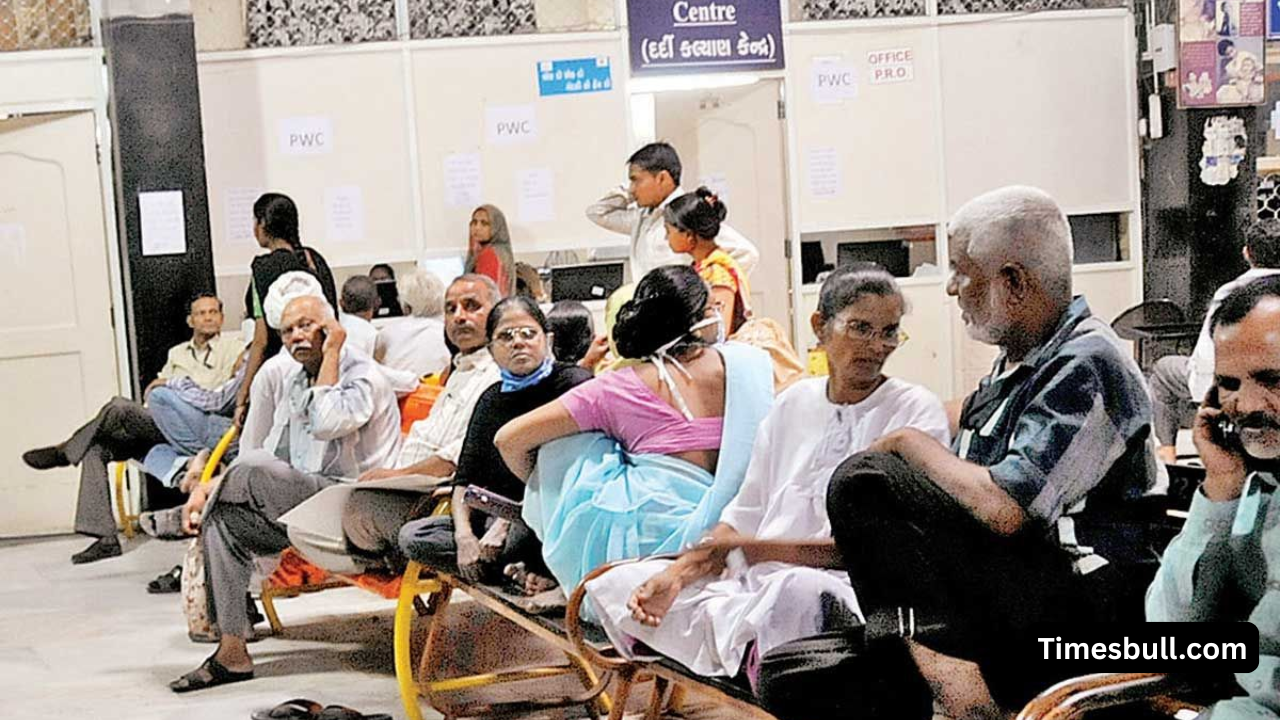
The CGHS package covers almost all treatment-related services, ensuring financial security. This includes room and bed charges, admission fees, anesthesia, medications, doctor and specialist fees, ICU/ICU expenses, oxygen, ventilators, operation theater fees, and facilities such as physiotherapy and blood transfusion.
New Memorandum of Agreement Mandatory within 90 days
Hospitals will now be required to sign a new Memorandum of Agreement (MoA) within 90 days. The validity of the old MoA will expire on October 13.
Benefits and a Transparent Future
This excellent amendment will ensure that employees and pensioners receive better, cashless treatment, while hospitals receive fair reimbursements. This significant reform, after nearly a decade, is an extraordinary step towards making the CGHS system more practical, transparent, and reliable.
Latest News
- US Green Card Rule Change, Know Before Apply

- PM Surya Ghar Scheme: खूब चलाएं एसी और कूलर, नहीं देना होगा बिल, जल्द कराएं यह काम

- ITR Filing Before May 31? You May Get Notice

- Women Free Bus Travel Scheme – How to Get Free Bus Travel From June 1, 2026? How to Apply

- LSG Vs PBKS Video: ऋषभ पंत पर भड़के अर्जुन तेंदुलकर! वीडियो देखकर आप भी रह जाएंगे हैरान

- Apple MacBook Neo Deal Alert: Get It For Under ₹58,000 on Amazon Right Now

- Pakistan Attack: आत्मघाती हमले से दहला पाकिस्तान, 23 लोगों की मौत, 50 से ज्यादा घायल, जानें

- Honor Magic 9 Series Leaks: Flagship Upgrades with Massive 8,000mAh Battery and 200MP Cameras

- Motorola Edge 60 Fusion Review: Mid-Range King or Outdated?

- FD Update– Breaking Your FD Early? Know the consequences