

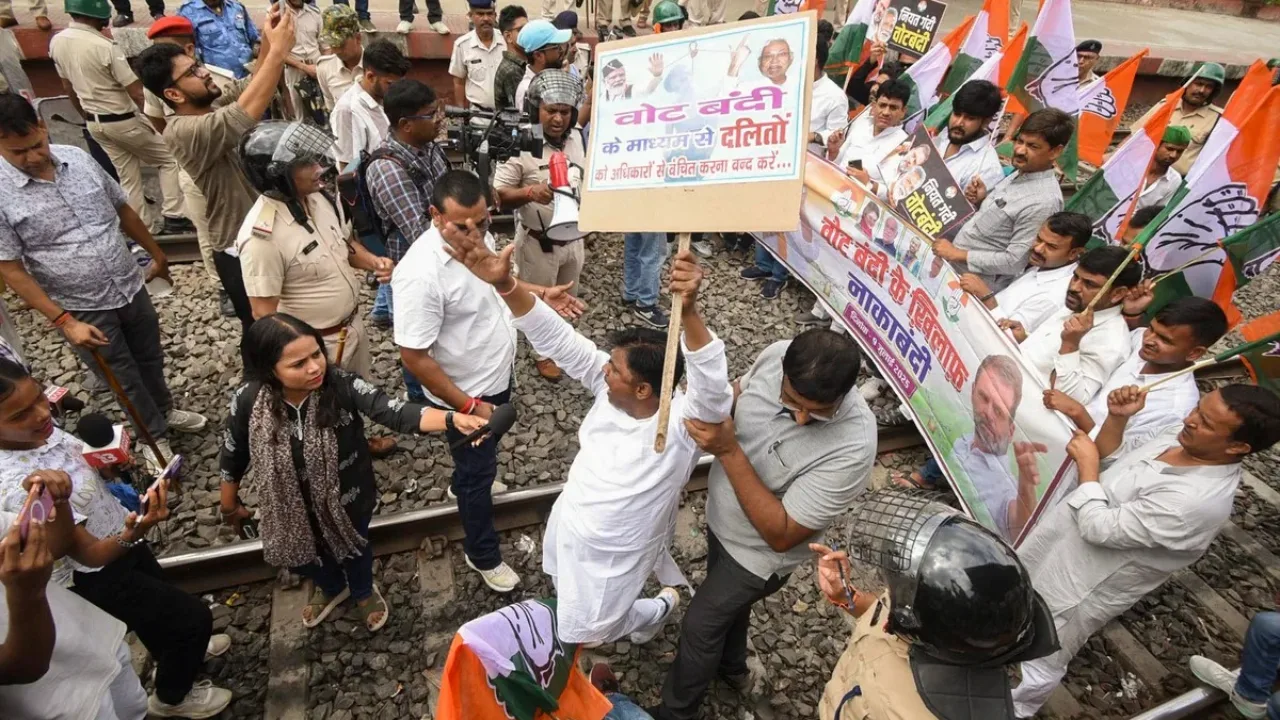
Bharat Bandh February 12: Farmers and trade unions are staging a Bharat Bandh today,February 12,to voice their opposition to four new labor laws,the India-US trade agreement,privatization,and minimum wage concerns. A coalition of central trade unions has declared this nationwide strike to challenge the policies of the central government. According to the unions,this strike is expected to disrupt work in over 600 districts nationwide. Let’s take a closer look at the key issues raised by the central trade unions.
Why is there a Bharat Bandh on 12 February?
Opposition to the four new labor codes
Trade unions say the four new labor codes reduce job security and threaten workers’ economic security. They argue that the new laws make it easier for employers to hire and fire staff.
Opposition to the India-US trade deal
The Samyukta Kisan Morcha and other farmers’ organizations say that the trade deal between India and the United States will devastate the country’s markets for products like dairy products,grains,soybean oil,and animal feed. This will lead to the influx of cheap American products,harming the Indian agricultural market. The Samyukta Kisan Morcha has called the interim trade deal with the United States a betrayal and surrender of farmers.
Opposition to privatization
Trade unions are also protesting the privatization of government-owned companies,arguing that handing over public sector enterprises to the private sector is undermining social security.
Demand for restoration of OPS and increase in minimum wage
Trade unions have also demanded the reinstatement of the Old Pension Scheme (OPS). Calling the new pension scheme weak,employee unions have also demanded an increase in the minimum wage and the minimum wage for contract workers.
Demand for protection of workers’ rights and change in agricultural policies
Protests against the Electricity Amendment Bill 2025 and demands for transparency in land and seed laws are also key issues for trade unions. Insurance sector employees are also taking to the streets to protest the decision to allow 100 percent FDI (foreign direct investment) in the sector. Furthermore,the Draft Seed Bill,the SHANTI Act,and the VB-G RAMG Act 2025 are also being opposed.