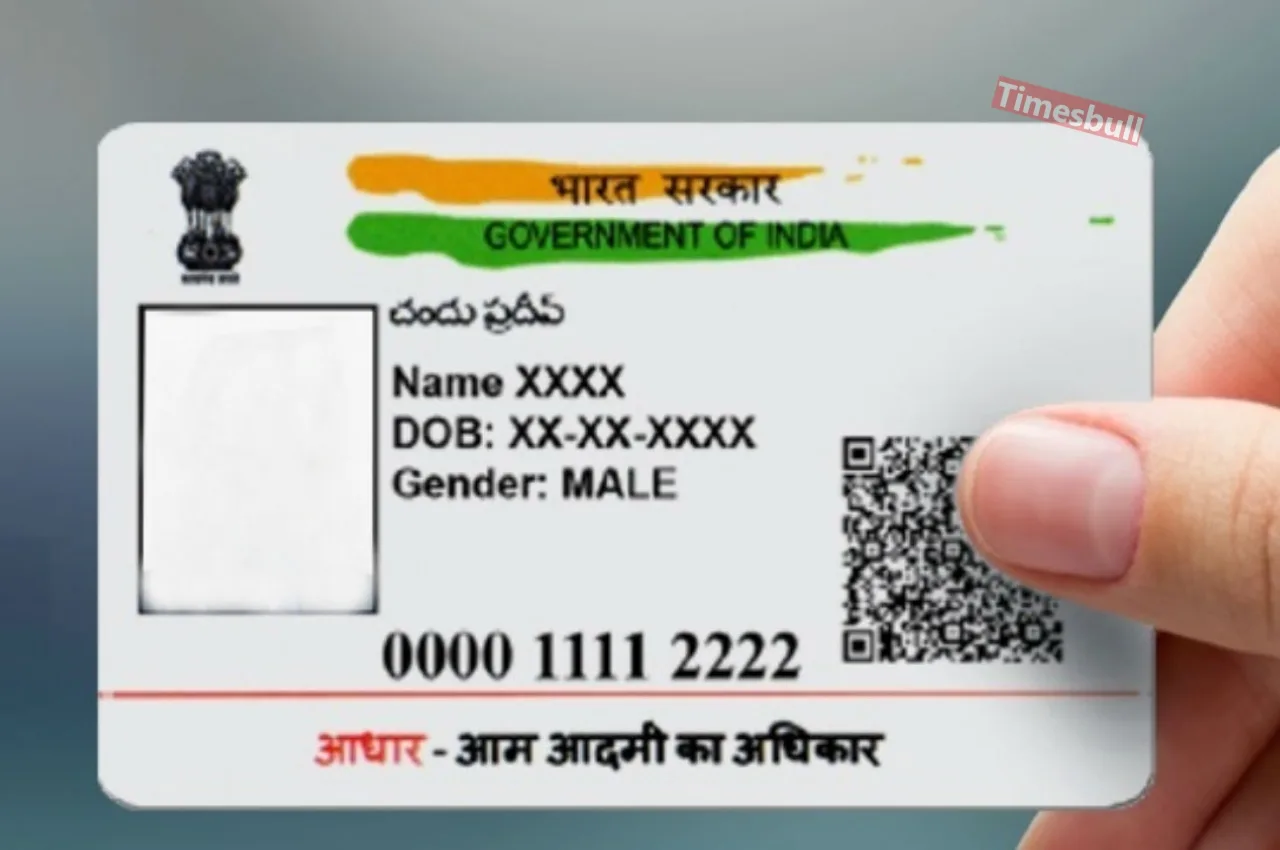
Aadhaar Card Rules– The government recently amended several key rules related to Aadhaar. These changes will impact the common man’s wallets and financial services such as banking, investments, and savings plans. If you haven’t yet updated your Aadhaar information or linked it to your PAN card, do so immediately. Otherwise, you could face trouble.
Change in Aadhaar update fees
UIDAI has revised the Aadhaar update fee, effective October 1, 2025. Updating your name, address, date of birth, mobile number, or email address will now cost ₹75, up from ₹50 previously. Biometric updates, such as fingerprint, iris, or photo, will cost ₹125, up from ₹100 previously.
Biometric updates for children will be free once. This includes updates for children aged 5–7 and 15–17 years. Biometric updates for children aged 7–15 years will remain free until September 30, 2026. Document updates will now cost ₹75 at the center, but will remain free online until June 14, 2026. Additionally, the fee for Aadhaar Card reprints has been fixed at ₹40.
If an officer comes to your home to update Aadhaar, you will have to pay Rs 700 for the first person and Rs 350 for every additional person at the same address.
PAN-Aadhaar linking is now mandatory
The government has clarified that those who have not linked their PAN with Aadhaar will no longer have their PAN active. Such individuals will not be able to invest in mutual funds, demat accounts, or tax-saving schemes. In recent times, many investors’ transactions have been halted because their PAN and Aadhaar are not linked. Therefore, it is extremely important to link your PAN and Aadhaar in a timely manner.
Aadhaar e-KYC is now easy
UIDAI and NPCI have launched the Aadhaar e-KYC Setu and offline KYC features. Banks and NBFCs will now be able to identify customers without having to see their full Aadhaar number. This will enhance data security and privacy, as well as speed up the account opening process.
New rules for Aadhaar verification
UIDAI has issued new rules, under which financial institutions will only be able to perform KYC on an active and unique Aadhaar number. If a person’s Aadhaar is found to be duplicate or inactive, opening a bank account or making an investment may be halted. Therefore, users are advised to periodically check their Aadhaar status by visiting the UIDAI website or the mAadhaar app.
Latest News
- Tata Punch EV Rival VinFast VF 5 Unveiled – Stylish Design And Long Range Detailed

- Petrol-Diesel Price Today: फिर लगा महंगाई का झटका, पेट्रोल-डीलज की कीमतों बढ़ोतरी, चेक करें रेट

- Maruti Suzuki Vision 3.0 Plan Revealed – 4 Powerful SUVs Coming In 2026-27

- EPFO Update: पीएफ से निकाले 5 लाख रुपये तो होगा कितना नुकसान? समझिए गणित

- DA Hike Update: इन कर्मचारियों की लगी लॉटरी, डीए में 5 फीसदी की बढ़ोतरी, जानें अपडेट

- Gold Price Today – Check 24K, 22K & 18K Gold Updated Rates in City – Wise

- CUET UG 2026 Exam Postponed – May 28 Exam Cancelled, New Date Announced Soon at cuet.nta.nic.in

- Weather Warning Delhi-NCR – Rain Alert & Dust Storm in Next 2-3 Hours, IMD Issues Yellow Alert

- PM Kisan Samman Nidhi Yojana: नहीं मिल रही 2000 रुपये की किस्त तो किसान तुरंत करवा लें यह काम

- Aadhaar Card Update Rules – How Many Times Can You Change Address, DOB & Number?