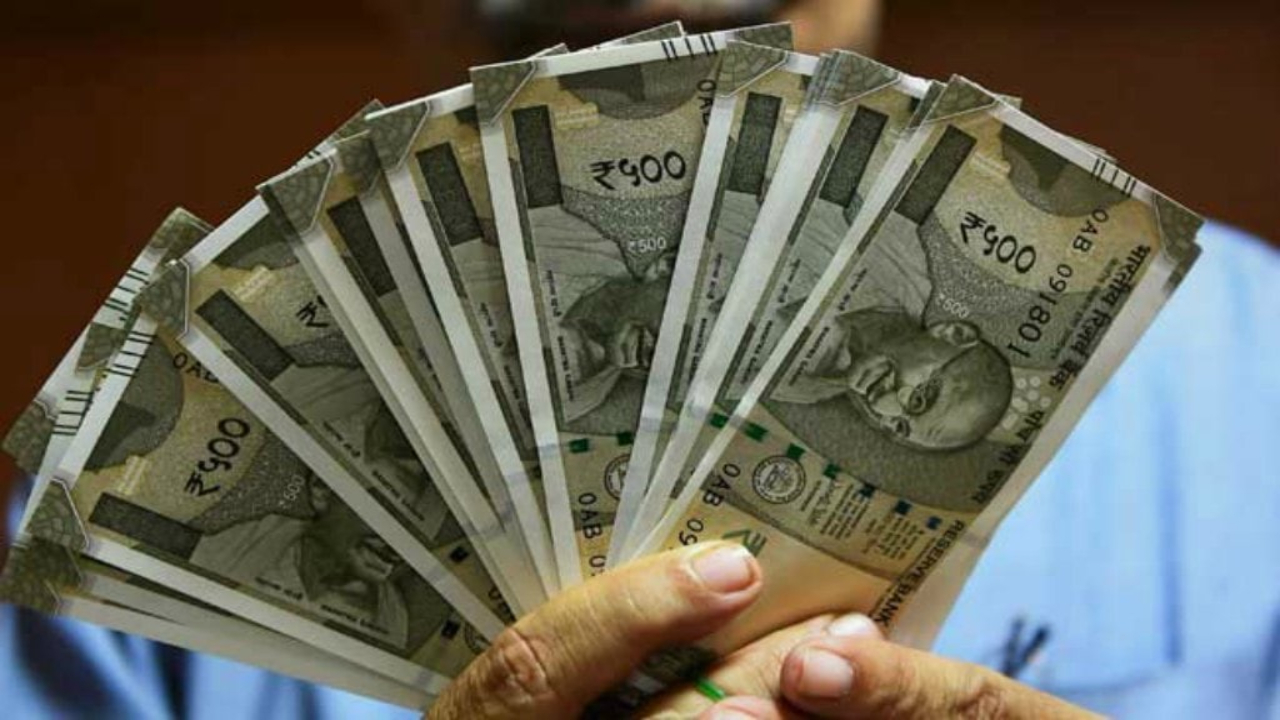
8th Pay Commission Salary: These days, the Eighth Pay Commission is the buzzword in government offices across the country. Be it at tea stalls or during lunchtime conversations, central government employees everywhere have only one question on their lips: “Brother, how much will your salary increase be under the 8th Pay Commission?” This question is valid, because in this era of inflation, everyone wants to see their income increase. A total of 50.14 lakh central government employees and approximately 69 lakh pensioners are currently looking to the government with great hope.
The 8th Pay Commission, headed by retired Justice Ranjana Desai, is now fully engaged in its work. This is a long and extensive process. This commission, headed by Justice Ranjana Desai, has been working diligently since its formation. The commission’s mandate is not only to increase salaries, but also to assess their impact on the country’s economy. The commission will provide its opinion on the basic pay structure, various allowances, pension rules, and post-retirement benefits, as well as service conditions. The government has given the commission 18 months to submit its report.
How much will the fitment factor go up?
The fitment factor is super important when it comes to figuring out salary and pension hikes. It’s basically the magic number or multiplier that takes an employee’s current basic pay and helps calculate their new salary. But keep in mind, this factor isn’t set in stone until the Union Cabinet gives the green light on the commission’s suggestions. There are a bunch of reports hinting that the fitment factor for the 8th Pay Commission might fall between 1.86 and 2.57. Here’s the deal: if this factor is on the lower side, salary increases will be pretty standard, but if it gets closer to 2.57, employees could face some serious losses.
When will the 8th Pay Commission actually kick in?
The big question on everyone’s mind is when will the “good days” finally show up? Let’s break down the timeline. The Terms of Reference (ToR) for the 8th Central Pay Commission were announced on October 28, 2025. The Commission has 18 months to hand in its report. So, they’re expected to submit it to the government by April 2027.
But don’t expect the government to jump on the report right away. The Finance Ministry and other departments will take their time to review it, make some tweaks, and then get Cabinet approval. This whole process usually takes about six months after the report is submitted. So realistically, we’re looking at the new salary structure being rolled out by the end of 2027 or early 2028.
How much cash will actually land in the employee’s hands?
Now, let’s dive into the key point. Ambit Capital has put out a report estimating that the fitment factor will range from 1.83 to 2.46. If that’s the case, the minimum salary for central government employees, which is currently Rs 18,000, could jump to anywhere between Rs 32,940 and Rs 44,280. Even if the fitment factor sticks at 1.83, the basic salary will nearly double to Rs 32,940. And if luck is on our side, with a factor of 2.46, it could soar to Rs 44,280.
The report suggests that we can expect at least a 14% bump in employees’ actual salaries. The highest increase could reach up to 54%. But honestly, that 54% figure feels a bit too optimistic. Such a significant rise would be tough for the government financially, as it could widen the fiscal deficit. If the government is looking to stimulate demand during elections or boost the economy, they might show some generosity. We saw something similar during the Sixth Pay Commission.
What’s the expected salary increase based on Grade Pay?
To figure out the salary increase for employees with the Eighth Pay Commission, two fitment factors are used: 1.92 (normal increase) and 2.57 (bumper increase). This calculation also takes into account house rent allowance (HRA), transport allowance (TA), and NPS deductions. For HRA, it’s considered to be 24% of the basic salary (for major cities), and NPS deductions are set at 10% of the basic salary.
For those with grade pay of 1900: If you are on grade pay of 1900 and the fitment factor is set at 1.92, your basic salary will be Rs 54,528. Add Rs 13,086 for HRA and Rs 3,600 for TA, resulting in a gross salary of Rs 71,215. After deducting NPS and CGHS, your net salary will be approximately Rs 65,512. However, if the fitment factor is 2.57, the situation will change. Your basic salary will be Rs 72,988, and after deductions, you will end up with approximately Rs 86,556.
Latest News
- NEET UG 2026 – Haryana & Bihar Announce Free Bus Service for Candidates on June 20-21

- PM Kisan 23rd Installment: Farmers to get Rs 2000 in June? Know Here

- Best Premium Smartwatches Under ₹10,000: Upgrade to Luxury Metallic Builds, AMOLED Screens, and In-Built GPS

- Maruti Dzire CNG Continues Dominance – Fuel Efficient Sedan Wins Indian Families

- Vivo Y600 Turbo Set to Debut: Featuring a 165Hz Display, Dimensity 8500, and a Massive 9,020mAh Battery

- HMD Vibe 2 5G Debuts in India with 6000mAh Battery & 50MP Camera: Get It For Just ₹9,499 With Launch Offers

- 8th Pay Commission लागू होते ही कितना हो जाएगा फिटमेंट फैक्टर, चेक करें अपडेट

- Oppo Find X9 Ultra Launched in India: Check Reliance Digital Price, Bank Offers, and Flagship Specs

- Electricity Bill Saving– How to Save Power During Summer Heat? Here Are the Few Tips

- Gold-Silver Rate – Gold ₹44,396 per 10 grams & Silver ₹1,85,462 per kg cheaper from the Peak