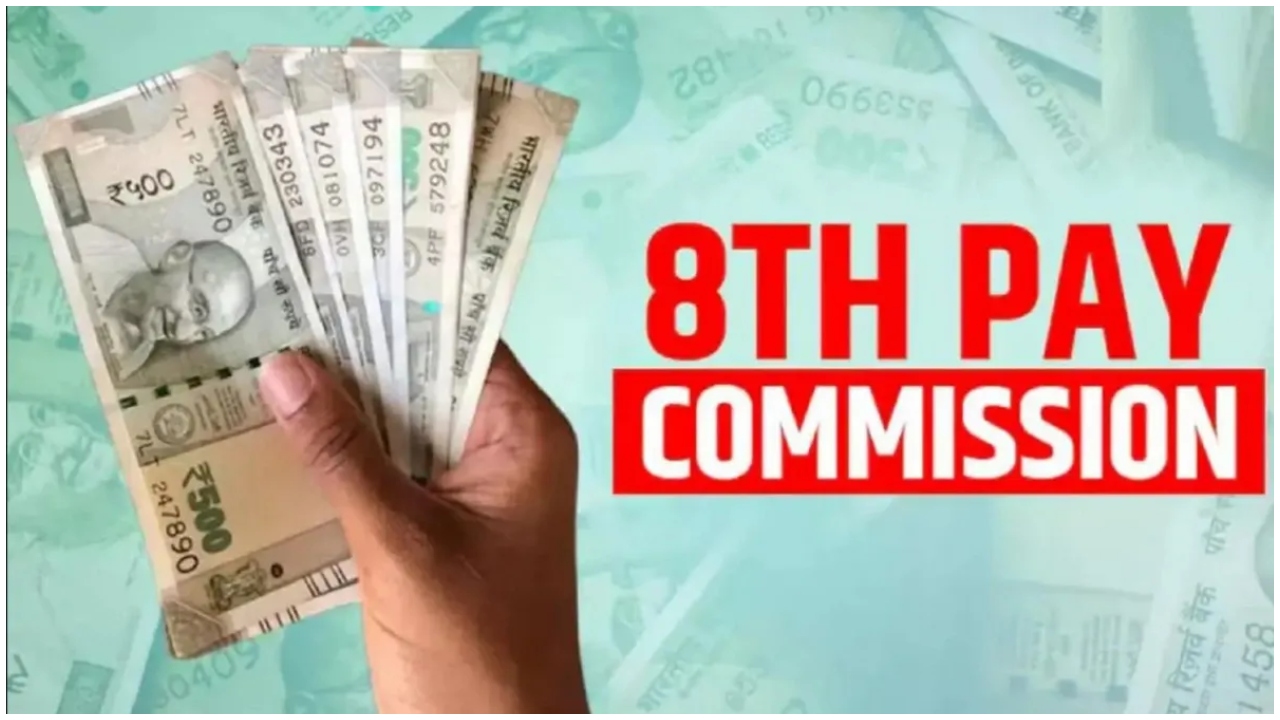
Millions of central government employees across the country are upset. Many questions are on their minds — what will the Eighth Pay Commission recommend, how much will their salary increase, when will the recommendations come, and how will the government calculate DA this time? If reports are to be believed, the government may change a 10-year-old rule and reset the DA meter to ‘zero’.
What is the government’s new plan?
Dearness Allowance (DA) is calculated using data from the Consumer Price Index (AICPI-IW) for industrial workers. This index is based on a base year, which is used to compare inflation.
Current rule
The base year for calculating DA is currently 2016. It was fixed when the Seventh Pay Commission was implemented.
Proposed Changes in DA Calculation
The 8th Pay Commission will come into effect from January 1, 2026. The government may also change the base year for DA calculation to 2026. In simple terms, the DA calculation will start again from zero.
Why Change the Base Year?
Over the last decade, people’s spending habits, needs, and inflation patterns have changed completely. The items people spend on today are very different from those in 2016. So, updating the base year is necessary to correctly measure inflation and give real benefits to employees.
How Will It Work?
By January 1, 2026, DA may reach around 60–61%. After the 8th Pay Commission starts, this DA will be added to the current basic pay, creating a new, higher basic pay. Then, the DA counter will reset to 0%, and future DA hikes (2%, 3%, or 4%) will be calculated on this new basic pay.
Impact on Salary
This change is good for employees. Future DA increases will be based on the new, higher basic salary, which means a faster rise in total income.
The 8th Pay Commission panel is expected to be formed soon. It will take around 18 months to submit its report. The new pay scale is likely to come into effect from January 1, 2026, along with arrears benefits.
Latest News
- Weather Warning Delhi-NCR – Rain Alert & Dust Storm in Next 2-3 Hours, IMD Issues Yellow Alert

- PM Kisan Samman Nidhi Yojana: नहीं मिल रही 2000 रुपये की किस्त तो किसान तुरंत करवा लें यह काम

- Aadhaar Card Update Rules – How Many Times Can You Change Address, DOB & Number?

- Train Ticket: How to book a confirmed train ticket without an agent? Learn the Easy Steps

- Indian Railways– 155 Trains Express Declared High-Speed, Thousands of Railway Staff to Benefit
- Monsoon Alert – Warning Heavy to Very Heavy Rain alert & thunderstorms in 22 States Over Next 4 Days

- America-Iran War: मिडिल ईस्ट में तनाव होगा खत्म! ईरान ने होर्मुज रास्ते पर कही बड़ी बात

- PM Surya Ghar Yojana 2026: Get Up to Rs 78,000 Subsidy within 6 Easy Steps, Know Here

- Cheapest Available 5G Smartphones in India Under 10000

- UPSC Prelims Answer Key 2026 – How to Download UPSC Prelims Answer Key at upsc.gov.in