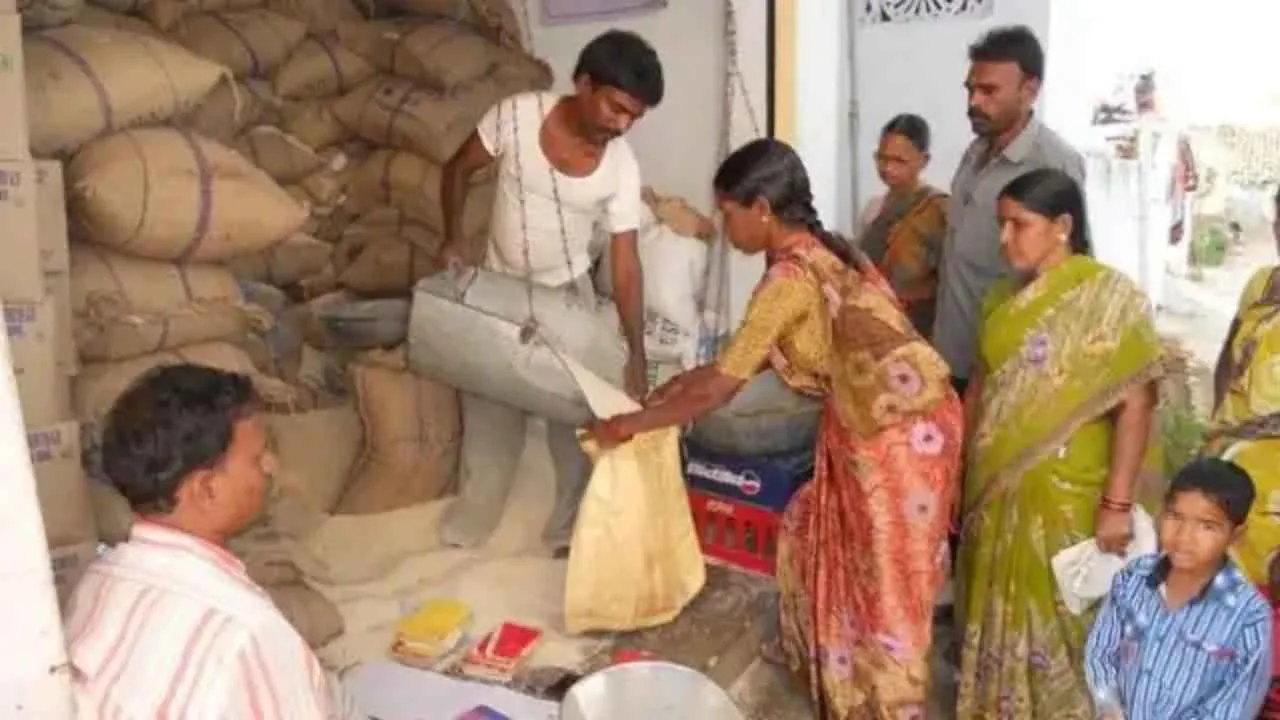
Free Ration Service– Good news for lakhs of common people of India. Recently, the Central Government has made an important announcement, planning to distribute free ration to 81 lakh families for the next three months. This initiative has come as a relief to those families who are financially weak and have limited means to meet daily needs.
Eligibility Criteria
Understanding eligibility is crucial for families hoping to benefit from the government’s free ration initiative. The program targets low-income households that are struggling to meet their basic food needs. To qualify, families must fall below a designated income threshold, which varies depending on the state they reside in. Additionally, priority is given to families with elderly members, children, or those with special needs.
Necessary documents include identification proof, income certificates, and ration cards. These documents help authorities verify the eligibility of applicants and ensure that the benefits reach the intended recipients. It’s important for applicants to have these documents ready to avoid delays in processing their applications.
- Proof of residence
- Income certificate
- Ration card
- Identification proof (e.g., Aadhar card).
Kick-off date for the free ration distribution has been set for the coming month. The government has meticulously planned the rollout to ensure a smooth transition and effective delivery of resources. With logistical arrangements in place, the distribution will commence in phases to cover all eligible families efficiently.
Implementation strategy involves collaboration between state governments and local authorities to coordinate the distribution process. This joint effort aims to minimize any potential issues and ensure that the food reaches every corner of the country where it is needed most. The use of technology will also play a vital role in tracking distribution and preventing any form of mismanagement.
- Phase-wise distribution
- Collaboration with state governments
- Use of technology for tracking
- Focus on rural and remote areas
- Initial distribution in urban areas
- Subsequent phases target rural regions
- Local authorities tasked with monitoring
- Regular updates from government channels
- Feedback systems for beneficiaries
- Grievance redressal mechanisms
- Active involvement of NGOs
- Periodic review of distribution efficiency.
Latest News
- PM Surya Ghar Yojana 2026: Get Up to Rs 78,000 Subsidy within 6 Easy Steps, Know Here
- Cheapest Available 5G Smartphones in India Under 10000

- UPSC Prelims Answer Key 2026 – How to Download UPSC Prelims Answer Key at upsc.gov.in
- 8th Pay Commission: एनपीएस और पुरानी पेंशन में कौन सी बेहतर, जानिए बड़ा अपडेट

- Xiaomi 17T Launching With Leica 5x Zoom and Huge 6,500mAh Battery Under ₹60,000

- NEET UG 2026 – Haryana & Bihar Announce Free Bus Service for Candidates on June 20-21
- PM Kisan 23rd Installment: Farmers to get Rs 2000 in June? Know Here

- Best Premium Smartwatches Under ₹10,000: Upgrade to Luxury Metallic Builds, AMOLED Screens, and In-Built GPS

- Maruti Dzire CNG Continues Dominance – Fuel Efficient Sedan Wins Indian Families

- Vivo Y600 Turbo Set to Debut: Featuring a 165Hz Display, Dimensity 8500, and a Massive 9,020mAh Battery