

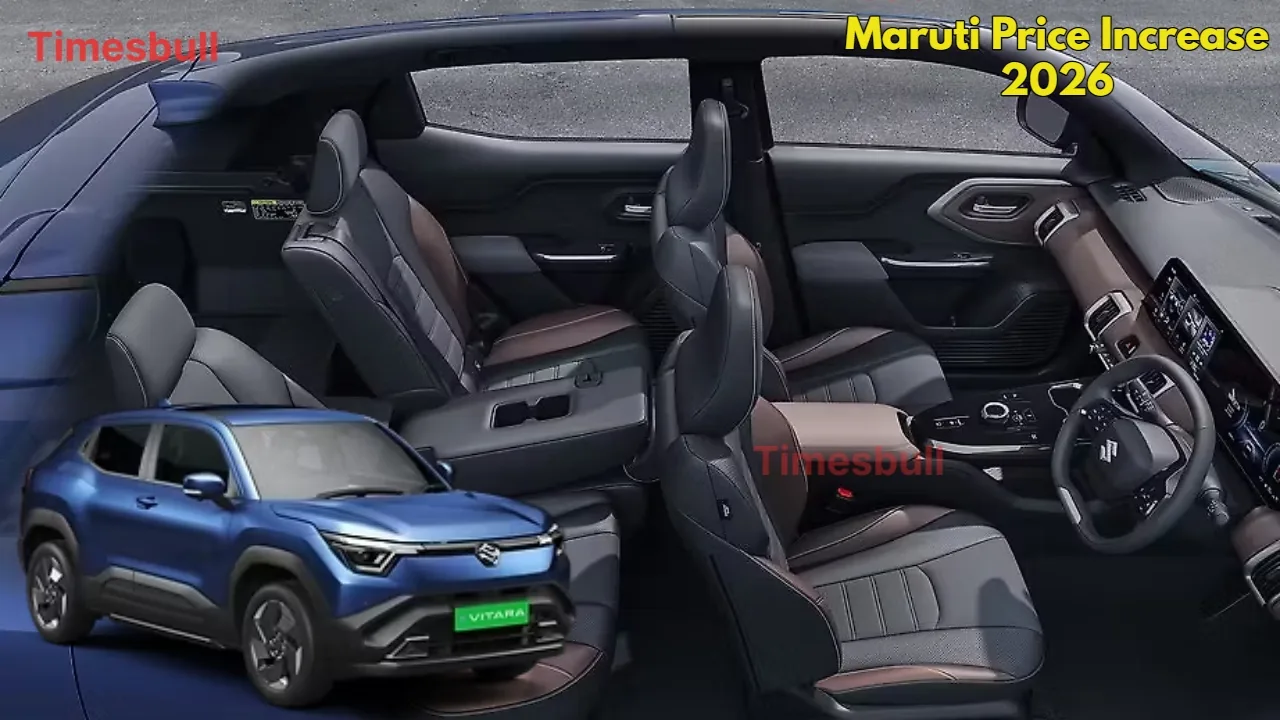
Maruti Suzuki Upcoming Price Hike 2026: Maruti Suzuki, the country’s largest car manufacturer, is preparing to implement a significant and significant price hike soon, which could have a dramatic impact on the budgets of middle-class families. Although the company has not yet announced the exact price hike, Partho Banerjee, Senior Executive Officer of Marketing and Sales, has clearly indicated that a price hike has become essential due to strong raw material costs and global supply chain pressures.
Following the lead of Tata Motors and JSW MG Motor, Maruti is now conducting a comprehensive price review of its successful portfolio to accelerate future production and ensure Maruti’s continued dominance on the roads.
Why are Maruti prices rising
Maruti Suzuki has clarified that the company has been under significant pressure since December last year due to strong raw material prices, which have dramatically increased production costs. Strong prices for precious metals like steel and aluminum are significantly impacting the company’s margins, and to offset this, the company is now forced to pass this significant burden onto its affluent customers.
While the global war hasn’t directly impacted Maruti’s supply chain, a dramatic increase in logistics and shipping costs has significantly impacted the price of each premium car. With price increases by premium companies like Tata Motors and Mercedes effective April 1st, Maruti’s premium cars are now expected to become more expensive, posing a strong and successful challenge to your affluent dreams.
Maruti e-Vitara and Victoris
Maruti’s first electric SUV, the e-Vitara, and the new Victoris have created a significant and successful market disruption, magically becoming the preferred choice of premium customers. The e-Vitara has successfully sold 2, 205 units in the first month of its launch, and the company is receiving over 2, 000 inquiries for this magical EV every day, a clear testimony to its strong popularity.
Maruti’s new Victoris has achieved the fastest sales milestone of 50, 000 units, increasing Maruti’s strong hold in the mid-size segment from 12.8% to 18%. The company currently has a full and successful capacity to produce 2, 000 EVs per month, with a well-planned capacity to further strengthen it to meet future demand.
Vision for the Small Car Segment and EV Charging
Demand for Maruti’s small cars, namely hatchbacks, has once again seen a remarkable and successful surge, with waiting periods in the small car segment now reaching over a month, a clear reflection of the strong confidence of middle-class and wealthy families. In FY 2025-26, Maruti has successfully established a strong and robust empire on the roads by selling over 2 million vehicles for the third consecutive year, with domestic sales reaching a record 169, 428 units.
Maruti has adopted a robust and robust strategy for electric vehicles, under which the company will not fully share its dedicated charging network with any other company, and this dedicated facility will be exclusively reserved for Maruti’s elite customers. The company is focusing entirely on home charger installations to ensure that elite customers are relieved of the stress of charging and that every journey is completed with a successful and magical speed.