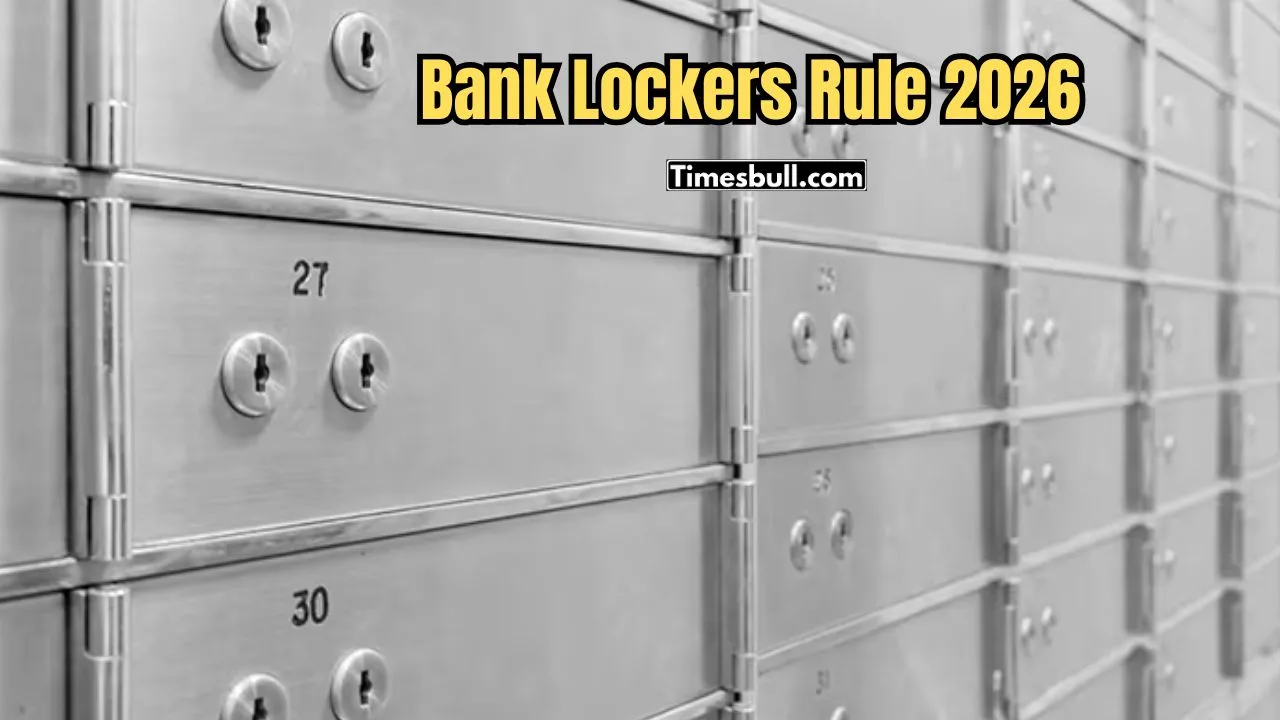
Do you keep your jewellery or other valuables in a bank locker? If so, then this news is particularly important for you. Recently, a woman’s locker was stolen from a Punjab National Bank (PNB) branch in West Delhi’s Kirti Nagar area, raising questions about its safety. So, let’s find out who is responsible if jewellery kept in a bank locker is lost? Does the bank guarantee the contents of the locker? What happens if the items kept in the bank are stolen? For this, it is necessary to know the RBI bank locker rules.
Gold and jewellery kept in lockers disappear
People usually buy bank lockers, believing that keeping them at home is risky and their valuables will be safe. However, the latest incident related to bank lockers is from a branch of Punjab National Bank located in Kirti Nagar, New Delhi. A mother-in-law and daughter-in-law went to open their joint locker and found that the gold and other jewellery were missing. According to the report, there was no evidence of breaking or forcing it open. Such incidents raise questions about whether bank lockers are really safe.
Banks cannot avoid their liability
RBI guidelines clarify that in case of loss to a customer, banks can no longer deny it by mentioning terms, so that the customer is fully compensated. As per RBI norms, banks have to ensure that the locker agreement they enter into does not include any unfair terms that could harm the customer.
Because in many such cases, banks often avoid liability by mentioning the terms of the agreement. However, to provide relief to customers, RBI has tightened the rules to prevent banks from avoiding their liability for loss to customers due to negligence. As per the guidelines, banks will be entitled to compensation for any loss of locker contents due to negligence.
Where is the bank liable, and where is it not?
As per RBI norms, the bank is liable for any loss of any contents stored in the locker. However, keep in mind that in cases like fire, theft, robbery, or house collapse, the bank will bear only the monetary loss. Because these are events that the bank can prevent. However, if the loss is due to natural disasters such as earthquakes or floods, the bank is not responsible for such losses, i.e. the customer will have to bear the entire loss.
What to keep and what not to keep in a bank locker?
When providing a bank locker, the bank agreement clearly states what types of items the customer can keep and what not to keep. As per the rules, customers can only keep jewelry, important documents and legally valid items. However, weapons, cash, foreign currency, drugs or any other dangerous items cannot be kept in the locker. Importantly, only the locker holder has the right to open and operate the locker, i.e. no one else in the family can open it.
However, if the locker holder nominates someone for his locker, then after his death, that nominated person has the right to open the locker and remove its items, but access is granted only after complete verification.
The bank does not know what the items are, so how much is the compensation?
Now let’s consider a special aspect of the bank locker. Although the bank provides a list or information about what can be kept inside the locker, the customer is not required to share with the bank the details of what and how much is kept in the locker. This means that the bank has no idea about how much gold or silver jewellery is kept, or any important documents. They only have information about the name of the locker, when and how many times it was used and other KYC details. This means that they do not have a list of the items kept in the locker by the customer.
Now that the bank does not know what is kept in it, how will it compensate the customer in case of theft, fire or any other mishap? RBI has made rules for this. The condition for compensation is that the banks will be liable only up to 100 times the annual rent of the locker. That is, if the annual rent of the locker is Rs 5,000, you will get only Rs 5 lakh compensation, even if you keep items worth Rs 50 lakh in the locker. In such a situation, while taking a bank locker, you should avoid keeping items worth more than 100 times the annual rent.
Related Stories
 Auto
Auto Auto
Auto Auto
Auto Business
 Auto
Auto India
India latest news
 Business
 Business
 Auto
Auto