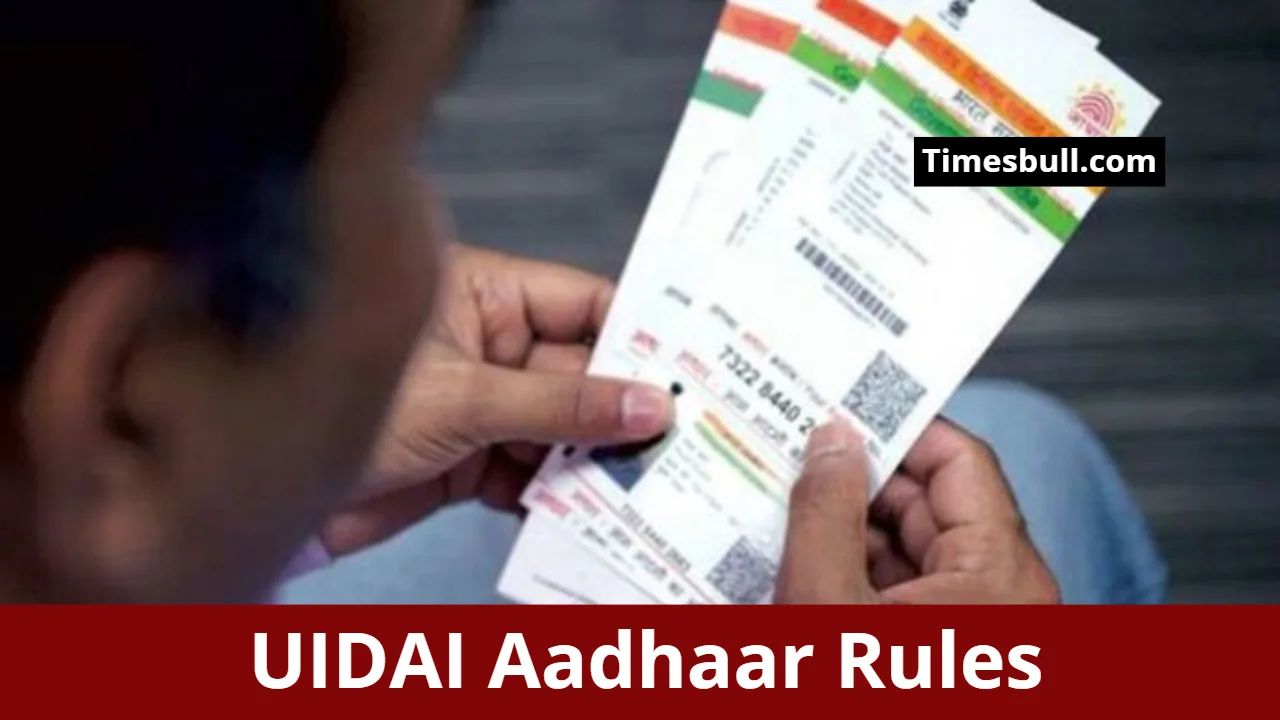
UIDAI Aadhaar Rules: The Aadhaar card has become the most important identification document in India today. It’s required everywhere, from bank accounts to government schemes, pensions, subsidies, and mobile connections. However, when a family member passes away, people often overlook the process of updating their documents. This negligence can lead to significant problems in the future.
Securing the deceased’s digital identity is not just a formality, but a responsibility of the family. If Aadhaar is not deactivated in time, it is vulnerable to misuse. Therefore, it is crucial to know what should be done with the Aadhaar card after death.
Deactivating Aadhaar after death is essential
The Unique Identification Authority of India (UIDAI) has clarified that deactivating a person’s Aadhaar number after death is a safe step. This can prevent misuse of the deceased’s identity.
In today’s digital age, Aadhaar is linked to many services. If Aadhaar remains active, anyone could try to obtain financial or government benefits using that identity. This could expose the family to legal and financial difficulties.
What problems could arise if deactivation is not done?
If the deceased’s Aadhaar number is not deactivated in time, their number will remain active in the system. This means that services associated with it may also remain active.
In such a situation, the risk of fraud increases during banking transactions, subsidy claims, or other online services. Misusing the identity could allow someone to gain financial benefits. If an investigation occurs in the future, the family may have to go through unnecessary legal proceedings.
Therefore, this is not just a technical process, but a crucial step for the family’s safety.
The entire process of deactivating Aadhaar
UIDAI has simplified this process so that family members can complete it easily. To do this, first log in to the myAadhaar portal. There, the option to report the death of a family member is available.
Next, the required information about the deceased must be entered. Documents such as a death certificate must be uploaded to verify the information.
Once the request is successfully submitted, the relevant authority verifies the documents. After verification, the Aadhaar number is deactivated. It will no longer be used for any transactions or verification purposes.
What should the family do?
The emotional state of dealing with the death of a loved one is difficult, but completing the necessary formalities on time is equally important. Updating bank accounts, filing insurance claims, and making changes to government records are just as important as deactivating Aadhaar.
In this era of digital security, identity protection cannot be taken lightly. Small actions taken in time can prevent major problems in the future.
Related Stories
 Auto
Auto Gadgets
 Auto
Auto Auto
Auto Business
 Education
 Auto
Auto Gadgets
 Gadgets
 Gadgets