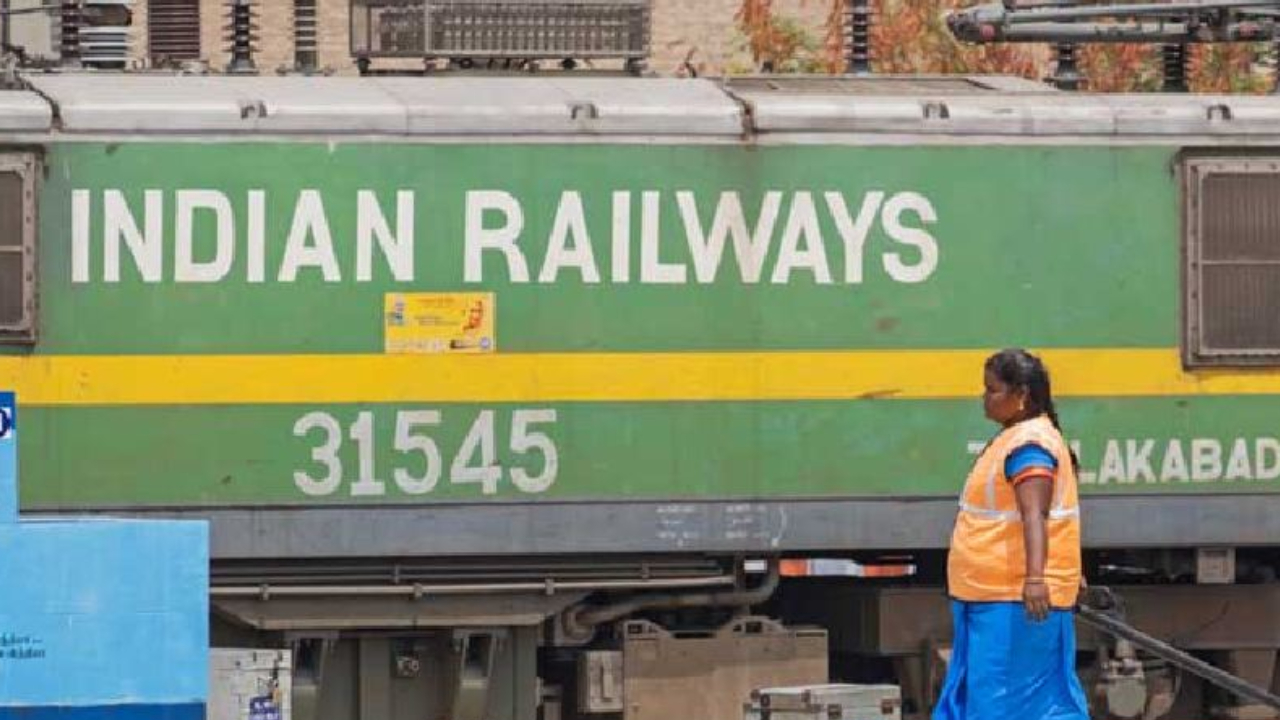
8th Pay Commission: Big news for railway workers. The Indian Railways is preparing to handle the upcoming salary burden imposed by the Eighth Pay Commission. According to a report, the Railways is taking measures to reduce expenditure in sectors such as maintenance, procurement, and energy, in order to maintain a strong financial position in the future. Railway officials say the aim is to ensure that the additional expenditure, when the new pay scale is implemented, is easily borne and that the Railways’ earnings are not significantly strained.
The Eighth Central Pay Commission was constituted in January 2024. It is headed by former Supreme Court judge Ranjana Prakash Desai. The commission will review the salaries, allowances, and pensions of central government employees and pensioners. The commission’s recommendations are expected to be implemented from January 1, 2026. This will affect approximately 5 million central government employees, including defense personnel, and approximately 6.9 million pensioners. The commission is scheduled to submit its report within 18 months, although an interim report may be submitted if necessary.
What do railway statistics say?
Regarding the Railways’ financial figures, the Railways’ operating ratio (OR) was 98.90% in the financial year 2024-25, generating a net income of approximately Rs 1,341 crore. For 2025-26, the Railways aims to reduce the OR to 98.42%, which could lead to an estimated net revenue of Rs 3,041 crore. Fortunately, the Railways’ annual payments to IRFC are expected to decrease from 2027-28, as capital expenditure in recent years has been funded through Government Budgetary Support (GBS).
What the officials said?
Railway officials have clarified that there are currently no plans to take new short-term loans. They say that by the time the new salary comes into effect in 2027-28, annual freight revenue will increase by approximately Rs 15,000 crore. This will help manage the increased salary expenses. It is worth noting that the 7th Pay Commission was formed in February 2014 and its recommendations were implemented from January 1, 2016. Usually, a Pay Commission is formed every 10 years. To provide relief to employees from inflation, a dearness allowance (DA) is also given, which is increased every six months based on the inflation rate.