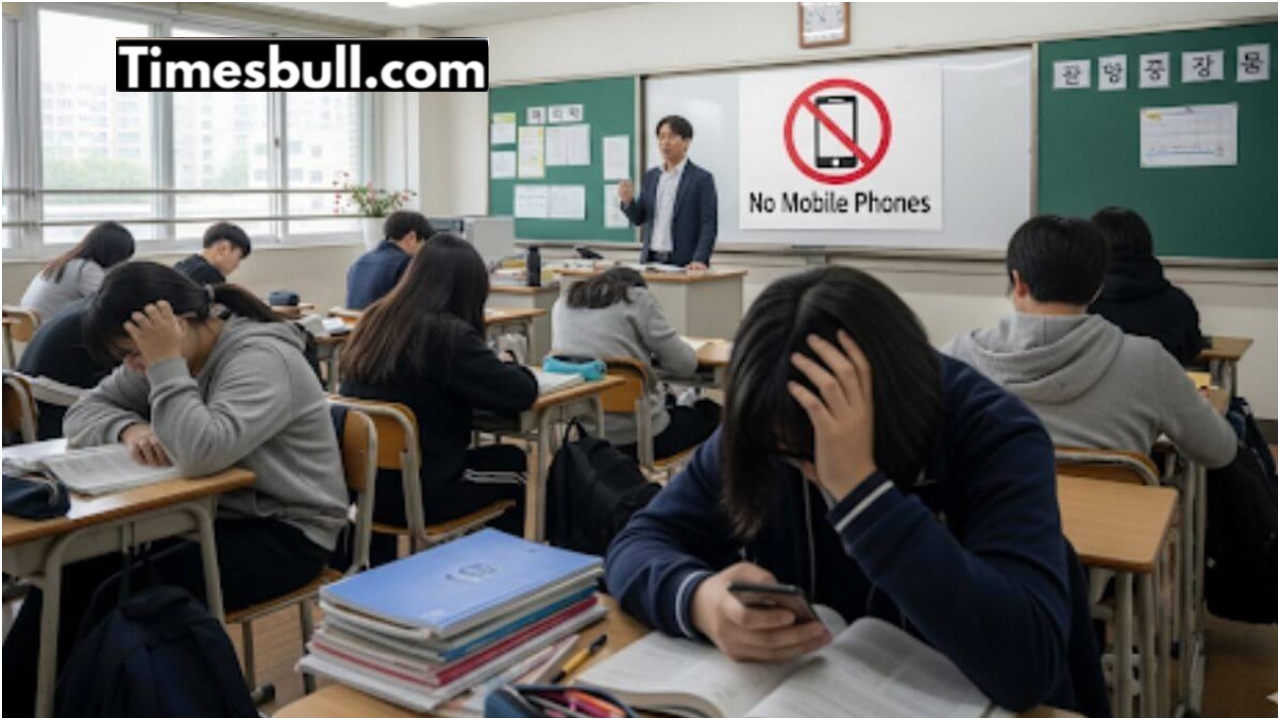
New Delhi: Smartphone addiction is increasing continuously from children to youth, which is also a matter of concern for everyone. You must have seen in many schools and colleges that students carry smartphones to pass their free time. As soon as they get a chance, they start using smartphones in the classroom itself. To deal with the increasing addiction to smartphones, a few days ago, Australia decided to ban social media for teenagers.
Now South Korea has made a big decision regarding mobiles. Taking a shocking decision, South Korea has banned carrying mobile phones and digital devices in the classroom. This decision will be applicable in all the schools of South Korea. This decision has been taken in view of the increasing addiction to social media among the youth.
When will the decision be implemented
The decision to ban mobile phones in schools in South Korea was passed on Wednesday. It will be implemented from March next year. Leader Cho Jung-hun, who proposed this rule, informed that children have been using Instagram and TikTok for a long time.

He said that children’s eyes look red every morning, the reason for which is being engaged on Instagram till 2 to 3 in the night. Before South Korea, this rule has been made and implemented in countries like Australia and the Netherlands. A lot of improvement has also been seen in the Netherlands due to this decision.
Problems spreading among students
According to a report, 98 per cent of the people in South Korea have a mobile phone. About 99 per cent of the population here also uses the Internet. Last year, the Education Department conducted a survey. In this, 37 per cent of the middle and high school students reported that social media is badly affecting their daily lives.
22 per cent of the students said that when they do not access social media, they start getting anxious. By the way, smartphones were already banned in many schools. Now this rule has been made for the whole country. Disabled children are not included in this. Along with this, there is no ban on smartphones for studies.