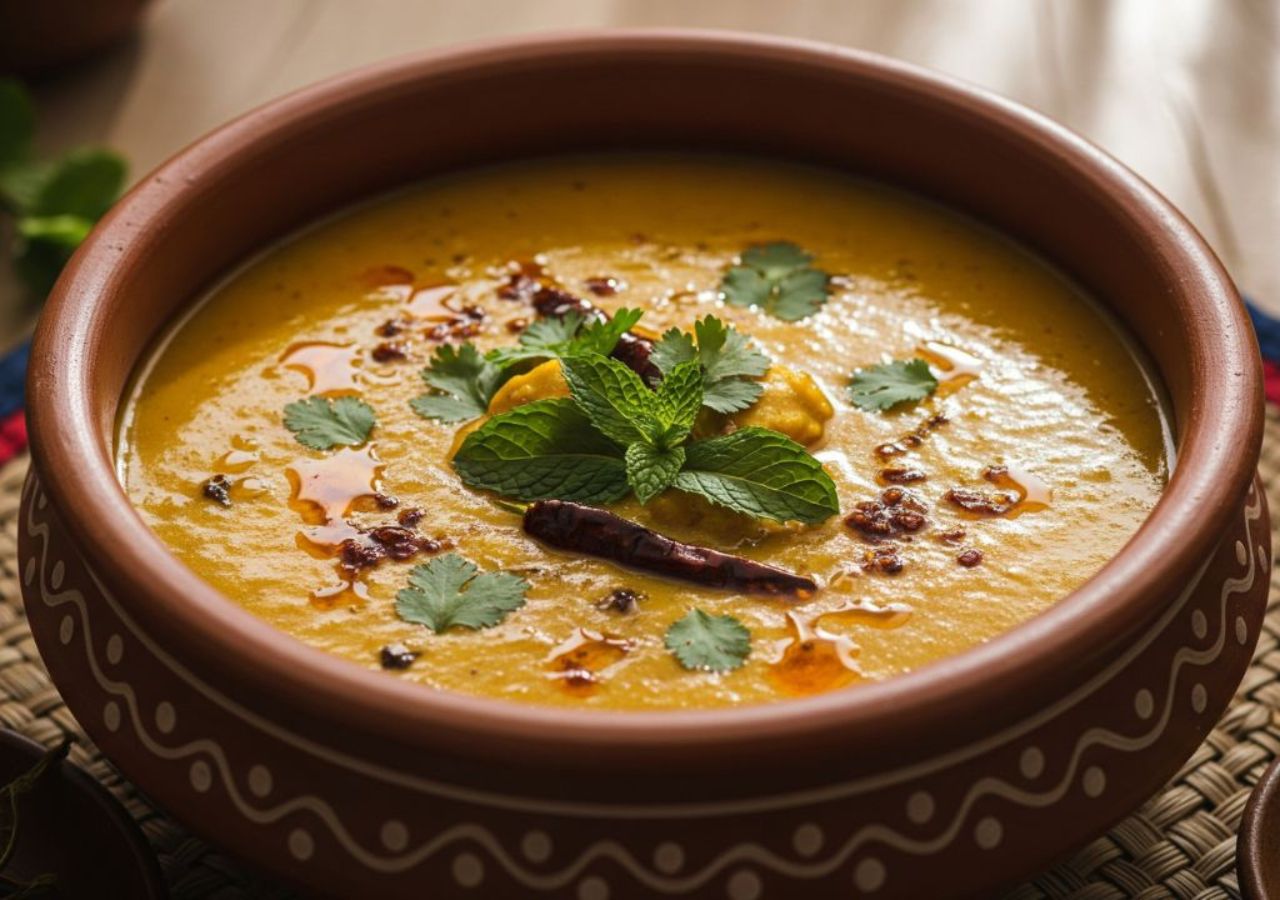
Kadhi : In the vast and vibrant tapestry of Indian cuisine, few dishes offer the same unique blend of tangy, spicy, and creamy comfort as Kadhi. This beloved yogurt-based curry, often featuring soft, melt-in-your-mouth pakoras (fritters), is a testament to the ingenuity of traditional cooking. More than just a meal, a steaming bowl of Kadhi is a warm embrace, a nostalgic journey, and a culinary masterpiece enjoyed across the subcontinent.
What Exactly is Kadhi? The Foundation of Flavor
At its heart, Kadhi is a savory gravy made by slow-cooking whipped yogurt and chickpea flour (besan) with a blend of aromatic spices. The magic of Kadhi lies in its delicate balance. The yogurt provides a distinctive tanginess, while the besan acts as a natural thickening agent, giving the curry its signature smooth and creamy consistency without any dairy cream.
The tempering, or tadka, is the soul of the dish. Whole spices like mustard seeds, cumin seeds, fenugreek seeds, dried red chilies, and curry leaves are sizzled in ghee or oil and poured over the top. This process releases their essential oils, infusing the Kadhi with a deep, aromatic flavor and a tantalizing fragrance.
A Journey Through India: The Many Faces of Kadhi
While the core concept remains the same, Kadhi transforms beautifully as you travel across India’s regions, each adding its own local twist:
-
Punjabi Kadhi: Perhaps the most famous version, it is known for its rich, yellow hue and is generously packed with besan pakoras (onion fritters). It is typically a bit thicker and often enjoyed with steamed rice.
-
Rajasthani Kadhi: This version is usually thinner and lighter on the stomach. It famously uses a greater amount of buttermilk instead of yogurt and is less likely to include pakoras, making it a staple for everyday meals.
-
Gujarati Kadhi: Distinguished by its subtle sweetness, which comes from the addition of jaggery or sugar. This sweet-and-tangy profile is a hallmark of Gujarati cuisine and is perfectly balanced with a hint of heat.
-
Sindhi Kadhi: A complex and flavorful variant that breaks the mold. It incorporates a variety of vegetables like okra, carrots, and potatoes and uses a roasted gram flour paste, along with tamarind for sourness, creating a darker, richer gravy.
Fact Check: Debunking a Common Kadhi Myth
-
Myth: Kadhi is difficult to make and often curdles.
-
Fact: While achieving the perfect smooth texture can seem daunting, the secret is simple: constant whisking. The key is to vigorously whisk the yogurt and besan mixture with water until it is completely lump-free. When adding this to the hot pot, you must do so gradually and stir continuously. This ensures the yogurt emulsifies with the heat rather than separating. Using full-fat yogurt also helps prevent curdling.
Why Kadhi Deserves a Spot in Your Kitchen
Beyond its incredible taste, Kadhi is celebrated for its digestive properties. The spices used, like ginger, fenugreek, and asafoetida (hing), are known in Ayurveda to aid digestion and soothe the stomach. It’s a probiotic-rich, protein-packed dish that is both nourishing and light.
Making Kadhi at home is a rewarding experience. It’s a dish that encourages patience and rewards it with layers of complex flavor. Whether you enjoy it with steamed rice, fluffy khichdi, or a simple roti, it is a humble yet profound dish that truly represents the heart of Indian comfort food.
Related Stories
 Photo Gallery
 Photo Gallery
 Photo Gallery
 Photo Gallery
 Photo Gallery
 Photo Gallery
 Photo Gallery
 Photo Gallery
 Photo Gallery
 Photo Gallery