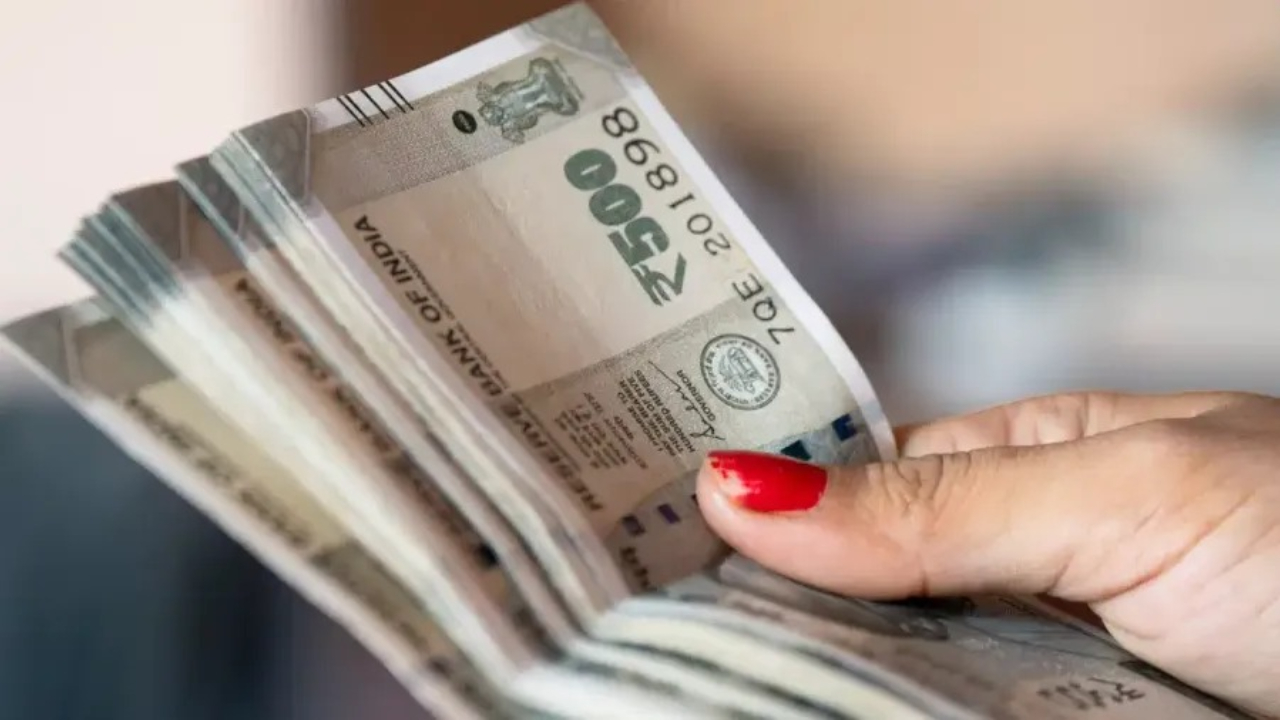
8th Pay Commission- If you are also waiting for formation of 8th Pay Commission, then this news is for you. The delay in the payment of the 8th Central Pay Commission (CPC) is likely to have a major impact on India’s economy. According to a recent report by private think tank QuantEco Research, this delay will not only upset the balance of economic growth and inflation, but may also force the Reserve Bank of India (RBI) to raise interest rates at the end of FY 2027 or 2028.
The report said that the payment of the 8th Pay Commission is getting delayed due to administrative reasons. It was expected that these payments would start earlier, but now it will take at least one more year for them to be implemented. Due to this delay, government employees and pensioners will be paid with lump sum arrears, which will affect both economic growth and inflation. Especially core inflation will be under more pressure, because this will increase demand and house rents will increase immediately.
The impact of the increase in salary and pension
According to the report, the fitment factor of the 8th Pay Commission may be close to 2, which is less than the 2.57 of the 7th Pay Commission. This may increase the minimum salary from Rs 18,000 to between Rs 35,000 and Rs 37,000. The total cost of revision of salaries, allowances and pensions may be Rs 2 to 2.5 lakh crore, which is more than double the cost of Rs 1 lakh crore of the 7th Pay Commission. This increase will put more money in the pockets of government employees and pensioners, which will increase their spending capacity.
The report states that the lump sum payment and arrears will increase consumer spending in urban areas. People will spend more on expensive things and services like cars, electronic goods and air travel. This is a true example of Engel’s law, in which as income increases, people spend more on non-essential things than their needs. Apart from this, a part of the increased income will also go as savings in the form of bank deposits or investments in the stock market.
QuantEco Research estimates that this payment will increase private final consumption expenditure (PFCE) by 65 to 80 basis points annually, while GDP growth will be affected by 40 to 50 basis points. However, this may increase the fiscal deficit by 0.6 percent of GDP. The government will have to raise financial resources to meet this expenditure.
The report also suggests that the government has a golden opportunity to implement GST reforms to meet the expenditure of the 8th Pay Commission, as the compensation cess is likely to be abolished by the fourth quarter of FY 2026.
Related Stories

 Business