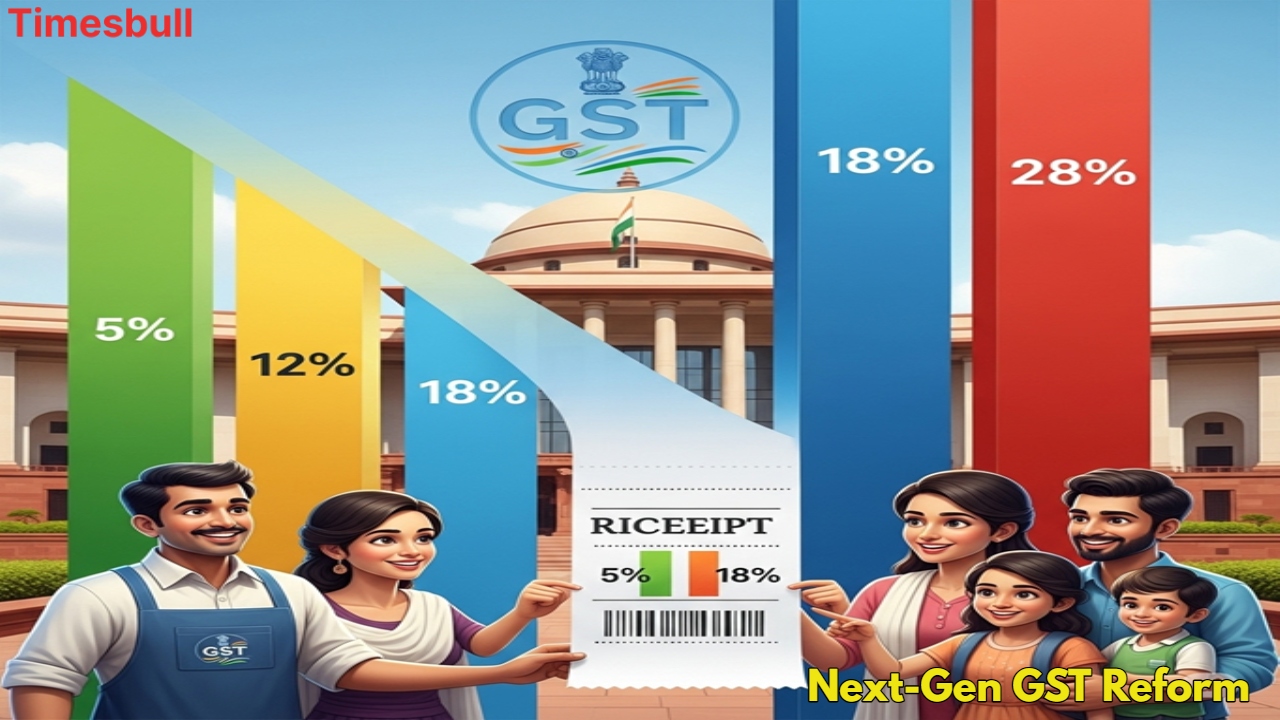
Good news for the common man and businessmen. The central government has proposed to bring a big change in the entire system of GST. Now, instead of four slabs of GST, there can be only two GST rates. Know what benefits you will get from this big GST reform and what the new GST slab is.
Big change in GST
The central government has proposed a revolutionary change in the existing structure of GST, which is likely to be implemented by Diwali. The Finance Ministry has announced that it has sent a new GST rate structure to the Group of Finance Ministers (GoM) of the states, which will have only two slabs – 5% and 18%. Under this proposal, there will be only two main rates of GST: ‘Standard’ and ‘Merit’, while special rates will be applicable only on selected items. At present, a four-tier GST structure of 5%, 12%, 18% and 28% is in force.
Why are these ‘Next Generation’ GST reforms being brought
Prime Minister Narendra Modi had announced in his address on the 79th Independence Day that the next generation GST reforms would be implemented by Diwali. He claimed that this would reduce the tax burden, and small industries would especially benefit. The Finance Ministry has given three main bases in its proposal:
- Making the tax system strong and sustainable.
- Making tax rates simple and rational.
- Reducing taxes on things essential for the common man.
How will the new GST slab be decided
The next meeting of the GST Council is expected to be held in September under the chairmanship of Finance Minister Nirmala Sitharaman. In this meeting, the recommendations of the group of ministers will be discussed. The council has the right to take all policy decisions related to GST. The seven-member group of ministers constituted under the chairmanship of Bihar Deputy Chief Minister Samrat Chaudhary will collect the views of various states and give its recommendations to the council.
What will be the impact on the common man and business
The proposed two-slab system aims to simplify the tax system, which will be a big relief for the business. The Finance Ministry believes that this will bring stability in revenue and reduce the tax burden for consumers. In the current four-tier GST structure, everyday essentials are either tax-free or placed in the lowest slab. The highest rate of 28% is levied on harmful and luxury goods. The scope of special rates will be limited in the new proposal as well, which will make the system even simpler.
Challenges and expectations of the new system
This new GST slab structure is expected to simplify the tax system, but there are some challenges in it, such as maintaining a balance of revenue between the states and coordinating with businessmen in this era of change. Nevertheless, if this proposal gets widespread support, it can prove to be the biggest and most important GST reform in the Indian tax system so far. This is an attempt to build a strong consensus between the Center and the states, in line with the spirit of cooperative federalism.