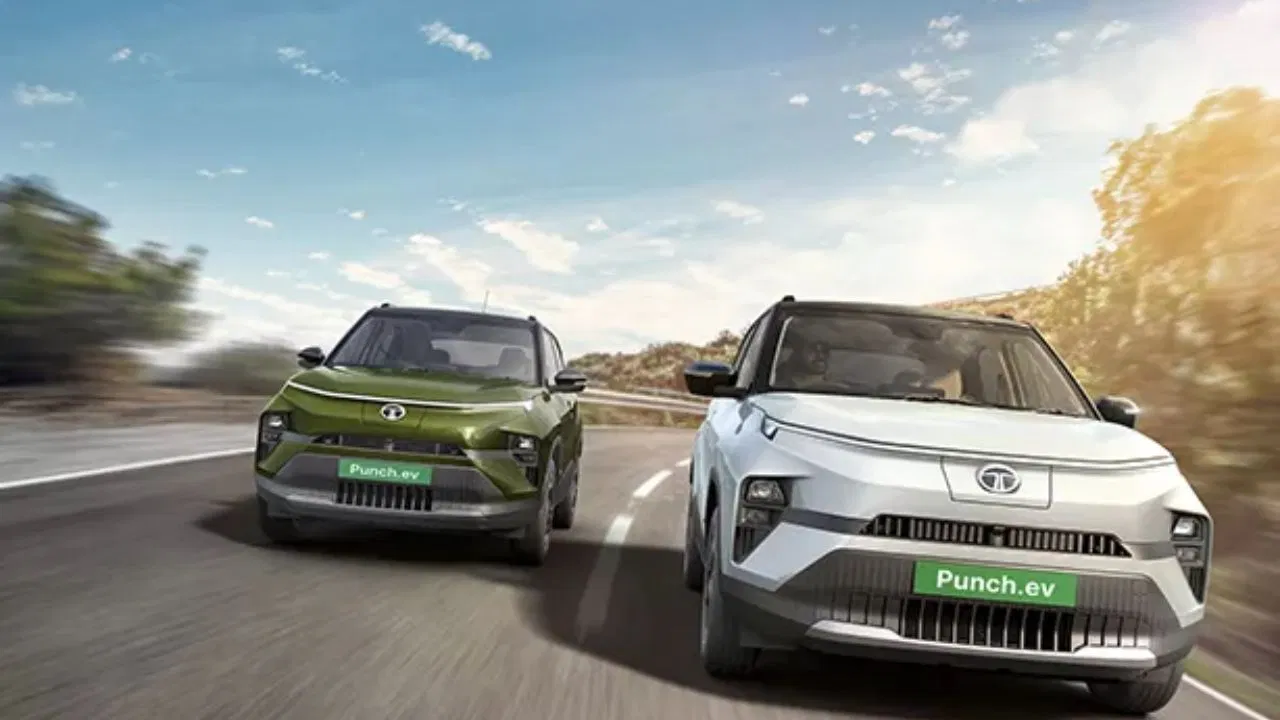
India’s electric car market is undergoing a seismic change as new figures from June 2025 show how Tata Motors’ once-uncontested dominance is under threat. For years, Tata was the EV king, but Mahindra and MG Motor combined have rewritten the script. Their hard push has pushed Tata in a rush to retain its market share, indicating that India’s race for EVs has officially started.
June 2025 EV Sales Surprise
June 2025 logged 13,033 electric vehicle sales in India, a whopping 78% increase over June 2024. Though they account for only 4% of total passenger vehicle sales, the spike indicates how rapidly India is adopting EVs. But the biggest surprise is Mahindra and MG Motor taking a combined 53% market share — a place previously comfortably occupied by Tata Motors.
Tata Motors Loses Top Spot
Tata Motors sold 4,664 electric cars in June 2025, achieving only a 2% rise from last year. Its market share decreased sharply from 62.7% to 35.8%. Despite the decline of the old guard like the Hector EV or the Nexon EV, despite models like Punch EV, Curvv EV, and the brand-new Harrier EV, Tata’s stranglehold is visibly weakening. It remains the EV sales leader in absolute volumes, but its hold is weakening under mounting pressure from competitors.
MG Motor Gains Strong Momentum
MG Motor retailed 3,945 electric vehicles, recording a strong 167% year-on-year growth. With 30.3% market share, MG is quickly closing in on Tata’s figures. Its SUV Windsor is particularly sweeping urban customers off their feet, while ZS EV and Comet are consistently strengthening its footprint. MG’s consistent product launches are largely responsible for this steep rise.
Mahindra’s Rapid Rise in EVs
Mahindra has caught many by surprise with 2,979 units in June. Its 512% year-on-year growth is nothing short of spectacular, taking its market share to 22.9%. Models such as BE 6 and XEV 9e are spearheading Mahindra’s EV growth with bold designs and intelligent features. Mahindra’s sudden rise indicates that it is no longer just an SUV champion but a serious EV player.
Other Brands in the EV Scene
Other brands are catching up too. Hyundai moved 509 units, a 708% increase, while BYD touched 461 units with 90% increase. Citroen’s eC3 was not doing well with a mere 80 sales and negative growth, though. In the luxury space, BMW reported 212 units with a 272% increase, but Mercedes crossed 91 units, though Audi and Volvo were trailing behind.
EV Battle Getting Intense
MG Motor and Mahindra have demonstrated that they are no longer also-rans but direct competitors to Tata in the EV war. With such mind-boggling growth, Tata Motors must reassess its product plans and introduce aggressive updates to remain competitive. India’s EV market is definitely heading for an all-out war where no one player can assume their crown for granted.
Related Stories
 Auto
Auto Auto
Auto Auto
Auto Auto
Auto Auto
Auto Auto
Auto Auto
Auto Auto
Auto Auto
Auto Auto
Auto