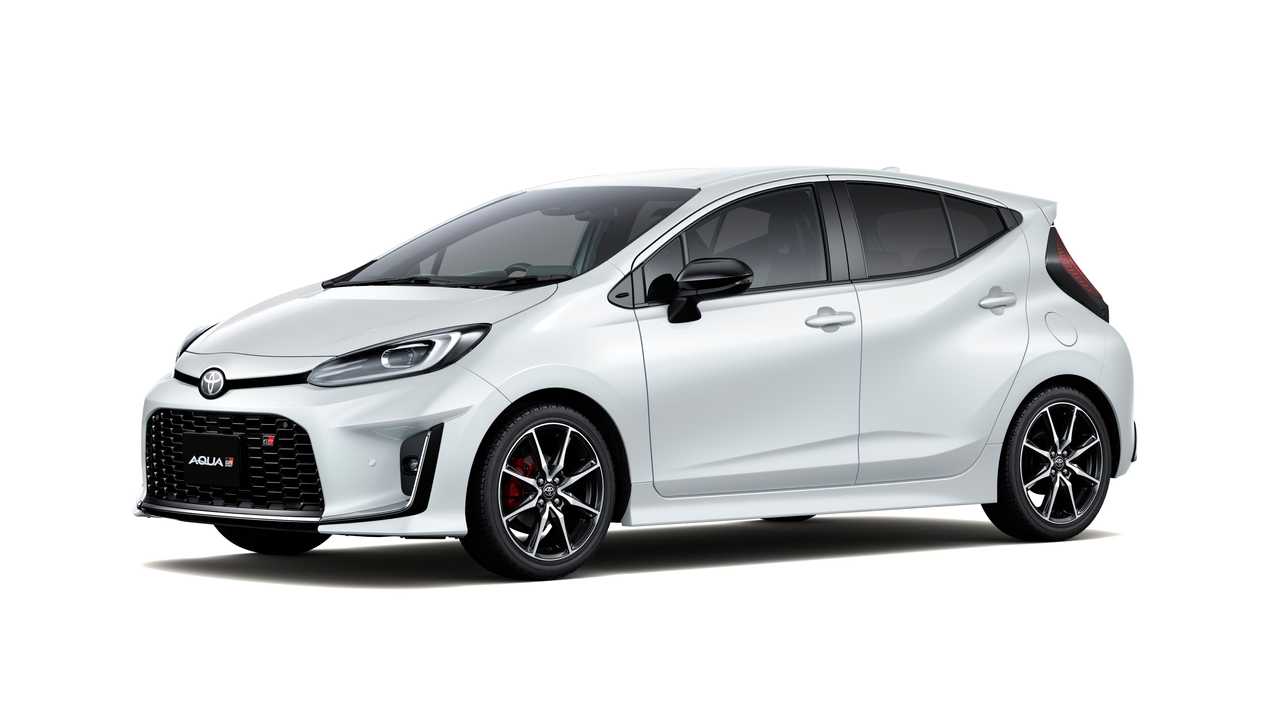
Toyota Aqua is a small hybrid hatchback which was initially released in Japan in 2021. Beyond Japan, it was previously branded as Prius C. It is based on Toyota’s TNGA-B platform, which also underpins other cars such as the Yaris and Sienta. Its size and frugal engineering make it a desirable option for city driving, while the hybrid system guarantees great fuel economy.
Powerful Hybrid Engine
The largest selling point of the Toyota Aqua Hybrid is its 1.5-litre petrol-hybrid engine. The engine combines two electric motors and pumps out a combined 116 bhp. The petrol engine alone pumps out 90 bhp and 120 Nm torque, with the front electric motor producing 80 bhp and 141 Nm torque. A rear motor in the E-Four model produces 64 bhp and 52 Nm torque. This powertrain boasts an eCVT automatic transmission for silky-smooth operation. Toyota says this vehicle has the potential to achieve a remarkable 35.8 km per litre fuel rating, and that’s a potential price-pleaser for cost-conscious car buyers.
New Bipolar Nickel Hydrogen Battery
Toyota Aqua is also the world’s first vehicle to incorporate a bipolar nickel-hydrogen battery. The battery is able to hold more energy and can provide sufficient power to operate not just the car but other electronic devices as well, through a 100V/1,500W socket. This technology reveals the efforts of Toyota to set new limits in hybrid technology and make vehicles more versatile.
Why Testing in India?
Experts feel that Toyota is not keen on introducing the Aqua itself in India. The company might be evaluating its sophisticated hybrid system in Indian roads. Earlier also, Toyota introduced models like RAV4, Yaris, and C-HR to India simply to test their technology and performance. If Aqua’s system provides improved mileage compared to available alternatives such as Hyryder or Grand Vitara, it can be part of future Toyota or Maruti models for the Indian market.
Related Stories

 Auto
Auto