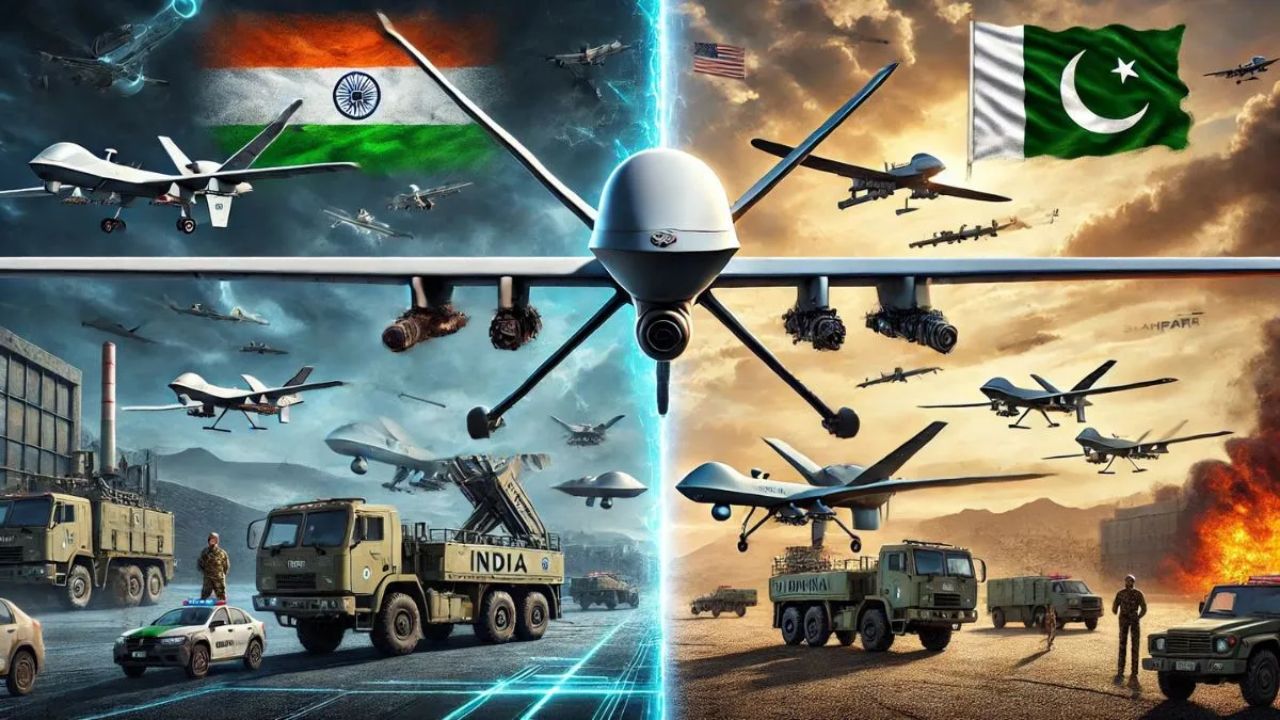
Indian drones evade Pakistani radar: Since tensions between Pakistan and India were running high during that period, drones were the most significant actors in recent cross-border military actions. While Indian drones carried out successful attacks far within Pakistani land, such as severely disabling air defense systems within Lahore, Pakistani drones were intercepted mid-air by Indian forces. The question lingers, why did Indian drones not manage to get detected by Pakistan beforehand?
Read More: Xiaomi 14 Ultra vs Oppo Find X8 Pro: Chinese Flagship Fight
Read More: Google Pixel 9 Pro vs Asus ROG Phone 9: AI vs Gaming
India’s Drones Deep into Pakistani Territory
Both countries employed drone technology in the recent war, but with very different results. Indian drones penetrated as far as Lahore and inflicted massive damage on Pakistan’s air defense system. Pakistan’s drone campaign was brief their drones were easily detected and destroyed by Indian defense systems even before they could do any damage.
Why Did Pakistani Radars Miss Indian Drones
The primary cause of Pakistan’s failure is that India possesses superior drone technology. India deployed kamikaze drones, UAVs that intentionally crash into the target and explode upon impact. The drones never have to fly back to the base, lessening their weight and making it more difficult to detect them. Their one-way flight also allows them to move faster and efficiently hit targets.
Stealth and Low-Observable UAV Technology
One of the greatest advantageous aspects of India’s military was using low-observable (LO) drones, or stealth drones. They are constructed with stealth technology and are intended to reduce their radar signature and remain stealthy. They prefer to cruise low, under the line of sight of radar. They are diminutive in size also, which again implies a smaller radar cross-section (RCS), lowering it even more for standard radar to detect them.
The Power of Swarm Drone Attack
India employed another sophisticated approach with the use of swarm drone technology, where dozens or even hundreds of very tiny drones are released together. If all those tiny drones are launched together, the majority of the normal radar systems cannot pick them out from a group of birds. It causes confusion and slows down detection, and facilitates drones to fly undetected to the target.
Radar Technology Is Not Perfect
Radar technology works on the principle of bouncing radio waves off targets and detecting the bounce. Stealth drones, on the other hand, use unusual materials and geometries to absorb or deflect such waves. When drones are tiny in size, flying low, and coming in gigantic numbers, it becomes extremely difficult for radar to detect and follow them economically. That’s the very way Indian drones dodged Pakistani defenses.
Conclusion: India’s Technological Advantage Did the Trick
India’s tactical deployment of kamikaze and LO drones in combination with swarm warfare and stealth technology revealed the vulnerabilities of Pakistan’s radar defense. With the war face changing as technology is advancing at a breakneck pace, nations that do not modernize their defense systems will be left behind. The recent drone standoff is a classic case of India’s technological superiority and its capability to strike with precision while remaining invisible.
Related Stories
 Gadgets
 Gadgets
 Gadgets
 Gadgets
 Gadgets
 Gadgets
 Gadgets
 Gadgets
 Gadgets
 Gadgets