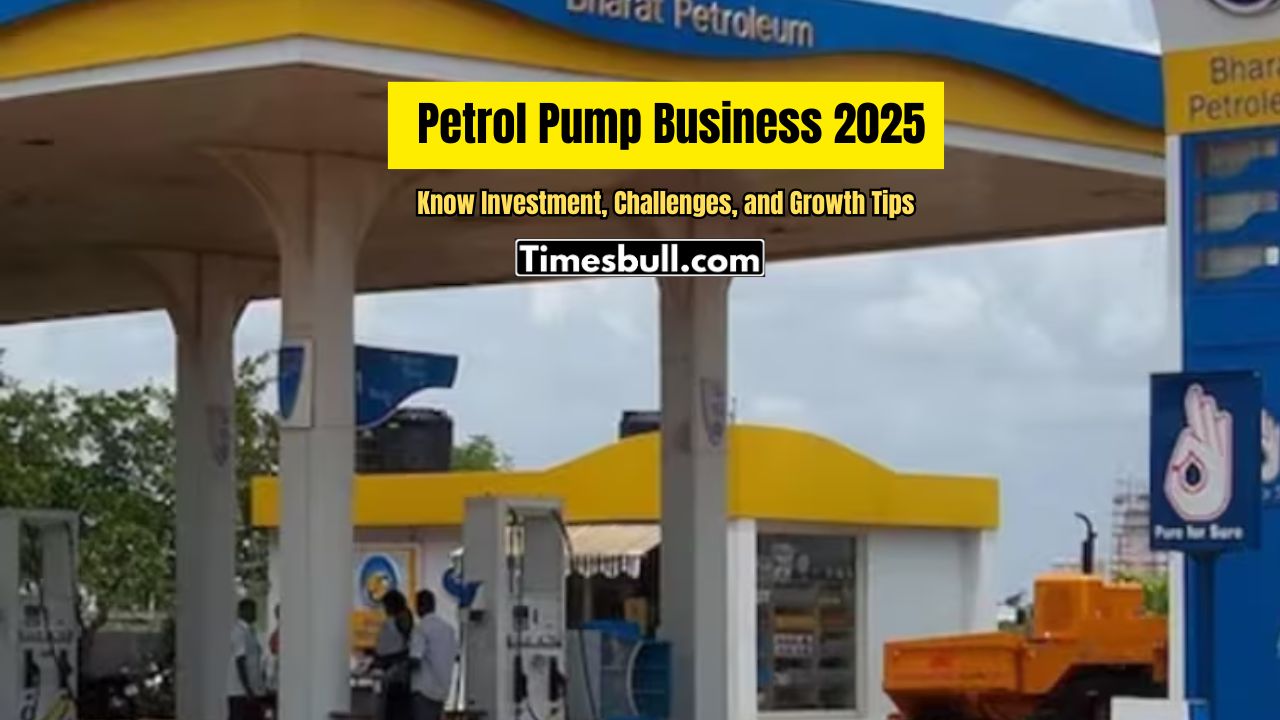
Running a petrol pump in India has long been seen as a stable and respectable business model. However, with the rise of the EV revolution, digital payments, and changing policies, many are questioning whether this business is still as profitable as it was a decade ago. Many people believe that when petrol prices are above Rs 100, the pump owner is making huge profits. However, the truth is that pump owners receive a fixed margin on every litre, which usually falls within the following range:
- Margin on petrol: ₹3 to ₹4.50 per litre
- Margin on diesel: ₹2.50 to ₹3.50 per litre
How Much Can a Petrol Pump Earn?
If a petrol pump sells 8,000 litres of fuel daily, its daily income could range from ₹25,000 to ₹35,000. However, this is before accounting for expenses.
How Much Investment is Needed to Open a Petrol Pump?
Opening a petrol pump is not a cheap deal, even though government oil companies like IOCL, BPCL, and HPCL periodically invite applications for new dealerships. Here’s a breakdown of the costs:
- Land: It’s better if the land is your own; rented land comes with some conditions.
- Infrastructure: Expenses range from ₹70 lakh to ₹1.2 crore (for tanks, machines, buildings, CCTV, offices, etc.).
- Working Capital: ₹10-20 lakh (for staff, maintenance, loading, insurance, pump stock, etc.).
If you take a loan, the repayment term is usually 5–7 years, but you must also consider interest and other costs.
Ways to Increase Margins
Modern pump operators are not just selling fuel; they’ve found smart ways to boost income:
- CNG station facilities (where possible).
- EV charging points.
- Providing ATMS, Fastag, mineral water, engine oil, and washing services.
- Setting up rest zones, dhabas, or shops for truckers.
Big Challenges in the Petrol Pump Business
- Fear of EV Transition: The rise of electric vehicles may reduce petrol demand in the next 10-15 years.
- High Compliance: Strict rules on fire safety, weight and measurement, and PDS audits.
- Staff and Security: Issues like fraud and managing night shifts.
- Cash Flow Pressure: Delays in supply from government oil companies may cause a liquidity crunch.
- Is This Business Right for Newcomers?
If you have a good location (near a highway or a big town) and plan to run the business as an owner-operator, it can still be a solid mid-term investment. However, don’t treat it as passive income.
New Trends in Petrol Pumps
Today’s petrol pumps are becoming more tech-savvy with digital payments, automated nozzle tracking, stock management software, and EV charging points. The government is also preparing the sector for a gradual transition towards green energy.