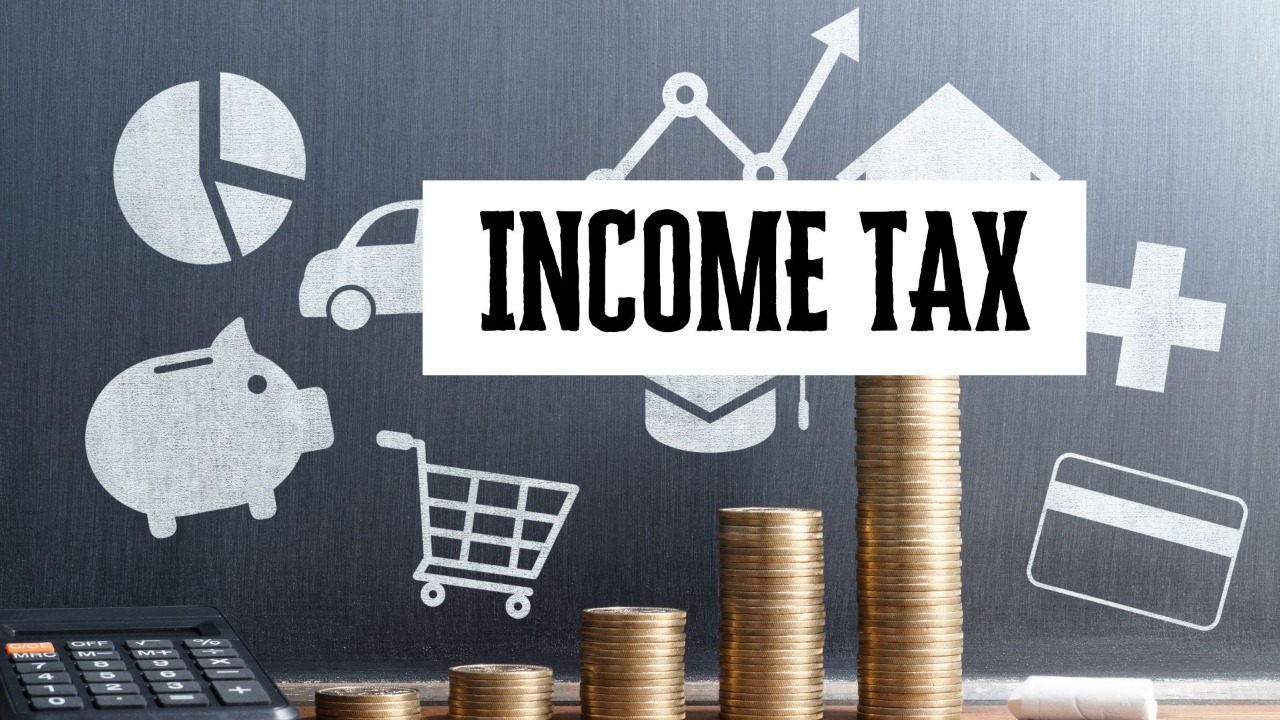
Income tax: The new rules related to the new income tax regime have come into effect from April 1. Finance Minister Nirmala Sitharaman had announced on February 1, 2025 to make income up to Rs 12 lakh annually tax-free under the new regime. He had said that salaried people will not have to pay tax on income up to Rs 12.75 lakh per annum. This announcement made crores of taxpayers happy. Actually, the interest of individual taxpayers has increased in the new regime. The reason for this is that its structure is quite simple. The Finance Minister had also changed its tax slab in the budget presented on February 1, which has made it very beneficial for taxpayers.
Only two deductions are available in the new regime
If you use the new Income Tax regime, you can easily calculate tax on your income.For this, you have to keep some things in mind. First, it is important to know that only two types of deductions are available in the new regime. First, the standard deduction of Rs 75,000. Second, deduction on employer’s contribution to NPS under section 80CCD(2) of the Income Tax Act. Under this section, the employer can contribute up to 14% of the basic salary (plus DA) to the employee’s NPS account.
Taxable income after deductions from gross income
Suppose you are employed and your annual income is Rs 20 lakh. We also assume that your employer does not make any contribution to your NPS account. In such a situation, you will get the benefit of standard deduction of only Rs 75,000. In the old regime of income tax, only Rs 50,000 standard deduction is still available. To make the new regime attractive, the government has increased the standard deduction to Rs 75,000.
There will be no tax on the first Rs 4 lakh
Now it is important to know about the new tax slab of the new regime. In this, tax on income of Rs 4 lakh is zero. 5 percent tax is levied on income of Rs 4 lakh to Rs 8 lakh. Tax on income of Rs 8 to 12 lakh is 10 per cent, tax on Rs 12 to 16 lakh is 15 per cent, tax on income of Rs 16 to 20 lakh is 20 per cent, tax on income of Rs 20 to 24 lakh is 25 per cent and tax on income of more than Rs 24 lakh is 30 per cent.
Calculate tax on subsequent income like this
First of all, you have to deduct Rs 75,000 from your salary of Rs 20 lakh. After this, your taxable income will be Rs 19.25 lakh. Now, the first Rs 4 lakh of your income will be taxed at zero.20,000 rupees will be taxed at the rate of 5% on income of Rs 4 to 8 lakh. 10% tax will be levied on your income of Rs 8 to 12 lakh. Accordingly, your tax on this income of Rs 4 lakh at the rate of 10 percent will be Rs 40,000. Then, the tax rate on income of Rs 12 to 16 lakh is 15 percent. According to this, your tax on this Rs 4 lakh will be Rs 60,000. The tax on income of Rs 16 to 20 lakh is 20 percent. According to this, your remaining income of Rs 3.25 lakh will have a tax of Rs 65,000 at the rate of 20 percent.
Cess will also have to be added to the total tax
This way your total tax will be Rs 1.85 lakh (20,000+40,000+60,000+65,000). You will also have to pay 4% cess on this tax. This will be Rs 7,400. After adding this, your total tax will be Rs 1,92,400. This is just an example. Based on this example, you can easily calculate the tax on your income. You just have to keep in mind the tax slab. If a taxpayer’s salary is Rs 23 lakh, then he will have to calculate tax on 20 to 24 lakh at the rate of 25 percent.
Related Stories
 Business
 Business
 Business
 Business
 Business
 Business
 Business
 Business
 Business
 Business