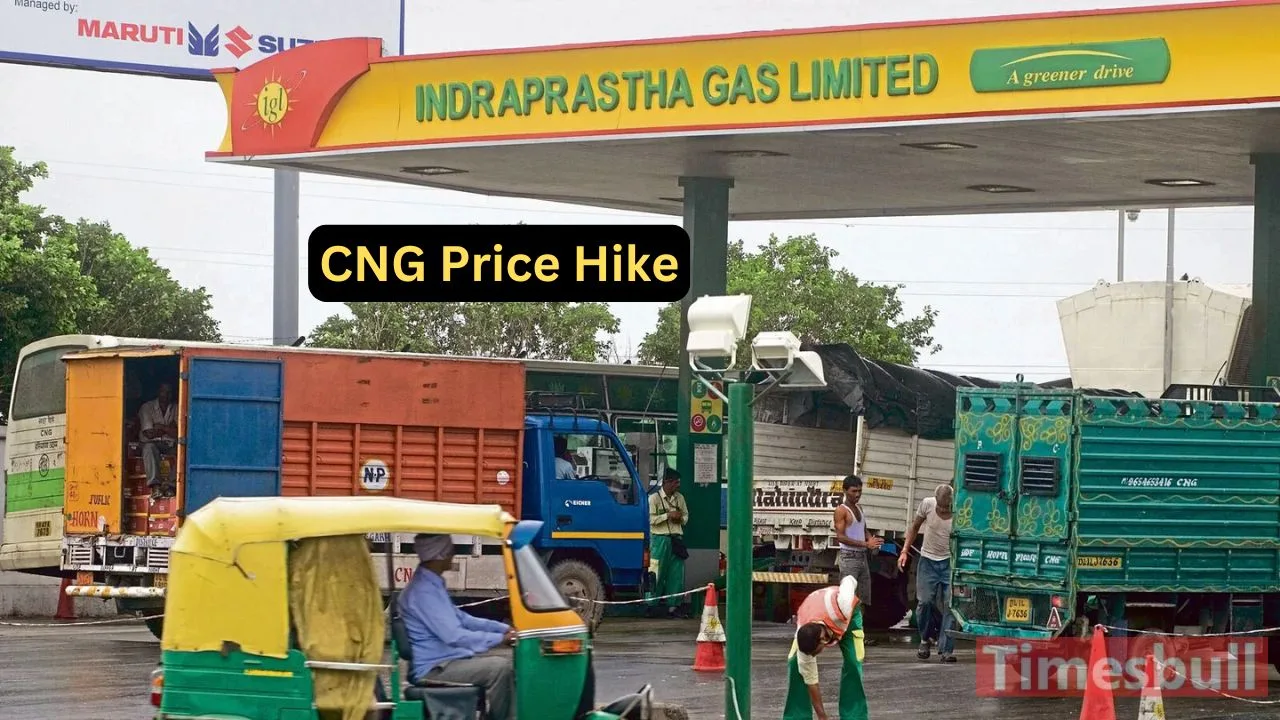
CNG Gas Price: The Modi government at the center has announced an increase in the price of domestic natural gas, after which its price has increased by 25 cents to $ 6.75 per million British thermal unit (mmBtu), whereas in March it was $ 6.5 per mmBtu. After this decision of increase, cooking will become expensive in homes using piped natural gas (PNG). The running cost of CNG vehicles may increase. At the same time, its effect will also be seen on city gas distributors and fertilizer makers.
CNG Gas Price
This is the first revision in the price of gas produced from old fields in two years. In 2023, India has set a cap of $6.50 per mmBtu for two years, with a provision for an annual increase of 25 cents from the third year
Increase in 6 months
Accordng to the website of the Petroleum Planning and Analysis Cell of the Oil Ministry, India has fixed the maximum price of gas produced from difficult fields for April-September at $10.04 per mmBtu, while in the previous 6 months it was $10.16 per mmBtu.
What will be the impact?
Prices will be applicable on the basis of gross heat value. Higher prices of gas produced from oil fields will increase the income of Oil and Natural Gas Corporation and Oil India, while prices will increase for industrial buyers and companies in the fertilizer and city gas distribution sector.
The recent decision by the Modi government to increase the price of domestic natural gas will likely have wide-ranging effects on various sectors. The price of natural gas has risen by 25 cents to $6.75 per million British thermal units (mmBtu), compared to $6.5 per mmBtu in March.
This increase in natural gas prices will result in higher costs for households using piped natural gas (PNG) for cooking. As a result, people who rely on PNG may face higher monthly expenses for cooking gas. Additionally, the running cost for vehicles powered by compressed natural gas (CNG) could also rise, making transportation more expensive for CNG vehicle owners.
The price hike will likely have a broader economic impact as well. City gas distributors could see higher operational costs, which may be passed on to consumers. Similarly, fertilizer manufacturers, who rely on natural gas as a key feedstock, may experience increased production costs. This could potentially lead to higher prices for fertilizers, affecting agricultural costs.
Related Stories


 Business