Category: Business

Stay ahead of the curve in India’s dynamic financial landscape with Timesbull. We deliver real-time updates and in-depth analysis on Indian business, finance, and the stock markets. Get the latest BSE/NSE news, ensuring you’re always informed about market movements.

Track the pulse of the Indian economy with our comprehensive coverage of Sensex and Nifty updates. Timesbull provides crucial personal finance insights to help you manage your money effectively and make informed investment decisions.

Beyond breaking news, we offer expert market analysis and insightful perspectives on economic trends shaping India and the global economy. Whether you’re a seasoned investor, business professional, or just starting to manage your finances, Timesbull is your trusted source.

Rely on Timesbull for accurate, timely, and insightful business and finance news, empowering you to navigate the complexities of the Indian market with confidence. Visit Timesbull today to unlock your financial potential.

  • Top Govt Investment Schemes 2026- Better Returns and Safety Than Bank FD, See Here

    Top Govt Investment Schemes 2026- Better Returns and Safety Than Bank FD, See Here

    Top Government Investment Schemes 2026: If you’re in search of secure investments that yield high returns, government savings schemes are emerging as your most dependable choice in 2026. While the average interest rates for bank FDs range from 6.5% to 7%, numerous government schemes provide significantly higher returns.

    This year, the Public Provident Fund (PPF) is offering an interest rate of 7.1%. This long-term investment is not only secure but also provides income tax benefits. The Sukanya Samriddhi Yojana (SSY) is an exceptionally appealing option for securing daughters’ futures, with interest rates reaching up to 8%.

    For senior citizens, the Senior Citizen Savings Scheme (SCSS) ensures a steady income with an interest rate of 8.2%. The Senior Citizen Savings Scheme is a government-owned savings scheme for senior citizens aged 60 years and above. The investment period is 5 years, which can be extended by 3 years. It offers an interest rate of 8.2%. You can invest a minimum of Rs 1,000 and a maximum of Rs 30 lakh in this scheme.

    Additionally, Kisan Vikas Patra (KVP) guarantees the doubling of investments in about 115 months. The National Savings Certificate (NSC) also provides a tax exemption along with an interest rate of 7.7%. The National Savings Certificate is a savings scheme run by the Government of India and available through post offices. This scheme is for those who wish to invest for a period of 5 years. This scheme offers an interest rate of 7.7%, compounded annually.

    The Post Office Monthly Income Scheme (MIS) offers a fixed monthly income option for middle-class families at an interest rate of 7.4%. This scheme is perfect for those who require a consistent cash flow. The primary benefit of these schemes is that they are fully backed by the government. This guarantees that investors face no risk or concern about losing their funds. Moreover, the tax advantages enhance their appeal.

    Trade experts indicate that government savings schemes are gaining popularity over bank fixed deposits in 2026. Young investors are particularly leaning towards PPF and NSC, while senior citizens are favoring options like SCSS and PMVVY. If you’re seeking a secure investment with superior interest rates, government savings schemes are proving to be more advantageous than bank FDs this year.
  • PF Rules Change After New Labour Code? Govt Issues Clarification

    PF Rules Change After New Labour Code? Govt Issues Clarification

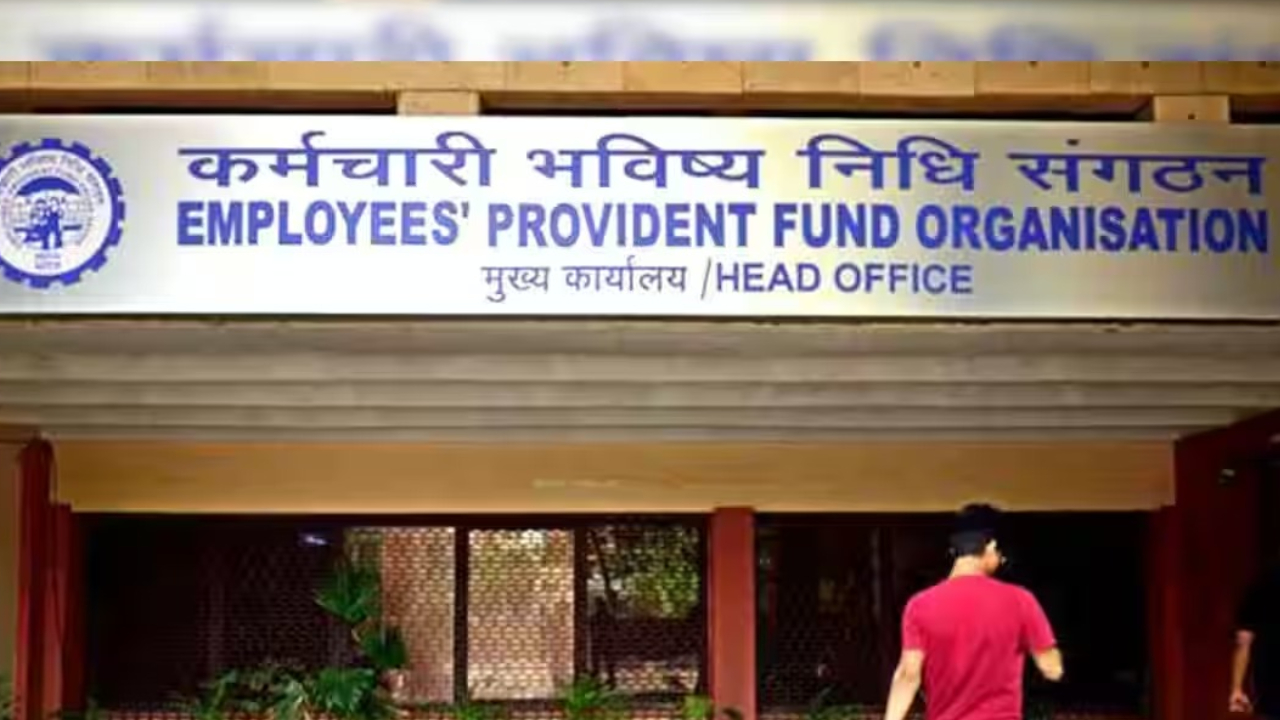
    EPFO Rules: The biggest question among employees regarding the new labor codes is whether they will change the rules of the Employee Provident Fund (EPF). The government has given a clear answer on this issue in Parliament. In response to a question asked in the Rajya Sabha, the Ministry of Labor and Employment stated that no significant changes are currently planned to the EPFO ​​scheme. According to the government, even after the new labor codes are implemented, the existing EPF system will continue as before for some time.

    What did the government say in Parliament?

    Rajya Sabha MP Sandosh Kumar P. had asked the government whether changes would be made to the EPFO ​​scheme under the new labor code and whether an increase in the interest rate on EPF deposits was being considered. In a written response to this question, Minister of State for Labor and Employment Shobha Karandlaje clarified the government’s position. She stated that no significant changes to the EPFO ​​scheme are currently planned.

    How is the interest on EPF decided?

    On this, the Ministry of Labour stated that the interest rate on EPF deposits is determined as per the rules of the Employees’ Provident Funds Scheme, 1952. According to Paragraph 60(1) of the EPF Scheme, the EPFO ​​deposits interest in the accounts of its members at the rate decided by the Central Government in consultation with the Central Board of Trustees (CBT).

    The Labour Ministry also clarified that while fixing the interest rate, it is necessary to ensure that the EPF interest account remains financially strong. As per Para 60(4) of the EPF Scheme, the government also has to ensure that there is no excess withdrawal from the interest account while paying interest. This means that while deciding the interest rate, the income generated from EPFO’s investments and its financial position are taken into consideration.

  • LPG-PNG Rule: These Households Will Not Get LPG Refill Anymore

    LPG-PNG Rule: These Households Will Not Get LPG Refill Anymore

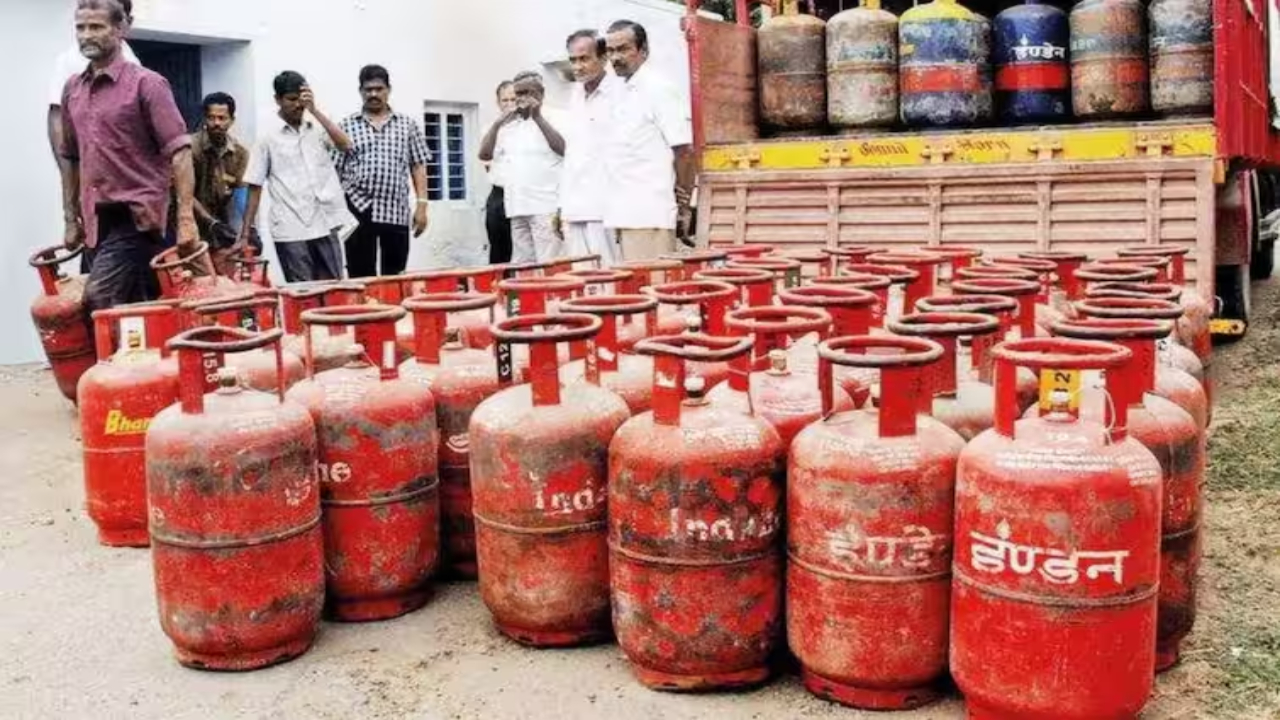
    LPG Refill: Big move by central government. The Ministry of Petroleum and Natural Gas has prohibited individuals with PNG (Piped Natural Gas) connections from acquiring or refilling LPG cylinders. This decision comes at a time when supply issues have emerged due to the ongoing conflict in West Asia. The turmoil caused by Iran’s conflict with the US and Israel has led to global chaos. In response, the LPG Control Order was amended on Saturday to prevent the misuse of subsidized LPG by families that already have PNG connections and to enhance distribution.

    What does the new supply order entail?

    According to the new supply order, the government has banned oil companies from providing new LPG connections or refills to those who already have access to the PNG network. Additionally, individuals with PNG connections will also be prohibited from maintaining their LPG connections, which means that households with both PNG and LPG connections will need to give up their existing LPG connections.

    What is the current status?

    Two Indian-flagged LPG vessels have successfully navigated through the Strait of Hormuz and are en route to India, carrying around 92,700 tonnes of LPG. Rajesh Kumar Sinha, Special Secretary in the Ministry of Ports, Shipping and Waterways, mentioned that 24 Indian-flagged ships are currently positioned in the Persian Gulf, west of the Strait of Hormuz. Among them, Shivalik and Nanda Devi, which are transporting LPG, have safely traversed the route and are anticipated to arrive at Indian ports shortly. They are expected to dock at Mundra and Kandla ports on March 16 and 17.

    Government oil companies (IOCL, BPCL, HPCL) and their distributors will not be able to provide LPG to such households. The government’s clear objective is to better manage the limited supply of LPG and ensure that cylinders reach needy families who do not have access to alternatives like PNG. PNG is primarily available in urban areas, where cheaper and more environmentally friendly gas is available through pipelines. However, LPG remains the primary fuel in rural and smaller towns. This change will reduce the demand for LPG in PNG-available areas, thereby increasing the availability of subsidized cylinders for rural consumers.

    This move is also seen as a step towards the “One Home, One Fuel” policy. The government has previously attempted to ban dual connections, but now this rule has been clearly and strictly enforced. Consumers have been advised that if they have both connections, they should immediately surrender the connection by visiting the nearest LPG distributor or the company’s portal. There will be no penalty for surrendering, but breaking the rules may result in legal action.


  • PNG Gas Connection: How to get? Check Eligibility, Required Documents and Many More

    PNG Gas Connection: How to get? Check Eligibility, Required Documents and Many More

    PNG Connection: Right now everyone is talking about LPG crisis. How to overcome from this tough situation? Everyone asking. But there is no relief. People are suffering from rising the price of everything. From LPG to CNG, PNG, Flight Fare, Inflation and many more, peoples are concern about everything. In this current situation people have worried about how to manage budget. The ongoing tensions among various countries globally have affected the supply of oil and gas. This effect was also experienced in India.

    Many cities faced disruptions in LPG cylinder supplies, leading to long queues outside gas agencies. However, households with PNG connections did not encounter significant issues. This is the reason the government is now encouraging PNG connections in urban areas. If you reside in Delhi-NCR and have access to a pipeline in your vicinity, you can easily apply for a PNG connection. So, let’s explore how to get a PNG connection and what documents you will need.

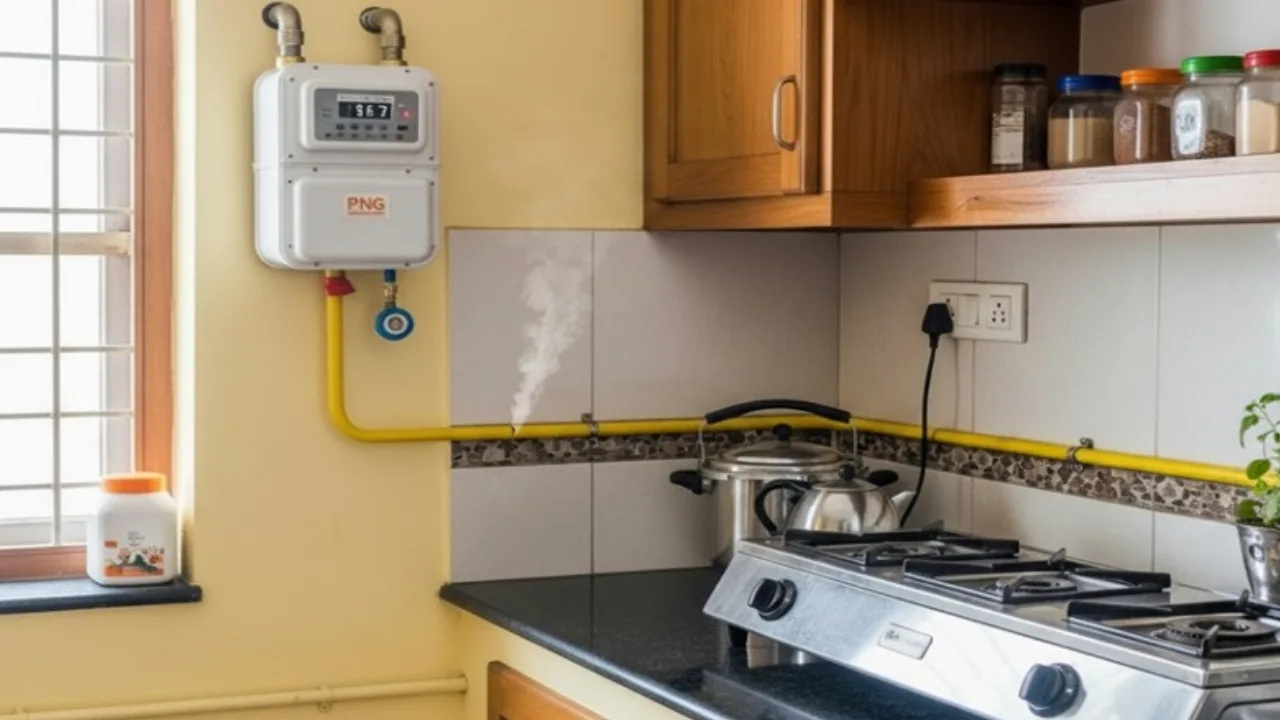
    PNG, or Piped Natural Gas, is supplied directly to homes through pipelines instead of being delivered in cylinders. Its main advantage is that you don’t have to worry about running out of gas, as it is always available. It is also regarded as safe and convenient. Consequently, many residents in various cities are gradually transitioning to PNG.

    Indraprastha Gas Limited (IGL) offers PNG connections in the Delhi-NCR area. If a PNG pipeline is already installed in your locality, you can easily apply for a connection. You can submit your application online by visiting IGL’s official website. After you submit your application, the company will verify your details and proceed with the next steps.

    Applying for a PNG connection is quite straightforward. You just need to follow a few simple steps. First, visit the IGL website and complete the new connection form. This form will ask for your name, address, mobile number, and email address. Next, upload the necessary documents. The company will review your application, and if everything checks out, they will send you a payment link. Once you make the payment, the installation process for your home connection will commence.

    To secure a PNG connection, you will need to provide certain documents. Typically, these include proof of identity and address. You will also need an Aadhaar card or voter ID for identification, proof of residence, a mobile number, an email ID, and a copy of an electricity bill, property tax receipt, or water bill.

    These documents help the company ensure that the connection is being provided to the correct address and the correct person. There’s an initial fee for installing a new PNG connection at home. This typically costs around Rs 7,000 for IGL. This includes an installation charge of approximately Rs 6,000 and a security deposit of Rs 1,000. Fortunately, this amount is refundable. If a person can’t afford to pay the full amount at once, they can pay it in installments of approximately Rs 500 each month along with their gas bill.

    Once you apply for a PNG connection, the company first verifies your application. If all the information and documents are found to be correct, your application is accepted. After this, the PNG connection is activated, usually within 15 to 20 days, by installing the pipeline and meter in your home.

  • LPG Cylinder Crisis: Centre’s Big Appeal Aimed at 60 Lakh Families, Whats next?  

    LPG Cylinder Crisis: Centre’s Big Appeal Aimed at 60 Lakh Families, Whats next?  

    LPG Crisis: The crisis of LPG gas cylinders is increasing due to the war between Iran and America-Israel. Despite all the claims of the government, there are reports of LPG cylinder shortages from different parts of the country. Meanwhile, the government has now requested about 60 lakh families living near the piped cooking gas (PNG) network to adopt this facility. 

    Sujata Sharma, Joint Secretary in the Ministry of Petroleum and Natural Gas, said that families living near PNG infrastructure can benefit from adopting piped cooking gas. This will provide them with a steady supply. Let us tell you that there are 33.37 crore LPG users in the country and 1.5 crore people get piped fuel (PNG) in their kitchens.

    Warning to depositors

    The government has warned hoarders and black marketers that strict action will be taken against them if they try to take advantage of the crisis caused by the war in West Asia. Citing state governments’ actions against hoarders, Sharma said top officials from the petroleum and civil supplies ministries have held meetings with state civil supplies departments, asking them to crack down on hoarders and black marketers.

    Domestic LPG production has seen an increase

    Sujata Sharma, the Joint Secretary in the Ministry of Petroleum and Natural Gas, announced that domestic LPG production has risen by 30 percent since March 5th. She reassured that there is no need for panic buying, and no LPG dealer has depleted their stock. Sharma noted that LPG bookings have surged to 7.57 million cylinders, compared to an average of 5.57 million prior to the Iran conflict, which clearly reflects panic buying behavior.

    She mentioned that the average daily refill bookings in the country stand at 5.57 million cylinders, but there has been a notable spike in the last two weeks. In this context, 7.57 million bookings were recorded on March 12th, which is indicative of panic buying. She also pointed out that we were supplying 5 million cylinders daily and are currently maintaining that supply level.

    The government is focusing on essential sectors such as domestic kitchens, hospitals, and educational institutions, ensuring they receive a steady LPG supply. Conversely, supplies to commercial entities like hotels and restaurants have been reduced. The Center has designated a fifth of commercial gas supplies to state governments and union territories, empowering them to prioritize these supplies, she stated. The conflict in West Asia has impacted the supply of crude oil and petroleum products, as the Strait of Hormuz, a crucial energy transit route between Iran and Oman, has been closed.


  • Silver Rates Today – Check the Price of 1 Kilogram Silver in These Cities After a ₹10,000 Decline

    Silver Rates Today – Check the Price of 1 Kilogram Silver in These Cities After a ₹10,000 Decline

    New Delhi: Customers have certainly found some relief as prices for both gold and silver have witnessed a decline. Early Sunday morning, a drop of ₹10,000 per kilogram was recorded in the price of 999-purity silver. This news brought smiles to the faces of customers.

    Currently, purchasing one kilogram of silver requires spending approximately ₹280,000. In contrast, just a day earlier, the price of silver stood at ₹290,000 per kilogram. If you are planning to purchase 999-purity silver, do not delay. We are providing you with city-wise details regarding silver rates, which should help clear up any confusion you may have. You can check the detailed silver prices below.

    Check Silver Prices in These Cities, Including Delhi

    In the national capital, New Delhi, the price of 999-purity silver dropped by ₹10,000 early Sunday morning, bringing the rate down to ₹280,000 per kilogram. The previous day, the price of silver in the city was ₹290,000 per kilogram.

    In Mumbai, the capital of Maharashtra, the rate for 999-purity silver has fallen by ₹10,000, settling at ₹280,000 per kilogram. A day earlier, the price of silver was ₹290,000 per kilogram. Similarly, in Kolkata, the capital of West Bengal, the price of 999-purity silver has been recorded at ₹280,000 per kilogram following a decline of ₹10,000.

    The previous day, the silver rate in Kolkata stood at ₹290,000 per kilogram. In Chennai, the capital of Tamil Nadu, the price of 999-purity silver has dropped by ₹10,000 and is currently trading at ₹280,000 per kilogram, whereas the previous day’s rate was ₹290,000 per kilogram. In Noida (Delhi-NCR), the price of 999-purity silver declined by ₹10,000, settling at ₹280,000 per kilogram. In contrast, just a day earlier, the price of silver in the region stood at ₹290,000 per kilogram.

    Note

    Before investing in silver within the Indian bullion market, it is essential to consult with market experts. Additionally, before purchasing gold jewellery, please contact your nearest jewellery store. Timesbull.com has published this article based on data from BankBazaar.com.

  • Gold Rates Today – Check the Latest Price of 10 Grams Gold in These Cities After the Decline

    Gold Rates Today – Check the Latest Price of 10 Grams Gold in These Cities After the Decline

    New Delhi: The fluctuating prices of gold and silver have caused considerable disappointment among customers, creating a state of indecision regarding purchases. If you are planning to buy gold, you might consider waiting a little while.

    Early Sunday morning, the price of 22-carat gold dropped by 1,450 rupees per 10 grams, while the rate for 24-carat gold fell by 1,520 rupees per 10 grams. Amidst the ongoing wedding season, bullion markets are witnessing significant customer activity. If you are contemplating a gold purchase, you may wish to check city-specific rates beforehand to avoid any confusion.

    Quickly Check the Rates for 10 Grams of Gold in These Major Cities

    In New Delhi, 22-carat gold dropped by 1,450 rupees, trading at a total of 147,350 rupees per 10 grams. Meanwhile, the price of 24-carat gold fell by 1,520 rupees, being recorded at a total of 154,720 rupees per *tola*. Just a day earlier—on Saturday—the price of 22-carat gold was recorded at 148,800 rupees per 10 grams, while 24-carat gold stood at 156,240 rupees per tola.

    In Mumbai, 22-carat gold has fallen by 1,450 rupees and is currently selling at 146,850 rupees per 10 grams. The price of 24-carat gold has dropped by 1,530 rupees, trending at 154,190 rupees per *tola*. A day prior, 22-carat gold in Mumbai was trending at 148,300 rupees, and 24-carat gold at 155,720 rupees per 10 grams.

    In Kolkata, the capital of West Bengal, 22-carat gold has fallen by 1,450 rupees and is currently selling at 147,850 rupees per 10 grams. The price of 24-carat gold has dropped by ₹1,530, bringing the selling price to ₹155,240 per tola. On the previous day, 22-carat gold was priced at ₹149,300, while the price of 24-carat gold was recorded at ₹156,770 per 10 grams.

    In Hyderabad, the capital of Telangana, the rate for 22-carat gold declined by ₹1,400, settling at ₹147,600 per 10 grams. Meanwhile, the price of 24-carat gold fell by ₹1,470 and appears to be trending at ₹154,980 per tola. A day earlier, 22-carat gold was priced at ₹149,000, while the price of 24-carat gold stood at ₹156,450 per 10 grams.

    In Bengaluru, the capital of Karnataka, the price of 22-carat gold dropped by ₹1,450 to reach ₹147,450 per 10 grams. Similarly, the price of 24-carat gold fell by ₹1,530 and is currently recorded at ₹154,820 per 10 grams.

    Note

    For your information, please ensure you consult with market experts before investing in gold. Additionally, before purchasing gold jewellery, please contact your nearest jewellery store. Timesbull.com has published this article based on data from Bankbazaar.com.

  • 8th Pay Commission- No more 18 to 24 month equation! Understand the new math salary  

    8th Pay Commission- No more 18 to 24 month equation! Understand the new math salary  

    8th Pay Commission: The Eighth Pay Commission has become a hot topic among central employees lately. The central government set up the Eighth Pay Commission last year. After its establishment, the recommendations are expected to be put into action within 18 to 20 months. 

    This Pay Commission will not only address the salary structure for central employees but will also make decisions regarding allowances, pensions, and other benefits. A major concern for central employees is whether their salaries will experience a larger increase compared to the 7th Pay Commission. Let’s take a closer look.

    In fact, employee organizations are advocating for the salary structure to be determined using the fitment factor, similar to the 7th Pay Commission. They are pushing for an increase to ensure a substantial rise in employees’ salaries. However, experts suggest that the ultimate salary increase will heavily rely on the dearness allowance (DA) level at the time the new pay structure is rolled out.

    This is why both the fitment factor and DA levels will be critical in shaping the salaries of employees under the 8th Pay Commission. Generally, when a new Pay Commission is introduced, the accumulated DA is added to the basic salary, and the new salary is calculated based on that.

    What was the formula used in the 7th Pay Commission?

    The 7th Pay Commission introduced a fitment formula of 2.57. At that time, the minimum basic salary was Rs 7,000, which, when multiplied by 2.57, was raised to Rs 18,000. This applied to Level 1 employees. Likewise, the amounts varied for employees at different levels. Now, the pressing question regarding the 8th Pay Commission is what this formula will be and how much of a salary increase employees can expect.

    However, many experts believe that it may be difficult to get a very high fitment factor in the 8th Pay Commission. On the other hand, employee organizations have demanded a much higher fitment factor this time. The Federation of National Postal Organizations (FNPO) has proposed a fitment factor ranging from 3.0 to 3.25 for different levels. According to this, a fitment factor of 3.0 has been suggested for employees in levels 1 to 5, 3.05 to 3.10 for levels 6 to 12, while a fitment factor of up to 3.25 has been suggested for top level officers.

    The government announced the formation of the 8th Pay Commission in January 2025. The committee was formed in November. Typically, the commission takes 18 to 24 months to prepare its recommendations. Meanwhile, the new Pay Commission launched a website in February. The Pay Commission has sought suggestions from employees and other stakeholders, sparking discussions about salary increases.


  • Dry Fruit prices rising by up to 40%, Know the rates

    Dry Fruit prices rising by up to 40%, Know the rates

    Dried Fruit prices: If you’re planning to purchase dried fruits, be prepared to spend a bit more. Traders in Hyderabad report that the ongoing conflict involving Iran, Israel, and the United States, along with tensions at the Afghanistan and Pakistan borders, has completely disrupted the supply chain.

    Supply chain issues complicate calculations

    Countries such as Afghanistan, Iran, Turkey, and Saudi Arabia are significant producers and exporters of dried fruits. According to traders in Hyderabad, the war has nearly stopped the flow of goods from these areas. Due to border tensions, trucks and containers filled with products are stuck, resulting in a critical supply shortage in the markets.

    Rising freight costs

    Air freight: Shipping goods by air is significantly more costly than by road.
    Effect: The increased costs have been directly transferred to consumers, causing prices for items like cashew nuts, almonds, pistachios, and figs to rise dramatically overnight.

    What are the traders saying?

    Aman Khan, the owner of ‘Afghan Baghban’ in Hyderabad, stated, “The ongoing war for the last 20 days has greatly impacted our business. Supplies from Turkey, Dubai, and Saudi Arabia have nearly ceased. The products arriving from Afghanistan now need to be flown in. We are struggling to persuade customers to accept such high prices.”

    He explained that Afghanistan remains a major supplier to his store, but ongoing tensions in the region have disrupted trade. He added, “Most of our exports come from Afghanistan. The tensions over the past 8-10 days have disrupted our operations significantly.” He added that product supplies from Turkey, Dubai, and Saudi Arabia have virtually stopped, leading to a sharp increase in prices.

    Khan said, “The impact is visible because goods from Turkey, Dubai, and Saudi Arabia have stopped arriving, leading to a 30-40 percent increase in prices. Products from Afghanistan are now arriving by air.” However, he added that air cargo significantly increases operational costs. He added, “The problem with air cargo is that it’s very expensive. It’s very difficult for us to convince customers and remain stable in the market.”

  • EPFO Withdrawal Rules: 5 Benefits of ATM PF Withdrawals

    EPFO Withdrawal Rules: 5 Benefits of ATM PF Withdrawals

    EPFO Withdrawals: Will employees be able to withdraw their PF directly from ATMs in the future? This question is becoming a significant topic of conversation among millions of employees these days. Social media and various reports are suggesting that employees will have the ability to withdraw EPF funds via ATMs starting in April. However, it’s crucial to understand the facts.

    As of now, the Employees Provident Fund Organisation (EPFO) has not put into effect any rule that allows employees to withdraw PF directly from ATMs (PF withdrawal through ATM). At present, the PF withdrawal process remains unchanged, either through a digital portal or a designated form. This indicates that employees still need to submit an online claim or adhere to the established procedure to access their funds.

    What is the proper method to withdraw PF currently?

    If an employee wishes to withdraw money from their PF account, they can do so online. The most popular methods for this are the EPFO Unified Member Portal and the UMANG app. Using these platforms, employees can submit PF withdrawal claims from the comfort of their homes. If the employee’s KYC is complete and their UAN is linked to their Aadhaar and bank account, the claim process is relatively swift.

    How much time does it take for PF claim to come?

    With the advent of digital systems, PF withdrawals have become much faster than before. Generally, funds can be deposited into your bank account within 3 to 7 days after submitting an online application. However, in some cases, it may take a little longer.

    If PF withdrawal starts from ATM, what are the 5 major benefits?

    If the facility of withdrawing PF from ATM is implemented in future, then employees can get many big benefits.

    1. Instant money in case of emergency

    Suppose a sudden medical emergency arises at night, and there’s no money in the bank account, but lakhs of rupees are deposited in the PF account. In such a situation, it could take several days for the money to arrive. With an ATM facility, the employee can withdraw money immediately and pay the hospital bill.

    2. Eliminate middlemen

    Even today, many laborers and less educated employees seek the help of agents or brokers to withdraw their PF and even pay for it. With the introduction of ATMs, the money will be directly in the hands of the employee, eliminating the role of middlemen.

    3. Relief from forms and paperwork

    Currently, PF withdrawals require filling out multiple forms, and sometimes involve issues like signatures or company approval. ATM withdrawals can significantly eliminate this hassle.

    4. Advantages for small towns and villages

    Many people living in remote areas don’t have access to computers or smartphones. ATMs or micro-ATMs make it easier for them to withdraw their money.

    5. Transparency will increase

    Withdrawals from ATMs will result in an immediate receipt and a text message on their mobile phone. This will ensure employees receive instant access to their account information.


  • LPG Gas Tips- How to Check If Your Cylinder Has Less Gas? Know the process

    LPG Gas Tips- How to Check If Your Cylinder Has Less Gas? Know the process

    LPG Gas Checking: Big news for LPG consumers. When the gas cylinder in the kitchen runs out, everything halts. When a new cylinder is delivered, many people connect it without verifying it first. However, there are often complaints about the cylinder being underfilled. Some individuals suspect that the gas supply might have been affected during transport. This highlights the importance of being careful when buying a cylinder. Currently, the availability of LPG cylinders in the country is quite limited.

    As a result, there is concern that the agency or delivery person could provide you with a cylinder that has less gas. If you think the cylinder ran out too soon or was low on gas, you can check it yourself using some straightforward methods. Having the right knowledge can not only help you avoid losses but also enable you to file a complaint if needed.

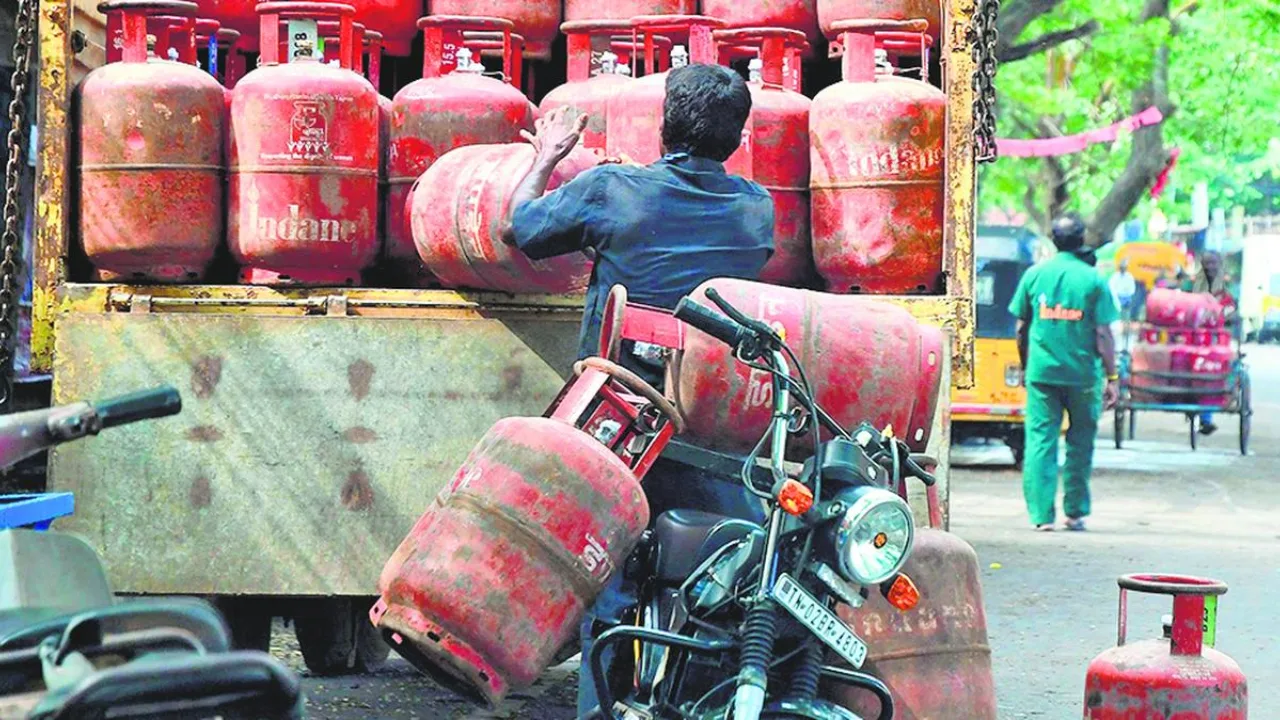
    Make sure to weigh the cylinder when you buy it. Whenever you get a new LPG cylinder at home, the first thing you should do is check its weight. Each domestic cylinder holds 14.2 kg of gas. The empty weight of the cylinder, known as the tare weight, is also indicated. This information is typically printed on the top or side of the cylinder in paint.

    When you add the weight of the gas to the cylinder, the total weight should be around 29 to 30 kg. The delivery person usually carries a weighing machine. You can request him to weigh the cylinder. If the weight is below the required limit, you have the right to return the cylinder right away.

    If you are unable to check the cylinder’s weight, a simple home technique can assist you. Pour some warm water into a bucket or jug and slowly pour it around the edge of the cylinder. After a moment, touch the body of the cylinder. The area that is filled will feel cold, while the empty area will not feel much different. This method can help you gauge the remaining gas in the cylinder. While it may not be entirely accurate, it can give you an idea if the gas is running low.

    If you suspect a cylinder is low on gas or has some kind of malfunction, there’s no need to remain silent. You can contact the gas agency immediately. When filing a complaint, it’s important to provide the cylinder’s delivery date, consumer number, and agency name. Many companies also have mobile apps and helpline numbers where complaints can be filed. If a defect is confirmed after inspection, the company may replace the cylinder. Therefore, it’s best to exercise caution when purchasing a cylinder to avoid problems later.


  • FASTag Annual Pass Gets Costlier, Check the New Toll Fee

    FASTag Annual Pass Gets Costlier, Check the New Toll Fee

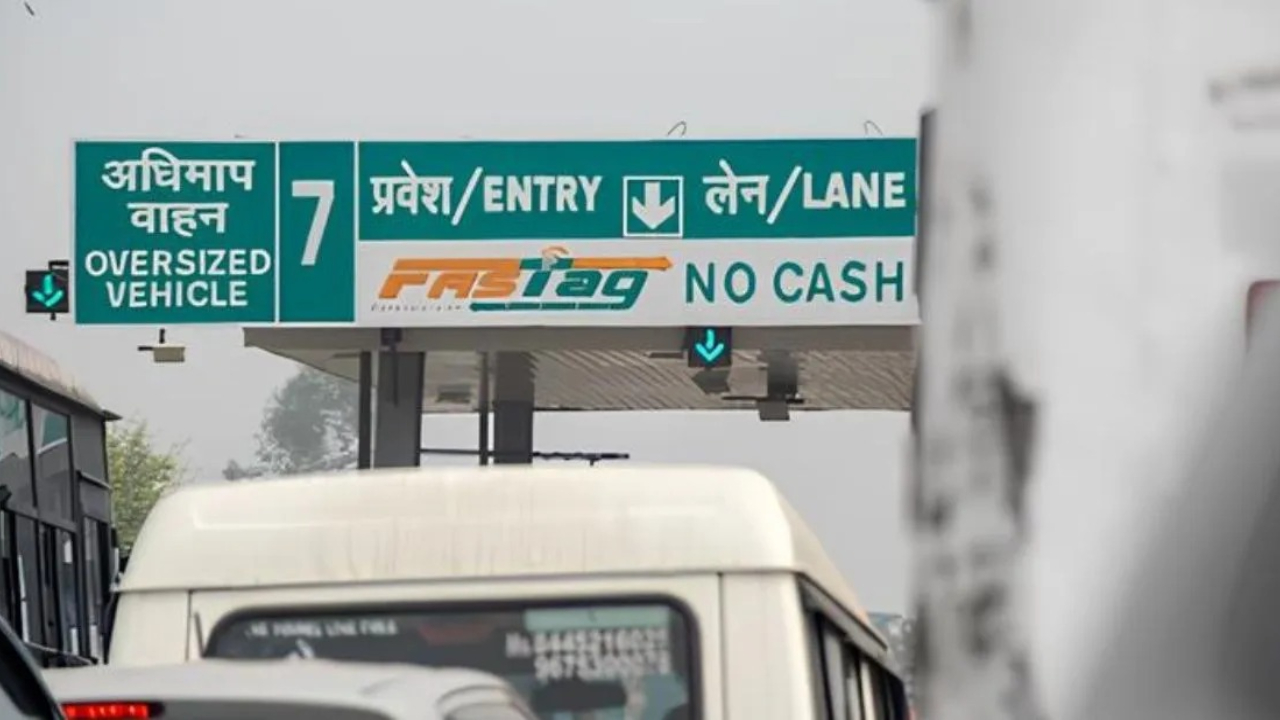
    FASTag Annual Pass: Fastag Annual Pass: Important news for those who often travel on national highways. If you get an annual Fastag toll pass to skip tolls, you’ll now have to pay a bit more. The government has raised the annual toll pass fee. This means that traveling on highways will become slightly pricier starting April 1st.

    Those who frequently use the highway may see an increase in their expenses. This new fee will take effect with the beginning of the new financial year, 2026-27. Therefore, it’s crucial for drivers to be aware of this information ahead of time. Discover how much an annual FASTag pass will cost.

    The cost of the annual pass will rise from April 1. The National Highway Authority of India, which manages national highway tolls, has made a slight increase in the annual toll pass fee. Previously, this pass was priced at Rs 3,000, but it will now be Rs 3,075.

    Know the new system

    The new price will be effective from April 1, 2026.
    Previously, the annual pass was available for Rs 3000.
    Now, Rs 3075 will need to be paid for this.
    This pass is intended for private or non-commercial vehicles.
    A valid FASTag must be installed in the vehicle.
    The government states that toll rates are periodically reviewed and adjustments are made accordingly.

    Valid for one year or 200 toll crossings

    The validity of an annual FASTag toll pass is also governed by established regulations. This does not imply that tolls can be crossed without any limits throughout the year.

    The rules are as follows:

    The pass is valid for a maximum of one year.
    Or it is valid for up to 200 toll crossings.
    The pass will expire when the first condition is met.
    For instance, if a driver crosses a toll 200 times before the year is up, the pass will no longer be valid. A new pass will then be necessary.

    Important instructions given to toll plazas

    The National Highways Authority of India has already issued instructions to all toll plazas and concerned officials regarding implementation of the new rates. Passes should be issued as per the new rate from April 1, 2026. Passengers should be informed about the new fees at the toll plaza. The new price should be updated in the system. The government says that fees are reviewed annually to maintain the toll system and balance costs. As part of this process, the annual FASTag toll pass price has been slightly increased this time.