Category: Business

Stay ahead of the curve in India’s dynamic financial landscape with Timesbull. We deliver real-time updates and in-depth analysis on Indian business, finance, and the stock markets. Get the latest BSE/NSE news, ensuring you’re always informed about market movements.

Track the pulse of the Indian economy with our comprehensive coverage of Sensex and Nifty updates. Timesbull provides crucial personal finance insights to help you manage your money effectively and make informed investment decisions.

Beyond breaking news, we offer expert market analysis and insightful perspectives on economic trends shaping India and the global economy. Whether you’re a seasoned investor, business professional, or just starting to manage your finances, Timesbull is your trusted source.

Rely on Timesbull for accurate, timely, and insightful business and finance news, empowering you to navigate the complexities of the Indian market with confidence. Visit Timesbull today to unlock your financial potential.

  • What is EPFO’s ‘Single Pool’ Scheme? Big impact on PF members 

    What is EPFO’s ‘Single Pool’ Scheme? Big impact on PF members 

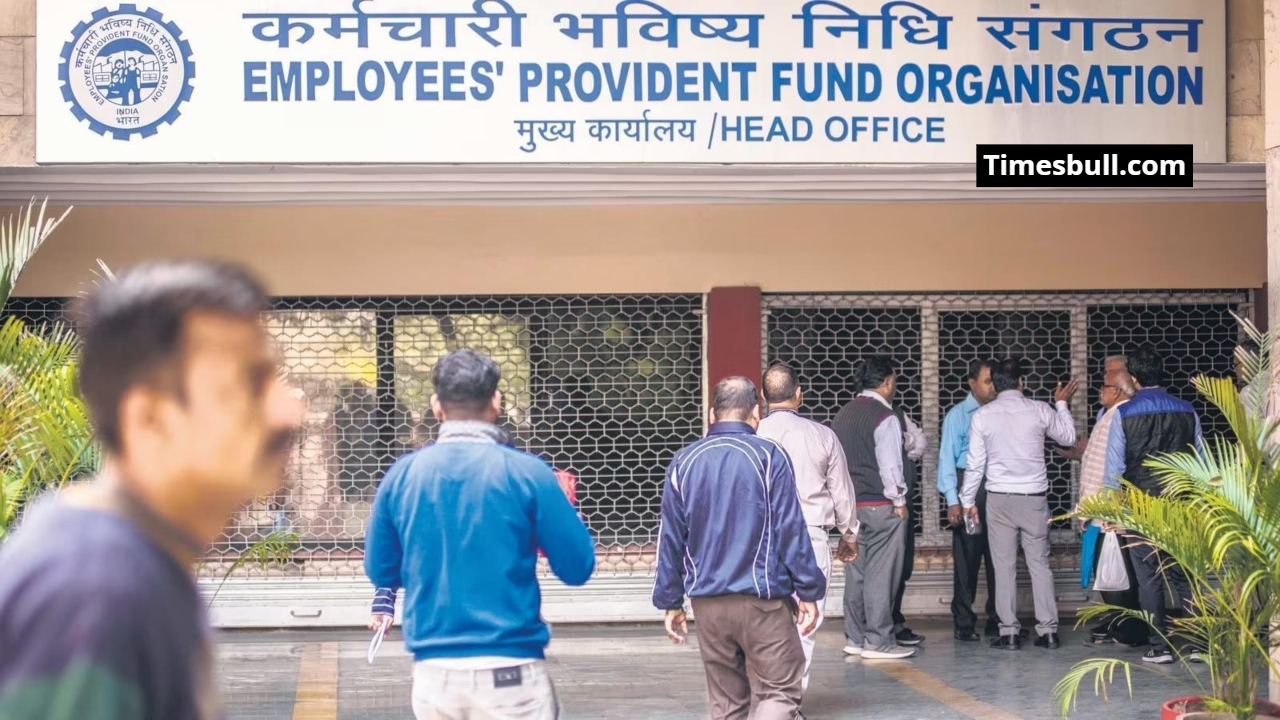
    EPFO: The Employees’ Provident Fund Organization (EPFO) is set to revise its investment strategy soon. As is widely known, the EPFO invests a portion of its surplus earnings in ETFs on a monthly basis. These investments are drawn from distinct accounts associated with the EPFO’s five schemes. However, this practice is about to change in the near future. The EPFO will now consolidate funds from all five schemes into a single account and will make investments collectively once a year. In addition, the EPFO is preparing to take part in the buyback offer for non-convertible debentures related to the Delhi-Meerut Expressway Development. Let’s delve into the planning that the EPFO is undertaking.

    What is EPFO planning?

    The Employees’ Provident Fund Organization (EPFO) is gearing up to merge funds from all five of its schemes into one account for ETF investments. It also intends to transition from the current monthly investment schedule to an annual one. This change will greatly streamline the regulatory and operational processes linked to ETF investments by the EPFO. At the same time, the retirement fund organization will engage in the fourth buyback round offered by the Delhi-Meerut Expressway Development (DMEDL) to offload its non-convertible debentures (NCDs) at an offer price of Rs 103,468 for each bond, which has a face value of Rs 100,000.

    These proposals, which have been approved by the Investment Committee, will be presented to the EPFO’s Central Board of Trustees for review and approval during their meeting on March 2. However, the announcement regarding the anticipated interest rate that the EPFO will offer for 2025-26 has not been included in the agenda shared by the retirement fund organization. According to a report from ET, the agenda for the Central Board of Trustees indicates that the EPFO will develop a new Standard Operating Procedure (SOP) for ETF investments to tackle existing challenges.

    Since 2015, the EPFO has been allocating 5-15 percent of its increased income into ETFs. The agenda indicates that the EPFO will establish a standardized, consolidated system for ETF investments across all its schemes. An ET report mentions that this initiative will assist the EPFO in adhering to the stock market regulator’s requirement that direct transactions with providers exceeding Rs 25 crore are only allowed.

    Currently, under the SOP that has been in place since 2016, the EPFO employs a scheme-wise investment strategy without any consolidation. Looking ahead, it intends to transition to annual investments, which is anticipated to mitigate market timing risks. Additionally, the agenda highlights that annual SIP (Systematic Investment Plan) calculations for ETF investments will render the existing monthly cycle from the 20th to the 19th unnecessary. The EPFO also aims to introduce clearly defined timelines to guarantee consistent market participation, including the prompt issuance of deal slips and ETF redemptions, moving away from the current practice of lacking fixed timelines.
  • When will the 8th Pay Commission be implemented? know the good news.

    When will the 8th Pay Commission be implemented? know the good news.

    8th Pay Commission Update: When will central government employees and pensioners receive the benefits of the 8th Pay Commission? A growing question remains. From street corners to intersections, everyone is abuzz with speculation about the 8th Pay Commission. It will benefit 6.9 million pensioners and over 5 million employees.

    A committee formed by the government, headed by retired Justice Ranjana Desai, has begun its review. This committee will submit its review report to the government within 18 months, after which it will be implemented. It is expected that the central government will implement the recommendations of the 8th Pay Commission by mid-2027.

    Once implemented, a significant salary increase is expected, which will prove to be good news. The basis for this salary increase can be understood in detail below.

    How Much Could the Fitment Factor Increase?

    According to experts on the 8th Pay Commission, the fitment factor is expected to be between 1.83 and 3.0. However, most estimates place it in the range of 2.15 to 2.57. It is estimated that upon implementation of the 8th Pay Commission, salaries of employees in pay levels 1 to 18 could increase by 20% to 35%.

    The impact of the fitment factor can vary at different levels. If the government implements a uniform fitment factor, officers in higher positions, such as pay level 18, could see a significant increase in salary in rupee terms.

    On the other hand, employees at lower levels (levels 1 to 5) are expected to receive greater benefits in percentage terms. It should be understood that if the fitment factor remains around 2.57, a significant gap between the minimum and maximum salaries of employees can be transparently increased.

    When will the Commission submit its report to the government?

    For information, the Commission is expected to submit its review report to the government by April-May 2027. After receiving the report, the government can implement it within a few days. The Finance Ministry and other departments of the government study the report, make some changes, and then receive Cabinet approval.

    This process typically takes six months after the report is submitted. Therefore, in practical terms, the new salary structure is likely to be implemented in late 2027 or early 2028.

    Da Increase Also Discussed

    The central government may soon increase the DA by up to 2%. This increase will bring the total DA to 60%. A decision on the DA increase could be taken after Holi. Currently, central government employees receive only 58% DA benefits. The government increases DA twice every year.

  • Gold Rate Today Feb 24 – Gold Crosses ₹1.61 Lakh; Silver Jumps ₹5 000 within 2 Days

    Gold Rate Today Feb 24 – Gold Crosses ₹1.61 Lakh; Silver Jumps ₹5 000 within 2 Days

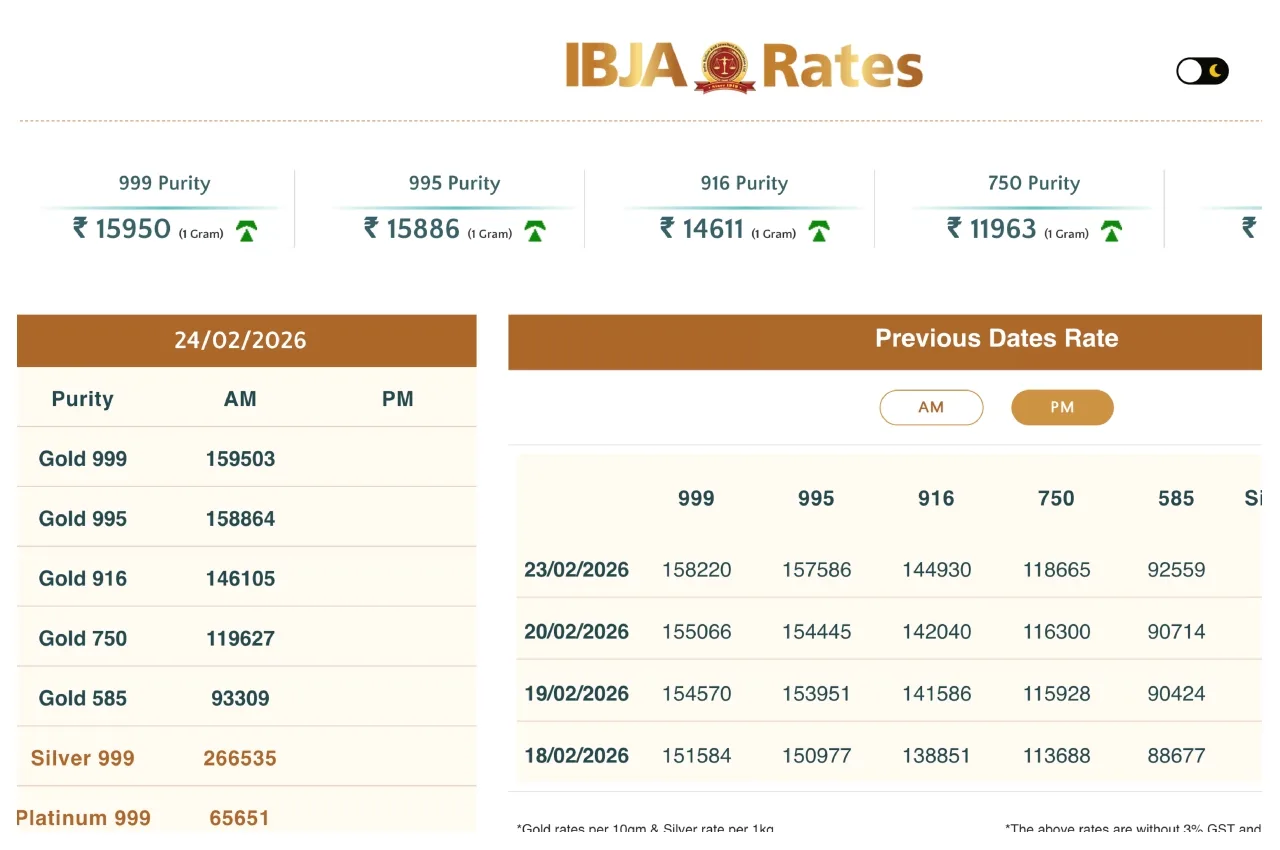
    New Delhi, Gold – Silver Rate Today: Gold and silver prices have risen again today, February 23rd. Gold and silver prices had declined recently. Now, gold prices are rising again. According to the India Bullion and Jewellers Association (IBJA), the price of 10 grams of 24-carat gold has risen by ₹1,283 to ₹1,59,503. Previously, the price of gold was ₹1,58,220. Gold has gained ₹5,000 over the past two trading days. Meanwhile, the price of one kilogram of silver has risen by ₹2,460 to ₹2,66,535. Silver was ₹2,64,075 per kilogram yesterday. Yesterday, it had gained ₹13,000. This means it has gained more than ₹16,000 in just two trading days.

    According to the IBJA’s rates, gold prices have risen by ₹1,283 per 10 grams today, February 24th, compared to Monday’s closing price. Gold is now only ₹16,618 cheaper than its all-time high of ₹176,121 in the bullion market. Including GST, gold has reached ₹164,288 today.

    What is the latest gold rate?

    According to the India Bullion and Jewellers Association (IBJA), 22-carat gold now stands at ₹150,488 per tola (including GST). 18-carat gold has reached ₹123,215 per 10 grams (including GST). On Monday, 999 gold closed at ₹158,220 per 10 grams (excluding GST). The IBJA releases rates twice a day.

    Gold Price by Carat

    24 carat – ₹1,59,503/10 grams
    22 carat – ₹1,46,105/10 grams
    18 carat – ₹1,19,627/10 grams
    14 carat – ₹93,309/10 grams

    Gold Rate Today City – Wise

    The price of 24-carat gold in Delhi is ₹1,61,930 per 10 grams.
    The price of 24-carat gold in Mumbai is ₹1,61,780 per 10 grams.
    The price of 24-carat gold in Kolkata is ₹1,61,780 per 10 grams.
    The price of 24-carat gold in Chennai is ₹1,62,440 per 10 grams.
    The price of 24-carat gold in Jaipur is ₹1,61,930 per 10 grams.
    The price of 24-carat gold in Patna is ₹1,61,830 per 10 grams.
    The price of 24-carat gold in Lucknow is ₹1,61,930 per 10 grams.
    The price of 24-carat gold in Raipur is ₹1,61,780 per 10 grams.
    The price of 24-carat gold in Ahmedabad is ₹1,61,830 per 10 grams.

  • HRA Rule Update: Major Changes Announced, Key Details Inside

    HRA Rule Update: Major Changes Announced, Key Details Inside

    HRA Rules: A significant change is on the horizon regarding the rules for claiming House Rent Allowance (HRA) for salaried individuals. According to the draft Income Tax Rules 2026, which aim to implement the new Income Tax Act 2025, the Central Board of Direct Taxes (CBDT) has suggested that tenants will now need to disclose their relationship with the landlord in the HRA declaration form. This new tax framework is set to take effect from April 2026. Previously, employees were only required to submit a rent receipt and the landlord’s PAN if the annual rent exceeded the specified limit, but now they must also indicate ‘what the relationship is.’

    What do experts think?

    At first glance, this change may appear minor, but tax experts argue that it will particularly affect those who claim HRA by renting from their parents, in-laws, or other relatives. Until now, claims were typically accepted if there was a valid rent agreement, the rent was paid through a bank account, and the landlord reported the rental income on their income tax return. However, the introduction of a ‘relationship’ column in the new rules will provide the department with a direct means to track such cases using data analytics.

    What are the specifics?

    According to the draft rules, the department will be able to easily confirm whether the individual renting the property has reported that income in their ITR and AIS. It will also be possible to check if the property is genuinely in the landlord’s name and if the rent was paid through banking channels. This means that what was previously challenging to detect on a large scale can now be clearly identified with the aid of technology. This is seen as an effort to combat fraudulent or merely paper-based rental agreements.

    The rules further clarify that rent paid to parents or other close relatives is deemed valid if the arrangement is authentic. However, TDS rules may apply for rent that exceeds the specified limit. In such instances, the tenant might be required to deduct tax under Section 194-I. Not doing so could lead to penalties.

    Opinion of tax advisors

    Tax consultants say that if the draft rules are implemented as they are, employees paying rent within their families will have to be more vigilant. Clear rent agreements should be prepared, rent should be transferred only through banks, landlords should disclose income on returns, and property documents should be preserved. The government’s aim is to make the system data-driven and transparent, but it must also be ensured that this does not lead to unnecessary disputes for honest taxpayers. Currently, suggestions have been sought on the draft; the picture will become clear only after the final rules are issued.


  • 8th Pay Commission: How Much Will DSP Salary Increase? Check the Latest Estimates

    8th Pay Commission: How Much Will DSP Salary Increase? Check the Latest Estimates

    8th Pay Commission DSP Salary: Government employees and officers across the country are now keenly watching the 8th Pay Commission. Police officers, in particular, are eager to know how much their salaries will increase after the new Pay Commission is implemented. The most debated topic is the salary of DSPs (Deputy Superintendents of Police). It is believed that the 8th Pay Commission could lead to significant changes in the salaries of DSPs.

    The government constitutes a Pay Commission every few years to review the salaries, allowances, and pensions of employees and officers. Seven Pay Commissions have been implemented so far, and the 8th Pay Commission is now underway. Currently, the position of DSP falls within Level 9 of the Pay Matrix. Currently, under the 7th Pay Commission, a DSP receives a basic salary of ₹53,100. In addition, they are also provided with dearness allowance, house rent allowance, and other allowances. The combined total salary of a DSP is considered good, but it is expected to increase further after the 8th Pay Commission.

    How much can the salary increase in the 8th Pay Commission?

    According to media reports and experts, the fitment factor may be increased in the 8th Pay Commission. If the fitment factor is set at around 2.86, officers in Level 9 could see a significant increase in their salaries. Based on this, the potential salary of a DSP is being estimated.

    Estimated new basic salary

    If the current basic salary of Rs 53,100 is added to the new fitment factor, the new basic salary of a DSP could reach approximately Rs 151,866 per month. This figure may sound surprising, but it is considered possible according to Pay Commission rules.

    Salary will increase further with allowances

    It’s important to note that this is only an estimate of the basic salary. In addition, DSPs also receive dearness allowance, house rent allowance, travel allowance, and other government benefits. After adding all these allowances, a DSP’s total monthly salary can be even higher. Consequently, the 8th Pay Commission has made the job of a DSP even more attractive. To become a DSP, candidates must pass the State Public Service Commission or Union Public Service Commission exams.


  • OASIS Scholarship Rules Changed: Beneficiaries Should Check Latest Updates Now

    OASIS Scholarship Rules Changed: Beneficiaries Should Check Latest Updates Now

    The Government of West Bengal has launched several scholarships so that students do not fall behind financially in the field of education. One of the popular scholarships is the Oasis Scholarship, where students from the SC, ST and OBC communities of the state get stipends every year. However, recently, two notifications have been issued on the Oasis Scholarship portal, which are very important for students to know. What is that update? Find out in this report.

    New update on Oasis Scholarship

    Students from the ST caste will now have to do a new thing to apply for the Oasis Scholarship. Yes, according to the guidelines of the Ministry of Tribal Affairs, before applying for the post-matric scholarship, ST students must log in to the National Scholarship Portal and complete one-time registration. Only after an OTP is generated there, students will be able to apply for the scholarship.

    Pre-matric scholarship for SCs

    On the other hand, the importance of this state government scheme is immense so that SC or Scheduled Caste students do not stop their studies due to financial problems. Under the Oasis scholarship, school and college students are given a scholarship ranging from Rs. 2,500 to Rs. 13,500 per year. However, this scholarship has been divided into two parts for them. And they are Component-1 and Component-2. Component-1 is mainly applicable on the basis of the specified income of Scheduled Caste students. And Component-2 is applicable for parents employed in unhealthy and risky professions. Read till the end to know the details.

    Who is Component-1 for?

    Component-1 of the Oasis scholarship is for Scheduled Caste or SC students. In this case, SC students of class 9 and 10 get assistance in this category. However, to apply here, the annual income of the family should be a maximum Rs. 2.5 lakh. Hey, under this scholarship, a benefit of 3500 rupees is given every year and 7000 rupees is given for hostel fees. Even an additional 10% scholarship is given for disabled students.

    Who is Component-2 for?

    Under the Oasis Scholarship, this component-2 is for those whose parents are engaged in unhealthy and risky professions. In this case, scholarships are given to students from class I to class X. However, there is no income limit here. And under this scholarship, 3500 thousand rupees are also given every year and another 8000 rupees are given for hostel fees. In this too, an additional 10% increase is given for disabled students.

    Post-matric scholarship for STs

    However, post-matric scholarship is given to those who study in class XI or any higher class. In this case, they have to be studying in various recognized institutions, universities, colleges or schools of the state. To get this scholarship, the annual income of the family should be maximum 2.5 lakh rupees. In this case, a scholarship of 2500 to 13,500 rupees is provided annually. In addition, an additional 10% is given for disabled students.

    How to apply?

    Oasis scholarship can be applied for very easily online. For this, you have to first register by going to the state government’s Oasis scholarship portal. Then you have to fill the application form with your personal information. Then you have to upload all the necessary documents and educational qualification certificates and complete the application.

    However, the documents required while applying are mobile number and email ID, Aadhaar card, Aadhaar linked bank account, family annual income certificate and caste certificate.

  • Made a Mistake While Applying to Yuvasathi Scheme? Know the Latest Update on Form Editing

    Made a Mistake While Applying to Yuvasathi Scheme? Know the Latest Update on Form Editing

    The application process for the Banglar Yuva Sathi scheme is going on across the state. The number of applicants for this special scheme of the West Bengal government is increasing day by day. However, a section of the applicants who have already applied online or offline have a question, if there is a mistake in the application, can it be edited now? If it can be edited, how can it be done?

    Applications can be made online 24 hours a day

    As per the instructions of the state government, the application process for the Banglar Yuva Sathi scheme has started from February 15. It will continue till February 26. Although, till today i.e. 23rd, more than 50 lakh applicants have applied for this special scheme. So far, applications could be made online from 7 pm to 9 am the next day. However, recently the government has opened the portal for online applications 24 hours a day. In that case, applicants can apply for this scheme online at any time, day or night.

    Can the form be edited if the application is wrong?

    First of all, let me tell you that if there is any mistake in the application of those who have gone to the camp offline and filled the application form, they can apply online again. In fact, every form submitted offline before February 26 has been submitted to the BDO office. Those forms have not been entered in the online portal yet. In that case, if you apply online again correctly, the offline form will be canceled later.

    However, those who have already applied for the Yubasathi project online, but there are some minor mistakes in the application, they do not have that opportunity to edit it now. The form applied online cannot be edited now until further instructions are issued by the government. Moreover, since the application has been entered online, it cannot be applied offline either. However, many people think that the government may provide the option to edit the form on the portal like the job exam form fill-up. However, if that is not the case, if there is any mistake in the form later, the applicants will be called to the local BDO office by calling the number mentioned there. They can correct the mistake by taking the necessary documents there.

  • Gratuity Hike– Rs 25 Lakh Gratuity for Secondary School Staff, Major Decision by Government

    Gratuity Hike– Rs 25 Lakh Gratuity for Secondary School Staff, Major Decision by Government

    Gratuity Update : There’s good news for teachers and employees in Uttar Pradesh. Secondary school teachers and employees will also receive a gratuity of 2.5 million rupees. The government has agreed to increase the gratuity limit for teachers and employees of aided and council secondary schools, similar to that of state employees.

    Currently, the maximum limit of gratuity for these teachers and employees is fixed at 20 lakhs. Two years ago, on July 2, 2024, the maximum gratuity limit for state employees was increased to 25 lakhs. For a year, there was a demand to make the gratuity of teachers equal to that of state employees. Now, the Secondary Education Department has sent a proposal in this regard to the Finance Department last week. More than 2.5 lakh teachers and employees are working in the aided and council secondary schools of the state.

    The Secondary Education Department has prepared a proposal to increase the maximum gratuity of teachers and non-teaching staff of council-aided non-government secondary schools to 25 lakh rupees, similar to that of state employees. This proposal will be sent to the Finance Department after finalization at the highest level within the department. This will provide financial benefits to secondary teachers and non-teaching staff upon retirement. Until now, their maximum gratuity amount has been limited to 20 lakh rupees.

    Now you will get gratuity money even in a year

    Meanwhile, following changes to central labor laws, some employees will now receive gratuity benefits in much less time than before. Previously, a worker or employee was required to work for at least five consecutive years to receive gratuity, but under the new rules, fixed-term employees will be paid gratuity after just one year of work.

    Fixed-term employees are those whose employment contracts specify a specific end date, such as a 1- or 2-year contract. Under the new rule, if such an employee has worked for at least 240 consecutive days, they will receive a pro-rata gratuity upon the end of their contract, even if they haven’t completed five years of service.

    This change was made primarily to benefit fixed-term employees so that they can also receive social security benefits and gratuity upon leaving the job, just as regular employees do. The five-year service requirement for permanent employees remains in effect

  • PNB Special FD 2026: ₹1 Lakh Can Grow to ₹1.42 Lakh with Guaranteed Returns – Detail Inside

    PNB Special FD 2026: ₹1 Lakh Can Grow to ₹1.42 Lakh with Guaranteed Returns – Detail Inside

    PNB Fixed Deposit Scheme 2026: If you want to protect your money from the fluctuations of the stock market and are looking for guaranteed returns, fixed deposits (FDs) remain the most reliable option. Public sector giant Punjab National Bank (PNB) has made the interest rates on its FD schemes very attractive, allowing everyone from ordinary citizens to senior citizens to earn stable and excellent returns on investments of lakhs of rupees.

    Investing under the bank’s special schemes in 2026 not only provides complete security but also offers higher returns than other safe instruments in the market. In this article, we will explore in detail the interest rates offered on PNB FDs with different tenures and how much money you can earn on an investment of ₹1 lakh.

    PNB FDs offer 7.20% interest

    PNB FD INTEREST
    PNB FD INTEREST

    Punjab National Bank offers its customers excellent FD options ranging from 7 days to 10 years, and the bank’s interest rates currently range from 3.00% to 7.20%. The bank’s most prominent scheme is the 390-day Special FD, which offers the highest returns.

    Under this scheme, while general citizens receive 6.40% interest, senior citizens receive 6.90% interest, and super senior citizens receive 7.20% interest. Furthermore, if you wish to invest for a longer period, such as 5 years, the bank has set very balanced rates to ensure that inflation does not impact your hard-earned money.

    Investing ₹1 lakh will yield tremendous returns.

    Let’s take a look at how much you’ll receive at maturity if you deposit ₹100,000 for a period of 5 years, as PNB offers significantly better returns for senior citizens. If you’re a regular citizen and invest ₹1 lakh for 5 years, you’ll earn an annual interest rate of 6.10%. At maturity, you’ll receive a total of ₹137,364, of which ₹37,364 will be earned from interest alone.
    For senior citizens (over 60), the deal is even more impressive. They’re being paid an interest rate of 6.60%, which will increase their ₹1 lakh to ₹140,784 after 5 years. This will result in net interest savings of ₹40,784. Very senior citizens (above 80 years) benefit the most. The bank offers them an interest rate of 6.90%. Consequently, their ₹1 lakh FD will grow to ₹1,42,875 after 5 years, meaning they will earn a guaranteed profit of ₹42,875 instantly.
    SBI & HDFC & PNB FD Rates
    SBI & HDFC & PNB FD Rates

    Safe Investment and Guaranteed Profits

    Investing in a public sector bank like PNB is considered the best in terms of security because your investment is not negatively affected by market fluctuations, and the maturity amount is completely fixed. FDs are ideal for those planning for retirement or wanting to fund major future expenses, such as children’s education or marriage.
    However, before investing, it’s important to note that banks may change their interest rates from time to time, which may affect the maturity amount. Apart from this, TDS rules also apply to interest income from FD, hence it would be a wise financial decision to consult your tax advisor.
  • Maiya Samman Yojana: Women to Get Rs 2,500 Aid Before Holi — Check Eligibility List

    Maiya Samman Yojana: Women to Get Rs 2,500 Aid Before Holi — Check Eligibility List

    Maiya Samman Yojana: The Jharkhand government has kicked off the Mukhyamantri Maiya Samman Yojana to help women become financially independent and strong. Through this initiative, eligible women in the state receive a monthly financial aid of Rs. 2500 directly deposited into their bank accounts. The government is set to take a significant step to enhance the financial stability of women beneficiaries under this scheme. Over 51 lakh women enrolled in the program will now have access to loans of up to Rs. 20 thousand from banks without needing any collateral.

    As per media reports, a meeting has already been held between the State Level Bankers Committee (SLBC) and the state government, where this proposal was approved. Women aged 18 to 50 will be able to secure loans to kickstart small businesses without any guarantees. The loan repayments will be deducted from the monthly Rs. 2,500 that the women receive.

    Women will receive Rs 2500 before Holi

    The next payment of the Mukhyamantri Maiya Samman Yojana will be credited to the accounts of female beneficiaries ahead of Holi, as announced by Scheduled Tribe, Scheduled Caste, and Backward Class Welfare Minister Chamara Linda. He also mentioned that some ineligible women have signed up for the scheme, and efforts are underway to identify and remove them from the list. Beneficiary women who missed the previous payment will get a transfer of Rs 5,000 covering both installments.

    Understanding the Mainiyan Samman Yojana

    The Maiyaan Samman Yojana is a unique initiative by the Jharkhand government aimed at providing financial support to women. Its goal is to empower women financially, boost their involvement in family and society, and promote self-reliance. Launched in 2024 by the Hemant Soren government, the scheme offers eligible women Rs 2,500 monthly directly into their bank accounts. Election analysts believe this initiative significantly contributed to the JMM alliance’s overwhelming victory in the 2024 elections.

    How to make the most of the Mainiyan Samman Yojana?

    To take advantage of the Maiyaan Samman Yojana, all eligible women need to complete their Aadhaar seeding. This process involves linking your bank account to your Aadhaar. You can fill out the Aadhaar seeding form at your bank. Additionally, camps are being set up at the Gram Panchayat level. E-KYC is also necessary to benefit from the Maiyaan Samman Yojana. If you haven’t finished your e-KYC yet, please do it soon. Without e-KYC, the funds from the scheme will not be deposited into your account.

    Only these women will receive funds in their accounts.

    Only women who are residents of Jharkhand will be eligible for the Maiya Samman Yojana.

    To qualify, women must be over 18 years old and under 50 years old.

    Families holding ration cards from Jharkhand state (green, yellow, pink, or white ration cards) are eligible.

    Documents needed for Maiya Samman Yojana

    Aadhar card

    Ration card

    Bank Passbook

    Voter ID card

    Passport-sized photo

    How to check your name

    If your name is not listed in the Mainiya Samman Yojana, the funds will not be credited to your account. To verify your name, visit the official website of the scheme, mmmsy.jharkhand.gov.in. Enter the required account information. You will receive an OTP on your mobile phone, which you need to verify. If your name is on the list, your status will be shown.

  • Indian Railways to Adopt New System, Railway Minister Announces

    Indian Railways to Adopt New System, Railway Minister Announces

    Indian Railway: Railway Minister Ashwini Vaishnav has announced a new system to improve cleanliness on long-distance trains. Now, trains will be cleaned not only at designated stations but also as needed throughout the journey. This will also include general class coaches.

    Now cleaning will be done during the journey

    Until now, under the Clean Train Station scheme, train cleaning was performed at specific stations. Under the new system, trained professional teams will be stationed on the train itself. These teams will clean coaches every hour or as needed. The frequency of cleaning will be determined based on peak and non-peak hours.

    Monitoring will be conducted using technology

    The Railway Minister has declared that technology-driven war rooms will be set up to manage this system. From these centers, real-time monitoring, feedback, and performance management will be facilitated. This approach will guarantee accountability and responsibility among service providers. The aim is to enhance and ensure timely service for passengers.

    What services will be included?

    In the revamped railway system, regular cleaning of coaches, toilets, and basins will be implemented, along with the maintenance of dustbins, minor repairs, and water refills. This will also encompass the inspection and reporting of safety equipment. Thus, maintenance will be prioritized alongside cleanliness.

    Railway freight business also improved

    Measures have been introduced to bolster not just passenger facilities but also the freight operations of the railway. Infrastructure related to cargo will be developed on unused railway land, which will include warehouses, grinding units, and processing and aggregation units. Underutilized warehouses will be transformed into Gati Shakti Cargo Terminals.

    Dispute resolution process will be easier

    The procedure for converting sidings and private freight terminals into Gati Shakti Cargo Terminals will be streamlined. A framework for dispute resolution has been put in place, and the Divisional Railway Manager has been given the authority to resolve disputes. The goal of these reforms is straightforward: to enhance passenger services and improve the efficiency of freight transportation.

    Initially, 80 trains have been chosen for this enhancement. Based on the experiences with these trains and feedback from passengers, the improvements will be extended throughout the entire network.