Category: Business

Stay ahead of the curve in India’s dynamic financial landscape with Timesbull. We deliver real-time updates and in-depth analysis on Indian business, finance, and the stock markets. Get the latest BSE/NSE news, ensuring you’re always informed about market movements.

Track the pulse of the Indian economy with our comprehensive coverage of Sensex and Nifty updates. Timesbull provides crucial personal finance insights to help you manage your money effectively and make informed investment decisions.

Beyond breaking news, we offer expert market analysis and insightful perspectives on economic trends shaping India and the global economy. Whether you’re a seasoned investor, business professional, or just starting to manage your finances, Timesbull is your trusted source.

Rely on Timesbull for accurate, timely, and insightful business and finance news, empowering you to navigate the complexities of the Indian market with confidence. Visit Timesbull today to unlock your financial potential.

  • 8th Pay Commission to Release Arrears for Salaries Below Rs 50,000! Know here

    8th Pay Commission to Release Arrears for Salaries Below Rs 50,000! Know here

    8th Pay Commission: A major concern for central government employees regarding the 8th Pay Commission is the extent of their salary increases and the amount of arrears they will receive. Recent reports from The Economic Times suggest that if 20 months’ arrears are disbursed, employees earning a basic pay of less than Rs 50,000 could see arrears ranging from Rs 3.6 lakh to about Rs 1.5 million. However, it’s important to keep in mind that these figures are merely estimates; the government has not yet made any official announcements.

    How much arrears can be received at different levels?

    The arrears for employees from Level 1 to Level 8 can differ greatly. For instance, Level 1 employees (with a basic pay of Rs 18,000) might receive arrears between approximately Rs 3.6 lakh and Rs 5.65 lakh. Level 3 employees are anticipated to get arrears ranging from Rs 4.34 lakh to Rs 6.81 lakh, while Level 5 employees could see amounts from Rs 5.84 lakh to Rs 9.16 lakh. Level 8 employees (with a basic pay of Rs 47,600) are expected to receive arrears from Rs 9.52 lakh to around Rs 14.94 lakh.

    How was this calculation done?

    This estimate is derived from 20 months’ worth of arrears and various fitment factors. The fitment factor serves as the primary basis for calculating salary increases. In the 7th Pay Commission, it was set at 2.57, while discussions for the 8th Pay Commission are considering options between 2.0 and 2.57. Additionally, some employee organizations are advocating for an increase to between 3.0 and 3.25.

    When can you get arrears?

    It is believed that if the recommendations of the 8th Pay Commission are put into effect, the arrears may be disbursed starting January 1, 2026, since the term of the 7th Pay Commission concluded on December 31, 2025. However, the implementation may take some time, and the final decision will rest with the government.

    What are the demands of the workers’ unions?

    Many employee organizations want the fitment factor to be increased to 3.0 or higher, which could lead to a significant increase in employees’ salaries. There are also calls for increasing the family unit from 3 to 5, which could further increase the basic salary. However, all these suggestions are currently under consideration.

    Overall, if the current projections of the 8th Pay Commission are implemented, employees with a basic salary of less than Rs 50,000 could benefit significantly. They could see arrears of lakhs of rupees and a significant salary increase. However, we will have to wait for an official announcement.


  • New Income Tax Rules: New HRA Rules Will Impact Your Salary and Savings, Know the rest

    New Income Tax Rules: New HRA Rules Will Impact Your Salary and Savings, Know the rest

    New Income Tax Rules: The updated income tax regulations, which will take effect from the financial year 2026-27, have brought about several important changes, particularly for salaried workers. These government-mandated rules will have a direct effect on house rent allowance (HRA), the process of filing taxes, and overall transparency. Starting from April 1, 2026, taxpayers will need to adhere to these regulations when submitting their income tax returns in July 2027.

    Major change in HRA exemption

    The most significant alteration under the new regulations pertains to HRA exemptions, which offer both relief and accountability to the salaried workforce. The government has now added eight major cities: Mumbai, Delhi, Kolkata, Chennai, Bengaluru, Hyderabad, Pune, and Ahmedabad – for increased HRA exemptions. Employees residing in these cities can benefit from HRA exemptions of up to 50 percent of their salary, while for other locations, the cap will be 40 percent.

    How will HRA exemption be calculated?

    Nonetheless, the calculation of the HRA exemption will still rely on the same three criteria as before, with the lowest figure being taken as the exemption: the actual HRA received by the employee, the rent paid minus 10 percent of the salary, and 50 or 40 percent of the salary, depending on the city.

    A notable change in the new regulations aimed at improving transparency is that employees will now need to reveal their relationship with their landlord when claiming HRA. Form 124 has been introduced to replace the former Form 12BB. This measure is designed to prevent fraudulent rent claims and enhance the transparency of the tax system.

    These people should be very careful

    If an employee wishes to claim HRA exemption by paying rent to their parents or other family members, they will now need to be more cautious. In such cases, a rent agreement is required, and it is preferable to pay rent through banking channels. Furthermore, the landlord will be required to include this income in their income and pay taxes on it.

    What are the aims of the new rules?

    These new government rules aim to simplify, make the tax system transparent, and align with global standards. However, for salaried employees, this also means greater caution and proper documentation will be required when filing tax claims. Overall, the Income Tax Rules 2026 bring significant changes for the salaried class, bringing both relief and increased responsibility. Having the right information and documents, along with proper tax planning, is now more important than ever.

  • Complete This Task by March 31, or Your Pension Will Be Stopped! Here’s the Update

    Complete This Task by March 31, or Your Pension Will Be Stopped! Here’s the Update

    New Delhi: If your name is linked to the Social Security Pension Scheme, this news is going to prove extremely important for you. The likelihood of a major setback has increased for approximately 136,000 beneficiaries associated with the Social Security Pension Scheme. Pensioners face potential difficulties if they fail to complete their physical verification by March 31.

    The government has set March 31 as the final deadline for these pensioners to undergo mandatory physical verification. Failure to do so could result in the suspension of their pensions. Under the Social Security Pension Scheme, approximately 595,000 beneficiaries across Jaipur district—spanning categories such as the elderly, single women, and persons with special abilities—are currently receiving pension benefits.

    According to departmental regulations, it is mandatory for all pensioners to undergo annual physical verification by March 31. Despite this requirement, 136,936 individuals across the Jaipur district have yet to complete their verification.

    Number of Pensioners Who Have Not Completed Verification

    B.P. Chandel, Joint Director of the Department of Social Justice and Empowerment, informed that 72,756 pensioners in Jaipur district and 64,180 pensioners within the Jaipur city area remain unverified. In this regard, instructions were issued during a meeting of the Deputy Commissioners of the Local Self-Government Department, directing that all pending verifications be completed by March 31, 2026.

    Additionally, the district administration has appealed to pensioners to complete their verification by visiting their nearest e-Mitra centre, using a smartphone, or appearing before an authorised official. Under the current system, pensioners are required to undergo physical verification annually to ensure that they remain eligible for the scheme.

    Complete Physical Verification by This Date

    B.P. Chandel stated that a meeting of the Deputy Commissioners of the Local Self-Government Department regarding this matter was convened by the Additional District Collector (IV), during which directives were issued to ensure the completion of physical verification for all pending pensioners by March 31, 2026. Meanwhile, he stated that the district administration has urged all remaining pensioners to mandatorily undergo physical verification by March 31, 2026, by visiting their nearest e-Mitra centre, using a smartphone, or appearing before an authorised sanctioning officer.

  • SBI Hikes FD Rates by 25 bps, Will you get benefits?

    SBI Hikes FD Rates by 25 bps, Will you get benefits?

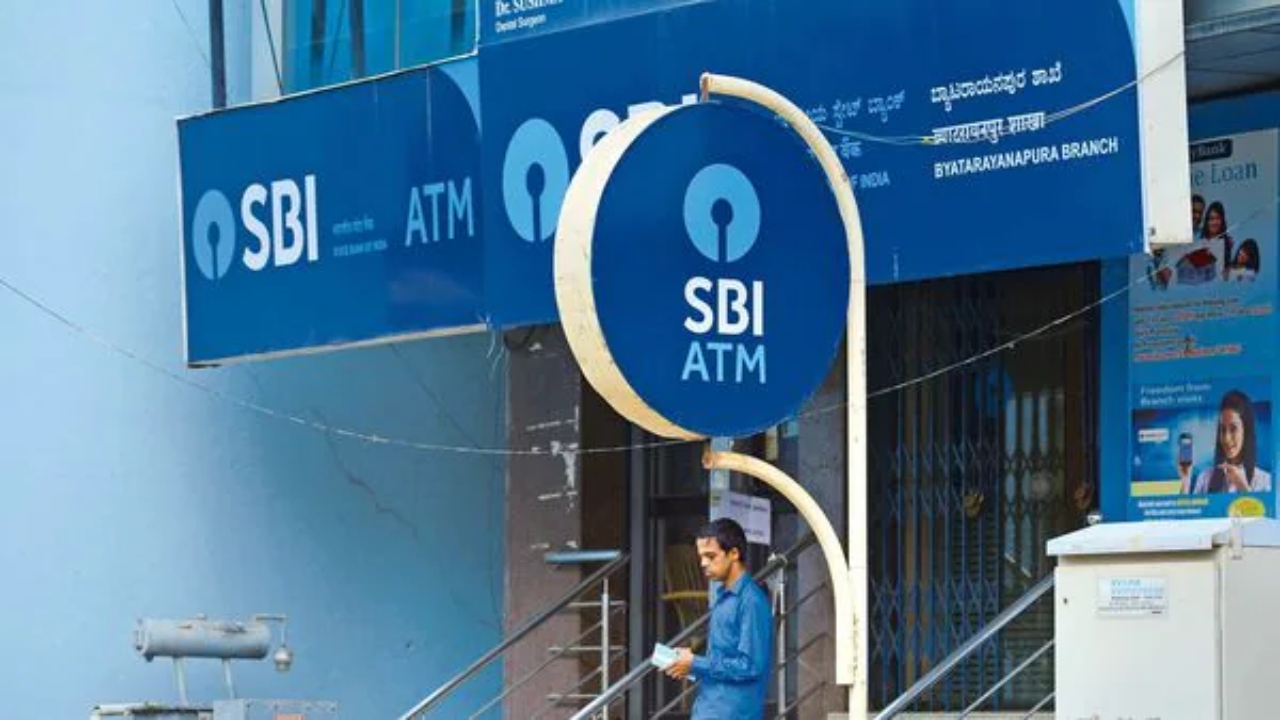
    SBI FD Interest: Good news for SBI customers. In a period where numerous banks are cutting their fixed deposit (FD) interest rates, the State Bank of India (SBI) has opted to raise interest rates on bulk deposits (over Rs 3 crore) by 25 basis points (bps), while maintaining the rates for FDs below Rs 3 crore. As per the bank’s website, these updated rates will take effect from March 15, 2026. Let’s explore SBI’s current fixed deposit interest rates.

    Which tenures have seen an increase in FD interest rates?

    SBI has raised its fixed deposit interest rates by 25 basis points (bps) for certain tenors. For deposits maturing between 46 days and 179 days, the interest rate has been increased from 5.10% to 5.35%. For tenors from 180 days to less than one year, the rate has been adjusted from 5.60% to 5.85%, and for deposits maturing between one year and less than two years, the rate has been modified from 6.25% to 6.50%.

    For senior citizens, the interest rate for FDs maturing between 46 and 179 days has been raised from 5.60% to 5.85%. For FDs maturing between 180 days and less than one year, the rate has been increased from 6.10% to 6.35%, and for deposits maturing between one year and less than two years, the rate has been revised from 6.75% to 7%.

    The updated interest rates will be applicable to new deposits as well as renewals of maturing deposits. The bank has stated that all other terms and conditions for retail and bulk term deposits will remain unchanged.

    What is the penalty for early withdrawal on SBI bulk deposits?

    Bulk term deposits for all tenors will incur a 1% penalty for premature withdrawal. This penalty will apply to all new deposits, including renewals. Therefore, if an investor decides to withdraw their deposit before the maturity date, the interest rate will be decreased by 1% from the applicable rate.

    To whom will the new rates apply?

    This will apply to new FDs and those FDs that mature and get renewed, all other terms and conditions will remain the same as before.

    What to think before investing?

    If you’re considering investing a large sum in an FD, this could be a good time. However, small investors should consider other options as rates remain unchanged.


  • Silver Rates Today – Check Silver Price in Major Cities After ₹5,000 Decline, 1 Kg Rate

    Silver Rates Today – Check Silver Price in Major Cities After ₹5,000 Decline, 1 Kg Rate

    New Delhi: Following a decline in gold prices within the Indian bullion market, silver has also become cheaper. In the market, the price of 999-purity silver has dropped by up to ₹5,000. The rate for 999-purity silver has been recorded at ₹260,000 per kilogram. Just a day earlier, the price of silver stood at ₹265,000 per kilogram.

    If you are planning to purchase silver, do not delay. We are providing city-wise details regarding silver rates; please read the article below carefully to access this information.

    Check Silver Rates in These Cities

    In the national capital, Delhi, the price of 999-purity silver has declined by ₹5,000 and is currently recorded at ₹260,000 per kilogram. The previous day, the price of silver was observed at ₹265,000 per kilogram.

    In the national financial capital, Mumbai, the price of 999-purity silver has dropped by ₹5,000 and is seen trending at ₹260,000 per kilogram. The previous day, it was seen trending at ₹265,000 per kilogram.

    In Lucknow, the capital of Uttar Pradesh, the price of 999-purity silver has become cheaper by ₹5,000 and is seen trending at ₹260,000 per kilogram. On Friday, it was seen trending at ₹265,000 per kilogram.

    In Bhopal, the capital of Madhya Pradesh, 999-purity silver has declined by ₹5,000 and is seen trending at ₹260,000 per kilogram. The previous day, it was recorded at ₹265,000 per kilogram.

    In Jaipur, the capital of Rajasthan, the rate for 999-purity silver has dropped by ₹5,000 and is recorded at ₹260,000 per kilogram. The previous day, the price of silver stood at ₹265,000 per kilogram. In Noida, adjacent to Delhi, the price of 999 purity silver has declined by up to ₹5,000, settling at ₹260,000 per kilogram. Just a day earlier, the price of silver in this region stood at ₹265,000 per kilogram.

    Note

    Before investing in silver within the Indian bullion market, it is highly advisable to consult with market experts. Additionally, prior to purchasing silver jewellery, you should contact a local jewellery store in your vicinity.

  • Diesel Price Hike: After petrol, Diesel also became expensive by about Rs 22 

    Diesel Price Hike: After petrol, Diesel also became expensive by about Rs 22 

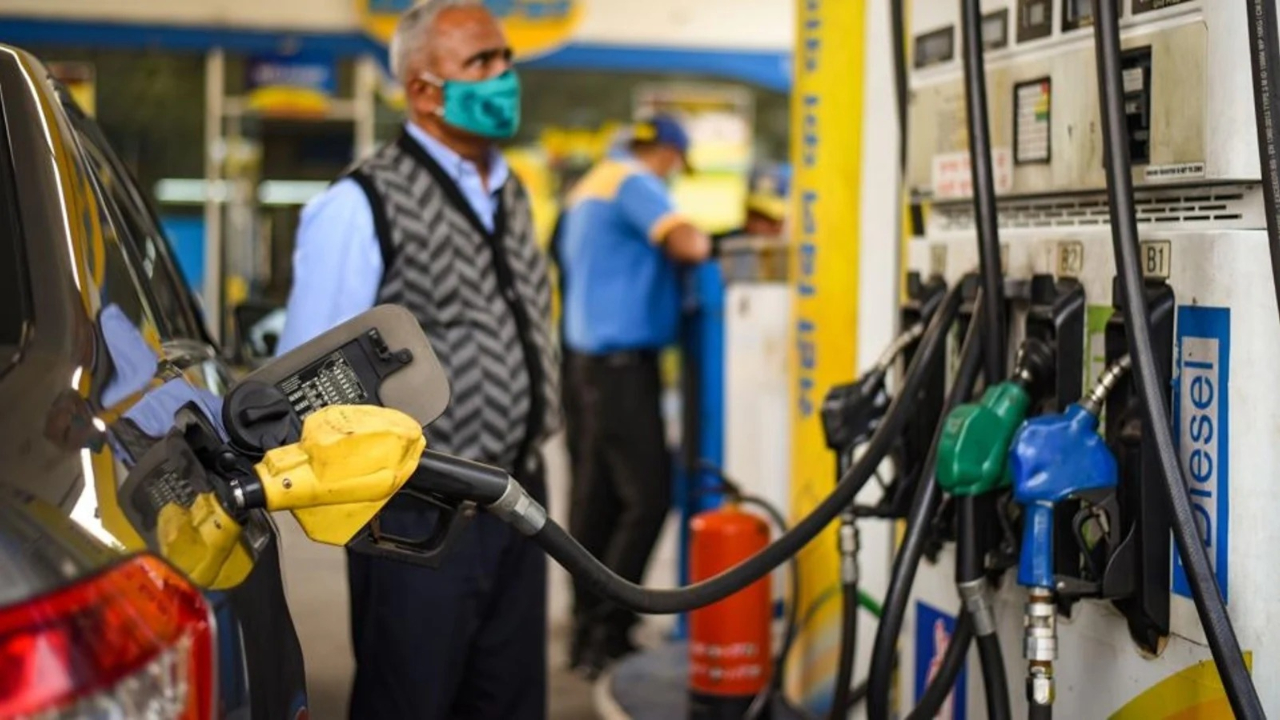
    Diesel Price Hike: After petrol now Diesel more become expensive. Yes you’ve heard it right. Following the rise in premium petrol prices, industrial diesel rates have also been increased. As reported by PTI, IOCL has raised the industrial diesel price to Rs 109.59 per liter, up from Rs 87.67 per liter, marking a hike of Rs 21.92 per liter. This increase will directly affect companies that rely heavily on diesel.

    Where does industrial diesel come from?

    Industrial diesel is not available at regular pumps; it is supplied directly between companies. Those that consume larger amounts of diesel will now incur higher costs. This situation may also affect everyday consumers in the future. With the rising costs of industrial diesel, companies will experience increased input expenses, which could lead to higher prices for their products down the line.

    Premium petrol prices have also gone up

    On March 20th, oil companies raised the price of premium petrol by Rs 2.09 to Rs 2.35. Meanwhile, the prices for regular petrol and diesel have remained stable. However, the recent surge in crude oil prices has put significant pressure on these companies. If the ongoing conflict does not resolve soon, we may see an increase in regular petrol and diesel prices as well.

    What did the Petroleum Ministry say regarding the price hikes?

    In a media briefing, Sujata Sharma, Joint Secretary in the Ministry of Petroleum and Natural Gas, stated, “There is some information about a slight increase in the premium category. However, this only accounts for 2 to 4 percent of the total petrol sales in the country.” She also mentioned that there has been no price increase for the general public.

    Since April 2022, oil companies have not raised the prices of standard petrol and diesel, maintaining stability in those rates. Despite the growing pressure on oil companies recently, they reported a profit of Rs 81,000 crore for the fiscal year 2024, with IOCL, BPCL, and HPCL earning Rs 23,743 crore in profit during the December quarter alone.


  • Gold Rates Update – Check Gold Prices in Major Cities After Decline, 10 Grams Rate

    Gold Rates Update – Check Gold Prices in Major Cities After Decline, 10 Grams Rate

    Gold Price Today – Gold prices are falling rapidly, bringing visible joy to customers. During the wedding season, the declining cost of gold is being viewed as a major relief. In the bullion market, the price of 22-carat gold has dropped by as much as ₹3,400, while the rate for 24-carat gold has been recorded at a total reduction of ₹3,570 per 10 grams. If you are planning to purchase gold, do not delay. We are providing you with city-wise details regarding current gold prices.

    Check Gold Prices in Major Cities

    In New Delhi, 22-carat gold has tumbled by ₹3,400, settling at ₹139,350 per 10 grams. The price of 24-carat gold has fallen by ₹3,570, bringing it to ₹146,320 per *tola*. Just a day earlier, 22-carat gold was trending at ₹142,750, and 24-carat gold at ₹149,890 per 10 grams in the city.

    In Mumbai, the capital of Maharashtra, 22-carat gold dropped by ₹3,400 to stand at ₹138,850 per 10 grams. The price of 24-carat gold became cheaper by ₹3,570, trending at ₹149,360 per 10 grams. On Friday, the price for 22-carat gold was ₹142,250, and for 24-carat gold, it was ₹149,360 per *tola*.

    In Kolkata, the capital of West Bengal, the price of 22-carat gold has dropped by ₹3,400, settling at ₹139,850 per *tola*. The rate for 24-carat gold has decreased by ₹3,570, bringing it to ₹146,840 per 10 grams. Looking back to the previous day, the price of 22-carat gold was seen trending at ₹143,250 per *tola*. The rate for 24-carat gold stood at a total of ₹150,410 per 10 grams.

    In Hyderabad, the capital of Telangana, the price of 22-carat gold dropped by ₹3,500 to reach a total of ₹139,500 per 10 grams. As for 24-carat gold, its price declined by ₹3,670, coming in at a total of ₹146,480 per 10 grams. The previous day, the price of 22-carat gold was ₹143,000, while the price of 24-carat gold stood at a total of ₹150,150 per 10 grams.

    In Chennai, the capital of Tamil Nadu, 22-carat gold was recorded at a total of ₹139,500, marking a decrease of ₹3,500. Here, the price of 24-carat gold fell by ₹3,670 to be recorded at a total of ₹146,480 per 10 grams. Looking back to the previous day, 22-carat gold had stood at a total of ₹143,000 per 10 grams.

    In Bengaluru, the capital of Karnataka, the price of 22-carat gold dropped by ₹3,400 to settle at a total of ₹139,450. The rate for 24-carat gold decreased by ₹3,570, being recorded at a total of ₹146,420 per 10 grams. On Friday, the price of 22-carat gold stood at a total of ₹139,450, while the price of 24-carat gold was ₹149,990 per 10 grams.

  • 8th Pay Commission Update:  CGHS Benefits & 400 Leaves Encashment and Many More

    8th Pay Commission Update: CGHS Benefits & 400 Leaves Encashment and Many More

    8th Pay Commission: In anticipation of the upcoming second staff meeting concerning the Eighth Pay Commission, several employee-related matters have become quite contentious. Employee organizations are now gearing up to present their primary demands to the government.

    In this context, Dr. Manjeet Singh Patel, the National President of the All India NPS Employees Federation, met with Shiv Gopal Mishra, the Secretary of NC-JCM (Staff Side), to discuss significant issues affecting employees. What topics were covered and what recommendations were made? Dr. Manjeet Patel mentioned that various proposals were introduced during the meeting that pertained to the welfare of employees in Delhi, other Union Territories (UTs), and central autonomous institutions. The most notable of these was the request for an increase in earned leave encashment to 400 days.

    He emphasized that the current limit should be raised to provide greater benefits upon retirement. Additionally, there was a request for 28 days of special leave for employees to participate in traditional religious and social events. The discussion also included the need for 14 days of casual leave (CL) and 30 days of earned leave (EL) each year.

    Request for CGHS option post-retirement

    Several key proposals regarding healthcare were also presented. Employee organizations insisted that employees should have the option to enroll in the Central Government Health Scheme (CGHS) after retirement, along with the provision of cashless medical treatment to avoid out-of-pocket expenses for medical care.

    The meeting also suggested that copies of the Central Government’s circulars and orders should be sent directly to the Union Territories to prevent delays in policy implementation. A significant demand from employees in the education sector was also raised, advocating for an increase in the retirement age of teachers to 65 years.

    Will lakhs of employees and pensioners benefit?

    According to Dr. Patel, there was a discussion on including all these demands in the common memorandum of JCM, so that they could be officially placed in the meetings with the Eighth Pay Commission. The JCM agreed to raise all these issues with the Eighth Pay Commission. It was also agreed that necessary steps would be taken to ensure representation of employees from Union Territories on the JCM. Employees’ organisations hope that if these demands are included in the Pay Commission’s recommendations, lakhs of employees and pensioners could benefit greatly.

  • ATM Rules Changing from April 1, What HDFC and PNB Customers Must Know?

    ATM Rules Changing from April 1, What HDFC and PNB Customers Must Know?

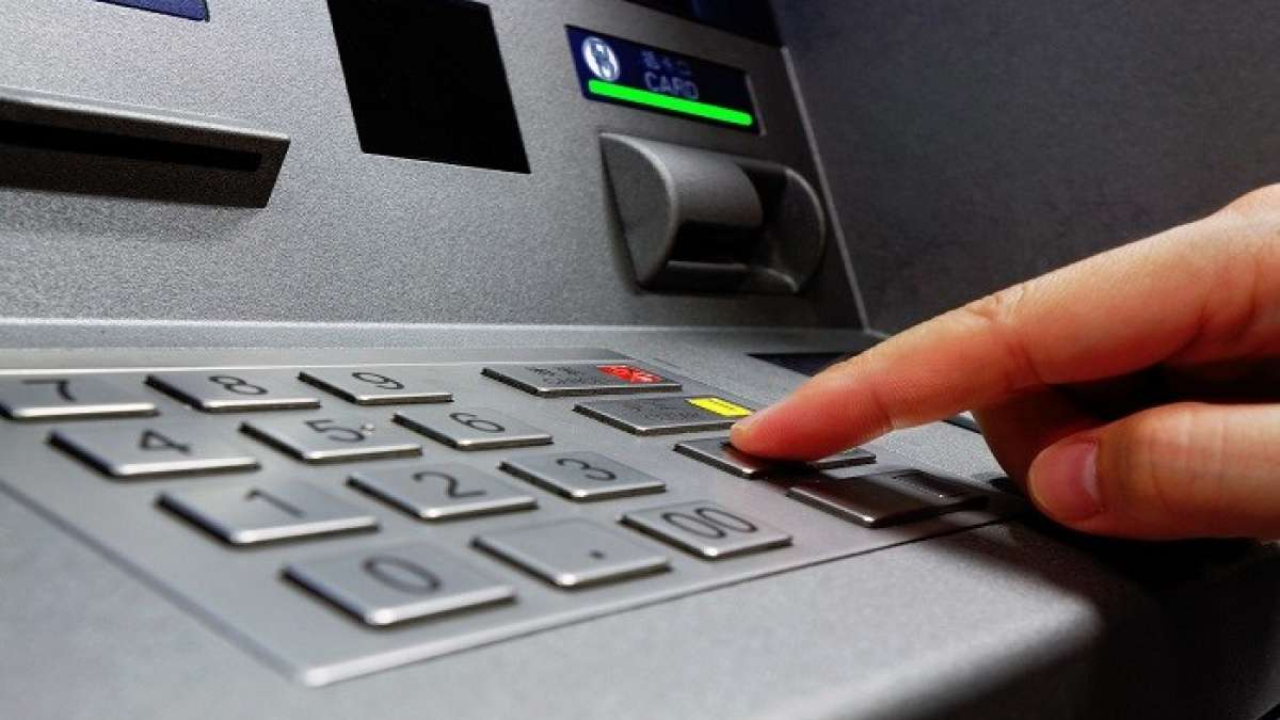
    ATM Rules: The new financial year is about to commence on April 1st. With this new financial year, several significant changes are on the horizon. Some of these changes pertain to banking. HDFC Bank, Punjab National Bank (PNB), and Bandhan Bank have updated their policies regarding cash withdrawals, fees, and transaction limits. Let’s delve into the specifics.

    Changes in HDFC and PNB

    HDFC Bank, a private sector bank, has implemented a significant alteration to its ATM regulations, now incorporating UPI-based cash withdrawals into its monthly free transaction limit. This implies that if customers withdraw cash from an ATM using UPI, these transactions will also count towards the free limit. Previously, such withdrawals were not included. Now, if customers exceed their free transaction limit, they will incur a fee of Rs 23 per transaction plus tax.

    In addition, Punjab National Bank has lowered the daily ATM withdrawal limit for its customers. Previously, some PNB debit cards allowed daily withdrawals of up to Rs 1 lakh, which has now been decreased to Rs 50,000. The affected PNB debit cards include the RuPay NCMC Platinum Domestic Debit Card, RuPay NCMC Platinum International Debit Card, RuPay Women Power Platinum Debit Card, VISA Gold Debit Card, and PNB Mastercard Platinum Rise. Furthermore, the withdrawal limit has also been reduced on certain premium cards like RuPay Select, Visa Signature, and Master Business cards. Previously, these cards permitted daily withdrawals of up to Rs 1.5 lakh, which has now been cut down to Rs 75,000.

    Bandhan Bank has modified the number of free ATM transactions. Beginning April 1, 2026, customers will be allowed to make five free financial transactions each month at their bank’s ATMs. This means there will be no fees for these five transactions. Non-financial transactions, such as balance inquiries, will continue to be unlimited. However, the usage limit for ATMs of other banks has been restricted.

    It should be noted that customers in Bengaluru, Chennai, Hyderabad, Kolkata, Mumbai, and Delhi will be able to make only three free transactions per month, while in non-metro cities this limit will be five. After exceeding the free limit, customers will be charged Rs 23 per financial transaction and Rs 10 per non-financial transaction. Additionally, if a transaction fails due to insufficient balance in the account, a charge of Rs 25 will also be levied.


  • Petrol Price hikes by Rs 2.30 per liter, Major setback for people

    Petrol Price hikes by Rs 2.30 per liter, Major setback for people

    Petrol Price: Due to the ongoing conflict in the Middle East and the increase in crude oil prices, the cost of premium petrol in India has gone up. The price of premium petrol has risen by Rs 2 to Rs 2.30, while regular petrol prices remain stable.

    These new prices will take effect today, March 20th. This increase applies to branded fuels such as HPCL Power Petrol and IOCL XP95. Premium petrol is generally preferred for its enhanced engine performance and improved mileage.

    HPCL, BPCL, and IOCL have all raised their petrol and diesel prices. As a result, premium petrol will now be priced between Rs 107 and Rs 112.30 per liter in New Delhi, Rs 115 to Rs 120.30 per liter in Mumbai, and Rs 112 to Rs 117.30 per liter in Chennai. In addition to the rise in premium petrol prices, Indian Oil has also increased the cost of industrial diesel, which has jumped from Rs 87.57 per liter to Rs 109.59 per liter, marking an increase of Rs 22.02 per liter.

    Normal Petrol and Diesel Prices

    There has been no alteration in the prices of regular petrol and diesel. In New Delhi, the price for 1 liter of petrol is Rs 94.77, while diesel is priced at Rs 87.67 per liter. In Mumbai, 1 liter of petrol costs Rs 103.50, and diesel is Rs 90.03. Likewise, in Chennai, 1 liter of petrol is priced at Rs 100.80, and diesel costs Rs 92.39 per liter.

    What is premium petrol and where can it be found?

    Premium petrol has a higher octane rating, usually 95 or above, compared to regular petrol, which has an octane rating of 91. It offers smoother and superior performance for vehicle engines. You can find it at nearly every petrol station in major cities, and it is commonly used in sports bikes, cars, turbocharged vehicles, and high-performance cars.

    It’s important to mention that oil and gas prices surged following Israel’s attack on significant fuel storage facilities in Iran. Crude oil prices hit $119 per barrel on Thursday, and gas prices also increased. On Friday, Brent crude oil prices were recorded at $110.20 per barrel.

  • New Income Tax Act to be Implemented from April 1, Major Changes Ahead

    New Income Tax Act to be Implemented from April 1, Major Changes Ahead

    New Delhi: Did you know that a new tax act is set to come into force starting from the very first day of the new financial year? The new tax legislation is expected to be quite significant. In this regard, the Central Board of Direct Taxes (CBDT) issued a notification on Friday regarding the rules under the Income Tax Act, 2025. The new rules also include provisions for enhanced tax benefits on House Rent Allowance (HRA) for salaried employees.

    The new regulations make it mandatory for landlords to disclose details regarding their relationship with their tenants. These new rules may also be referred to as the Income Tax Act, 2026. They are scheduled to come into effect on April 1, 2026. In fact, on August 12, 2025, the Central Government approved a new Income Tax Bill aimed at replacing the nearly six-decade-old legislation—specifically, the Act of 1961. This new bill does not introduce any new tax rates; rather, its primary objective is to simplify the language of the law.

    What has been reduced?

    To make the complex income tax laws more accessible, the government has drafted the Act using simpler terminology. Consequently, matters related to income tax legislation can now be understood in plain language. The new Act also involves the removal of obsolete and unnecessary provisions from the previous legislation.

    The 819 sections of the Income Tax Act, 1961, have been reduced to 536, while the number of chapters has been cut from 47 to 23. Additionally, a decision has been taken to reduce the total word count in the new Income Tax Bill from 512,000 to 260,000. To enhance clarity and to replace the cumbersome text of the 1961 Act, 39 new tables and 40 new formulas have been introduced for the first time.

    What are the benefits?

    Furthermore, the new regulations include provisions for stricter rules concerning capital gains, stock market transactions, and the taxation of non-residents. The system for other disclosures has also been simplified. The notification introduces over 150 official forms. Find Out What Benefits Tenants Will Receive

    For your information, the new income tax rules retain the proposed framework regarding the House Rent Allowance (HRA) exemption applicable to salaried taxpayers. Under the new income tax regulations, specific cities—Mumbai, Kolkata, Delhi, Chennai, Hyderabad, Pune, Ahmedabad, and Bengaluru—will be eligible for a higher exemption limit of 50 per cent of the salary.

  • Business Idea – Start This Business from Home and Earn Big – Know the Details

    Business Idea – Start This Business from Home and Earn Big – Know the Details

    New Delhi – In the race to earn money, everyone shares a common objective: making a profit. Nowadays, people appear willing to make every possible effort to earn an income. Yet, despite these efforts, there is still no guarantee of success. The job market is becoming increasingly challenging, as the number of available positions is low while the number of applicants is high. We are about to introduce you to a method that allows you to earn money even without holding a traditional job.

    By starting your own business, you can generate a substantial monthly income. In fact, you could earn several lakhs of rupees over the course of a year. An agribusiness—specifically one related to farming—could very well become the key to your financial prosperity.

    Nowadays, due to the excessive use of chemicals and pesticides, the food served on our plates has become toxic. Consequently, farmers across the globe are now turning back toward organic farming. You, too, can earn money by venturing into this business. In particular, you can generate significant profits through a vermicompost (earthworm manure) business.

    High Earnings with Low Investment

    People often hesitate to start a business out of fear regarding the required investment, as purchasing heavy machinery can be a daunting task. They often feel intimidated by the high costs associated with heavy equipment and large-scale factories. However, starting a vermicompost unit offers distinct advantages. To get started, you do not need any expensive machinery or extensive infrastructure. It is an entirely natural process that anyone can undertake.

    All you require for this venture is a small open space. When selecting a location, ensure that rainwater does not tend to accumulate there. You will need materials such as animal dung, earthworms, plastic sheets, and covering materials—such as straw or grass—to shield the dung. Once the setup is ready, the earthworms take care of the rest of the work themselves. The best part is that you do not have to toil day and night to manage it. A One-Time Investment, Followed by Continuous Earnings

    You do not need a massive investment to launch this business. You can get started with a modest sum of just ₹50,000 to ₹60,000. Your most significant expense will be the purchase of earthworms. In the market, these are available at a price ranging from ₹1,000 to ₹1,200 per kilogram. The best part is that earthworms multiply very rapidly; their population doubles in approximately three months.

    Find Out How Much You Can Earn!

    People are willing to pay a premium for high-quality fruits and vegetables, provided they are organic. Consequently, you will not have to struggle much to sell the compost you produce. You can also reach out to local farmers, plant nurseries, and gardening supply stores.

    In urban areas, people are increasingly engaging in kitchen gardening on their rooftops, creating a significant demand for small packets of this compost. According to experts, if you launch this business professionally—starting with 20 compost beds—your annual income could reach anywhere between ₹8 to ₹10 lakhs within just two years.