DA Hike Update – Central Govt Employees’ DA Hike, Expect 2% Increase, Know the Latest Update
NSC vs Post Office FD: Which Scheme Gives the Middle Class Better Returns on ₹1,00,000, ₹3,00,000, ₹5,00,000 in 5 Years?
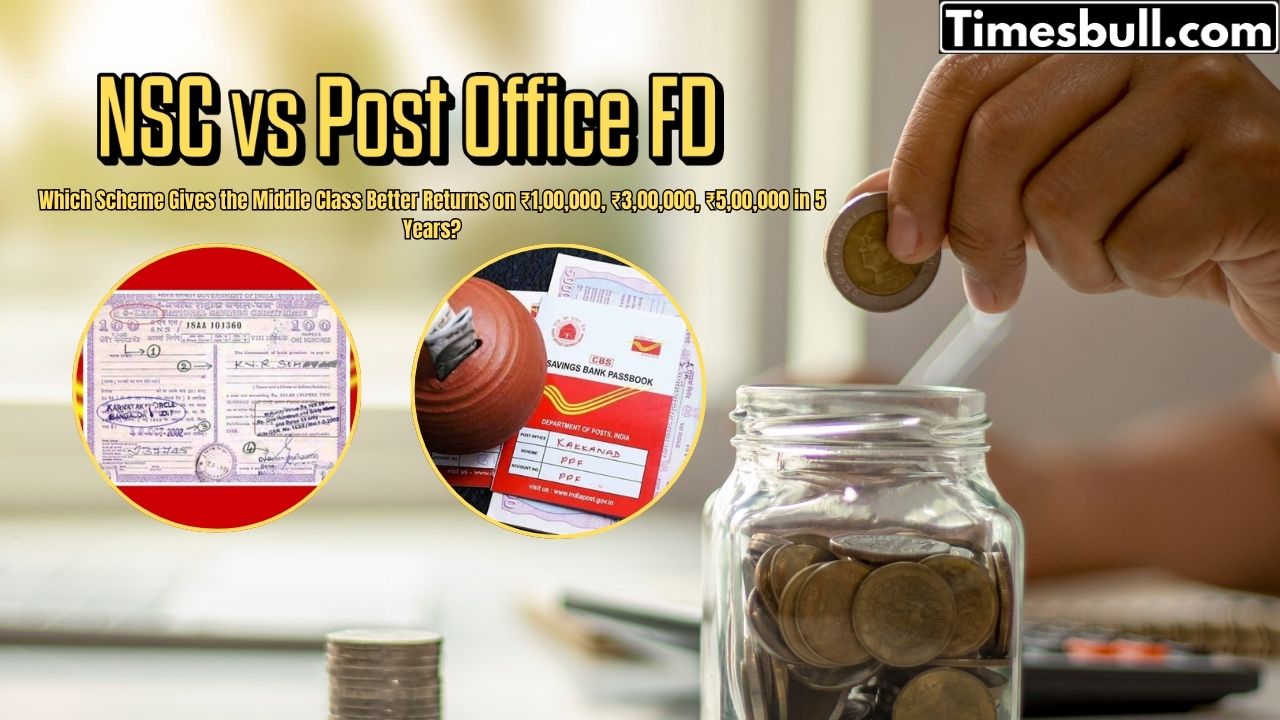
Like banks, many schemes are run in post offices. Two of these are the Post Office Term Deposit (also called Post Office FD) and the National Savings Certificate (NSC). Post Office FD is available for 1, 2, 3, and 5 years, while the NSC requires a 5-year investment. Both the NSC and Post Office FD are popular choices that offer fixed returns over a 5-year tenure. But which one gives better maturity value on investments of ₹1 lakh, ₹3 lakh, and ₹5 lakh? In this detailed comparison, we analyze interest rates, tax benefits, withdrawal rules, and final returns.
Why Post Office FD Gives More Profit Than NSC Despite Lower Interest Rate
If you want to invest ₹1,00,000 for 5 years, you can choose between a 5-year FD and NSC. The 5-year FD offers an interest rate of 7.5%, while NSC offers 7.7%. Based on the interest rate alone, it seems NSC would provide more profit. However, in reality, you will earn more profit with the Post Office FD. Although the difference is not significant, let’s explain why this happens.
How Profit Is Calculated
When you consider investing in a scheme, the first thing people usually check is the interest rate. Many assume that a higher interest rate automatically means more profit, but that’s not always the case. The profit or loss in a scheme depends on how the interest is calculated. It’s important to know whether the interest is simple or compound. If compound interest is applied, the frequency of compounding—whether quarterly or annually—also affects the final amount.
NSC vs. Post Office FD: Which Is Better for Investment?
1. Interest Rates & Compounding Method
- NSC: Offers an interest rate of 7.7%, compounded annually and paid at maturity.
- Post Office FD (5-year tenure): This offers an interest rate of 7.5%, compounded quarterly but paid annually.
2. Minimum & Maximum Investment Limits
- NSC: Minimum investment of ₹1,000, with deposits allowed in multiples of ₹100. No maximum limit.
- Post Office FD: Minimum deposit of ₹1,000, with investments in multiples of ₹100. No upper limit.
3. Who Can Invest? (Eligibility Criteria)
- Both NSC and Post Office FD can be opened by:
- A single adult.
- Joint account with up to 3 holders.
- Guardians for minors or individuals of unsound mind.
- Minors above 10 years can open an account in their name.
Maturity Amount on ₹1,00,000 Investment
- NSC: After 5 years, the maturity amount will be ₹1,44,903.
- Post Office FD: After 5 years, the maturity amount will be ₹1,44,995.
Maturity Amount on ₹3,00,000 Investment
- NSC: ₹4,34,710 after 5 years.
- Post Office FD: ₹4,34,984 after 5 years.
Maturity Amount on ₹5,00,000 Investment
- NSC: ₹7,24,517 after 5 years.
- Post Office FD: ₹7,24,974 after 5 years.
Which One is Best For Middle-Class People?
Although NSC offers a slightly higher interest rate, Post Office FD provides a higher maturity amount due to quarterly compounding. If you want better returns, Post Office FD is a slightly better option. However, both investments are safe and offer tax benefits.
Latest News
Must Read
These 3 Best Budgeting Apps for Management Your Expense in Effective Way
Most Viewed
Silver Buying Tips: Planning to Buy 1 Kg Silver? Know When, Where and How to Invest Smartly
Most Viewed
Gold Rates Today – Check 22-24 carat 10 gram gold rates in metros after price drop
Most Viewed
Silver Rates Update – Know the price of 1 kilogram silver in these cities
Most Viewed
Earn ₹7.70 Lakh by Saving Just ₹8.50 a Day – Invest in This Government MF Scheme!
Most Viewed
Trending Now
Bhojpuri Song – Nirahua & Aamrapali Dubey New Song 2026 “NAYANAVAAN MARE JAAN” Trending Top On Youtube, Must Watch
Amazon Offers OnePlus 12 5G; Get This Phone Rs 19,000 Cheaper With ProXDr Display
Vijay Valentine Day Sale- Apple iPhone 16 Plus Up to Rs 21,000 Discount with Best Offers!
Start Investing with Just ₹500 – Earn Strong Interest Along with Tax-Free Returns
Samsung Galaxy M56 5G Available at Just ₹20,999 After Coupon Benefits in Valentine Sale
CBSE Board Exam 2026 New Guidelines – On Screen Marking and Important Exam Day Rules Explained
This Valentine Must Listen Bollywood Most Romantic Songs And Make Your Love Feel So Special
Valentine’s Sale—Motorola Edge 60 Pro With 50MP Selfie Camera Now At 25% Discount, Grab This Deal
IBPS RRB Office Assistant Final Result 2026 Declared – Check Selection List at ibps.in
📁 CATEGORIES